From a reader…
QUAERITUR:
My wife and I are interested in learning the Latin Mass so we can attend one here in Nashville. Is there a video or a book we could purchase that starts from scratch?
Great blog – keep up the good work.
My first thought…

From a reader…
QUAERITUR:
My wife and I are interested in learning the Latin Mass so we can attend one here in Nashville. Is there a video or a book we could purchase that starts from scratch?
Great blog – keep up the good work.
My first thought…
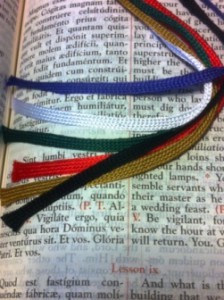 Under another post this comment appeared:
I ask Fr. Z if a discussion of the old breviary and the LOTH is a rabbit hole. If so, I ask him to post about a comparison between the old and the LOTH and allow comments.
It isn’t a rabbit hole under it’s own post!
So… there it is, folks.
Roman Breviary and Liturgy of the Hours…
Compare, contrast, discuss.
 UPDATE 7 September 2017:
I had this note from the Administrator at Corpus Christi in Maiden Lane, London.
Hi Father,
I just wanted to give you a quick update: we’re currently at £3840.20 of the £5000 we need – so very close!Once we get past the £4000 we can place the order for it, I think. Would you be able to bump the post back to the top of your page for a day or so? Your readers have been incredibly generous so far. [That’s you!]
I hear you will be coming to stay with us soon. I’m very much looking forward to meeting you in person!
Okay, readers…. get in there and help them cross this ACTION ITEM off their list! Tell them Fr. Z sent you.
>>HERE<<
Also… TONIGHT my friend Fr. Michael Lang of the Oratory will be at Maiden Lane for the Mass with the Sodality of the Blessed Sacrament. Londoners! SHOW UP!
Originally Published on: Jun 25, 2017
I bring to your attention a wonderful and WORTHY project. I hope you will all click and explore the site as well.
The parish of Corpus Christi in London, on Maiden Lane near Covent Garden, as been the site of ongoing Holy Masses in the Traditional Roman Rite for decades.
The church itself is simple and lovely and it has been receiving a lot of TLC from its present pastor (parish priest). There is a great restoration going on there about which I have posted from time to time.
I just received this note from their parish administrator.
I just wanted to drop you a quick line to give you an update on Corpus Christi, Maiden Lane in London. I know you have celebrated Mass here and have posted about us on your blog before, for which we are very grateful.
As you may have seen online, the restoration should hopefully be done by the end of the year and next year His Eminence, Vincent Cardinal Nichols is coming to celebrate Mass for Corpus Christi and to ‘reopen’ the restored church.
We would like to have a procession of the Blessed Sacrament after Mass but we do not own a canopy at the moment (shocking, I know!). [OH THE HUMANITY!] We are trying to fundraise for one from Serpone. Perhaps the followers of your blog may be able to help us out? There is a link on our website where donations can be made online:
http://www.corpuschristimaidenlane.org.uk/canopy-project/
We have also set up a Sodality of the Blessed Sacrament – a Confraternity dedicated to more perfectly honouring Jesus in the Blessed Sacrament. [Very cool.] Anyone can be a member, wherever they are in the world. [Sign me up!] There is a monthly Mass with a different guest preacher each month and members receive a nice Monstrance badge to wear. Our next Mass (after the summer break) is on Thursday 7th September at 6:30pm, when Fr. Michael Lang, CO will be preaching. There is a monthly newsletter with all the homilies, so those who can’t be there in person don’t miss out!
[…]
Here is the canopy they want.
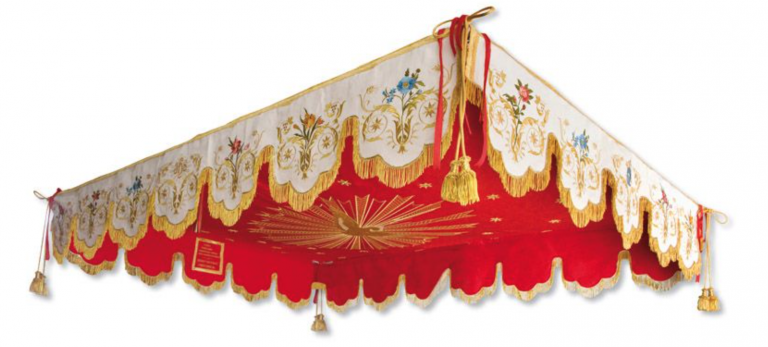
I’m all for that!
You readers have been generous to projects for the TMSM (DON’T FORGET OUR PROJECT HERE!).
If a goodly percentage of you readers would donate even just a little bit, their project will be rapidly fulfilled.
Would you please give them a lift with a donation?
>>HERE<<
I would like to see the Blessed Sacrament carried about COVENT GARDEN with THAT canopy and all the incense and hand-bells going. Imagine.
You Americans out there… show the Brits how it’s done. Be swift and generous. Don’t be outdone. Make sure that when they pick up that canopy they remember that “Fr. Z’s readers – especially the American readers made this!”
HENCE – When you make your donation, use the “special instructions” item and tell them that Fr Z (Zed) sent you!
Speaking of restoration…
Just to give you an additional idea of what they are trying to do there, here is a view of what they did for the church’s sanctuary.

Here is what they have done with their Lady Chapel
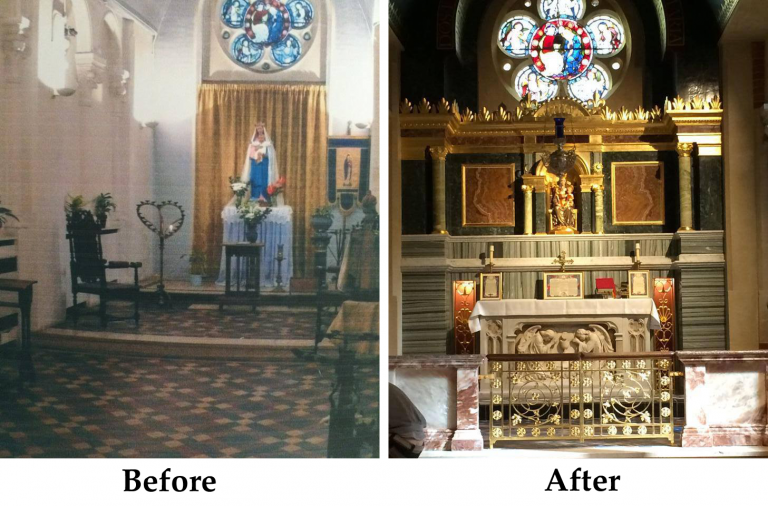
Get it?
 I don’t use the Second Eucharistic Prayer. Okay, okay, I don’t say the Novus Ordo all that often either. But when I do, I use the Roman Canon… always. Even when I was saying the Novus Ordo often, I did not use Number Two. The way I figured it, when I got to the very bottom of the Roman Canon, exhausted it, no longer found anything interesting or new in it, then I might move on.
Fr. Hunwicke hit for six again today. He helpfully and properly undermines the appeal of the Second Eucharistic Prayer, which is a perfect example of how some aspects of the Novus Ordo were artificial, cobbled up creations which have disrupted our Catholic identity.
How sad it is that so many priests use the Second Eucharist Prayer so often… (or at all). Fathers… please… rethink your ars celebrandi.
Here is Fr. H with some emphases and comments:
“Hippolytus”; or “The Second Eucharistic Prayer”
How able, how cunning, the Enemy is in his plots to bring Evil out of Good. I will illustrate this by considering his use of a Eucharistic Prayer still sometimes linked with the name of the early third century antipope Hippolytus. [BTW… His Hermeneuticalness, Fr. Tim Finigan, wrote a spiffing post about the Second Eucharist Prayer waaaaay back in 2007. He blows it out of the water. HERE]
My distinguished predecessor at S Thomas’s, Dr Trevor Jalland, wrote ‘The widespread interest evoked by the visual demonstrations of the Hippolytean Eucharist, which have been given in various parts of the country [by Dix since July 1948], [interesting] testify to the deep indebtedness not merely of scholars, but of the ordinary worshipper, to Dr Gregory Dix in making available for English readers the text of Hippolytus’ invaluable treatise The Apostolic Tradition.’
One aspect of this rite which particularly appealed to Catholic Anglicans was the presence of the phrase ‘we offer unto thee this bread and this cup’. This seemed to provide an alibi for smuggling back into the mainstream worship of the Church of England a formula expressive of the Eucharistic Sacrifice, absent from our Parliamentary Liturgy since 1559. Thus in 1966 the English Liturgical Commission recommended a rite (‘Series II’) which contained this phrase; justified on the ground that ‘It confines itself to the simple language of the first two centuries. It is the language used by Hippolytus … The use of the phrase is in line with the Anglican appeal to antiquity’.
At about the same time the pot-Conciliar revisers of the Roman Rite [“pot”-Conciliar… I’ve often wondered what they were smoking…] incorporated a mangled version of ‘Hippolytus’ Eucharistic Prayer’ as an alternative to the venerable Canon Romanus, the invariable Eucharistic Prayer of the Roman rite for so many centuries. The version which those revisers adopted had been confected by Dom Bernard Botte and Fr Louis Bouyer in between caraffes of wine in one of Rome’s seedier areas tras Tevere. [True!]
By 1989, however, Bouyer, at least, had given up the idea that ‘Hippolytus’ really was by Hippolytus, or even had any connection with the Roman Church. This doubt has now become the academic orthodoxy. (If necessary, one murmurs here the name of Professor Paul Bradshaw.)
Unfortunately, ‘Hippolytus’ failed in the laudable struggle to recatholicise the worship of the Church of England; the Evangelicals vetoed the crucial phrase. The Enemy saw to that.
But the version put out by the Roman revisers did, by the Enemy’s able machinations, succeed in almost entirely eliminating the Canon Romanus from the worship of most ordinary RC churches, where its extreme brevity appealed to priests and people alike (despite the rubrical guidance given that the Canon Romanus was for Sundays and ‘Hippolytus’ for other occasions). The passion for brevity, which made dear old Fr O’Murphy I say the Old Mass with such unholy rapidity, made his trendier nephew Fr O’Murphy II select ‘Hippolytus’ with unholy regularity in the New Mass. [A seminarian who once served as sacristan at the North American College related to me a pre-Mass conversation with a Cardinal: “Eucharistic Prayer II again today, Your Eminence?” “Not if there’s a shorter one! HAR HAR!”]
So, in the one body, ‘Hipplolytus’ failed to achieve the hoped-for good of restoring the Eucharistic Oblation; and in the other body it did massive positive harm by edging out of use the Eucharistic Prayer which did express the full doctrine of that Sacrifice.
Satan’s Smoke! Killing two birds with one stone! [Catachrestic but effective!]
That information about the Anglican use of Hippolytus was new to me. Fr. Z kudos.
So, Number II is licit option. Being licit doesn’t make it a good option.
Eucharistic Prayer II
JUST SAY NO!
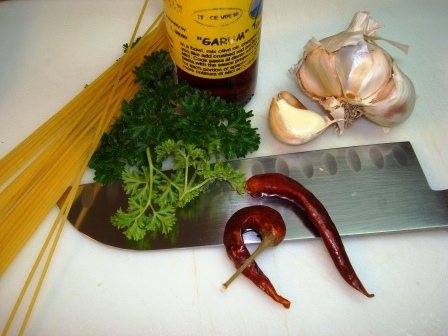
Sometimes I have written of the joys of garum.
The ancient Romans loved to slather their foods, and add as a cooking ingredient, wondrous garum. Garum is a fermented fish sauce, highly attested in ancient literature, the preparation of which is even described by Pliny. It is closely analogous to modern Vietnamese fish sauce and also, perhaps more so, to modern S. Italian colatura. (I’ve had colatura on my wish list periodically… thanks readers, especially FGZ!)
Today a reader sent an article [HERE] about the underwater archaeological dig of ancient Neapolis off the coast of North Africa. It seems to have been destroyed in a massive earthquake and tsunami on 21 July 365.
Good weather has helped them with new finds, including massive garum tanks, suggesting that Neapolis, like Pompeii, was a major producer of the stuff.

Garum and its counterpart liquamen was the ketchup of the ancient world. Keep in mind that sauces which Europeans made and also brought back from the Far East, were fish based. Even today, famous steak sauces are fish based, anchovy.
If you want a tasty light lunch, try this.
First, GET SOME COLATURA: US HERE – UK HERE (there are several varieties with varying prices)
 From a seminarian…
QUAERITUR:
I am a seminarian for ___, and I have been looking for a 4 Vol. Latin Breviary [Liturgia Horarum] … I emailed the Libreria Editrice Vaticana and received this response:
Dear Mr. __,
I’m sorry to inform you that all the volumes of the Liturgia Horarum in Latin language are no longer available and at the moment there is not a reprinting plan.
Best regards
Dott. Alfredo Maria Ottaviani
Ufficio Commerciale
Libreria Editrice VaticanaTel: +39 06.6988.1032
Fax: +39 06.6988.4716
Email: commerciale@lev.va
www.libreriaeditricevaticana.vaWhy aren’t they printing these volumes anymore? What can we do if we want a book-version? I don’t even think MTF is printing their version anymore.
I can imagine a couple reasons.
First, market forces: If the demand drops, the publisher won’t print it. If the demand returns they will reprint. This is the most obvious reason. For the Vatican Press, it’s all about money.
Second, ideology: There has been a concerted effort to wipe out Latin. This has been going on since before Pope St. John XXIII’s Apostolic Constitution Veterum sapientia. I think that there may also be an ideological reason because, were some other publisher want to take on the task, the LEV would probably deny them permission.
I remind the readership, especially those readers who are diocesan bishops, that the Code of Canon Law, can. 249, requires – it doesn’t suggest or recommend or propose, but requires – that seminarians be “very well skilled” in the Latin language: “lingua latina bene calleant“. Not just calleant, says can. 249, but bene calleant.
Calleo is “to be practiced, to be wise by experience, to be skillful, versed in” or “to know by experience or practice, to know, have the knowledge of, understand”. We get the word “callused” from this verb. We develop calluses when we do something repeatedly. So, bene calleant is “let them be very well versed”.
Review also Sacrosanctum Concilium 36 and Optatam totius 13, just to point to documents of Vatican II. … unless you “HATE VATICAN II!”, as the libs throw about.
Latin is necessary. Its benefits are so numerous that they shouldn’t have to be enumerated. And yet we are faced today with a clergy of the LATIN Church who are nearly totally ignorant of Latin!
I ask you, Reverend and Most Reverend gentlemen, what does it mean for our Catholic identity if our clergy don’t know the language – and therefore what goes with the language – of their Rite and Church?
Do you think that that’s a problem?
“But Father! But Father!”, some of these priests and bishops will respond, “We have so many more pressing problems to address!”
Is that so.
Our Catholic identity has been severely enervated over the last half dozen decades. Let’s do something about this, starting with elementary and high schools! Let’s do something about this starting in homeschooling! We have to recover these lost tools or we will, shortly, begin to pay massively for the wounds to our identity.
Oh… and by the way… when rectors or others stand up during ordinations to attest before God that the men to be ordained for the Latin Church have been properly trained…. is that true if they have no Latin?
 His Eminence Carlo Card. Caffarra has died. He is the second of the Four Cardinals of the Five Dubia to have gone to the Lord – in two months – without having read answers from Pope Francis.
And then there were two.
One of my Roman correspondents wrote this morning of a reliable priest’s account:
“His last words were of encouragement as the Lord will not forsake the Church and he will rebuild it with the few who will endure these times and to pray to St. Athanasius. He said, have faith, hope and love.”
Stop and say a prayer for Carlo Caffarra today. We hope that he is now, or will be soon, an intercessor in heaven.
 This from the inimitable Fr. Hunwicke at his always gratifying page with my Usual Treatment™:
How to introduce the Vetus Ordo to a country church overnight
“For weeks before my induction I had been in the parish seeing people in their homes and in the fields … endeavouring to prepare the minds of all who would listen for the changes I contemplated making in the services.
“All had been made ready for the solemn offering of the Mass. Nicholas Peters had learnt to swing the censer, Peter Curnow … to make the responses, when on that first Sunday after my induction the people of St Hilary flocked to the church and found, in the place of a clergyman reading Dearly beloved, a strange figure in vestments at the altar with a little boy who knelt at his side. Many were watching for the first time the drama of the Mass. They were there as spectators who watch a play with a symbolism and language unknown to them. Man cries for redemption, Kyrie eleison, Christe eleison, Kyrie eleison. God answers man’s despairing cry in the opening words of the Gloria in excelsis, proclaiming the advent of the promised Saviour, but still they do not understand.
“‘Whatever is he doing up there now?’ they say. ‘Can ‘e make it out at all?’ The summit of the drama is reached when, the whole company of heaven having been summoned to man’s aid, the words of consecration are spoken and the bread and wine become the Body and Blood of Jesus who offered Himself on the Cross at Calvary. They are aware of the silence, broken by the ringing of a bell. ‘Did ‘e hear the bell? What is that for, my dear’ they whisper. The bell rings again at the Domine non sum dignus. There are a few who kneel in wonder at what is being accomplished; it is for them a moment of prayer such as they have never experienced before. But for many who crowd the church the great drama of the Mass remains without meaning.”
I know what readers are thinking … “That’s not very brick-by-brick”.
Sed contra, dear Father. That’s brick by brick indeed.
There was preparation beforehand. Moreover, in building the structure – one “made of living stones” – not all the bricks and stones were lain at the same time. As in that congregation described, some kneel in wonder, some wonder what’s going on. Some sense the moment, some are distracted by externals. At the next offering of the Holy Sacrifice, more bricks will be prepared and set in place.
As he works, the bricklayer, the stonemason, must dress the stones and bricks, chipping here, smoothing there.
 Furthermore, there are those entirely familiar with every aspect of the liturgical actions down to the last jot and tittle who nonetheless do not have an encounter with the Mystery tremendum et fascinans because they are absorbed in whether or not the missal stand was placed at their approved angle when the server shipped it from the Epistle to the Gospel side. They participate lacking in wonder, because they are listening for errors in pronunciation or of pitch. Their principle active participation is to measure up the liturgical action against their own expectations. Those who know less, some times rise to greater and actual participation.
Hence, the priest in the account above has a great advantage in the continuance of his work brick by brick. He can dress the stones who, at that Mass, found no meaning, even while he builds with those who knelt in wonder.
True “brick by brick” work has to have a beginning. That was a beginning.
This morning at NLM Peter Kwasniewski makes some points about liturgy and memory, memorization, which are quite good… so good that I have made them myself in the past. Here is a good bit:
This requirement [for priests who say the Extraordinary Form, Usus Antiquior] of memorization, far from being a mere guarantee of efficiency, has its own profound value: it is one more way in which the ancient liturgy demands that the celebrant “put on the mind of Christ” — or better, enter His Heart — by means of “knowing by heart” certain prayers of the Church that mold him into the image of their sentiments.
Prayers run the risk of remaining external to the celebrant as long as they are merely written in the Missal, because their location is an external book. Memorized prayers, on the other hand, are already internal(ized) and, as such, are more available as a wellspring of piety within. The heart has become the book, the living book from which the Mass is celebrated.
The same must be said for catechism and children (or adult converts). I have related in the past how at a hospital I was confronted by a woman whose father was dying. She was very angry at God and everyone else. “Why would a God make us just to wind up like this!”, was the essence of her anger and sorrow. I asked her, “Why did God make you?” She calmed down and gave the precise Baltimore Catechism answer, which then helped her to deal with her father’s death.
Once you have it inside then it is yours.
I have also often opined that priests should memorize at least one set of texts for a Mass, perhaps a Votive of the Blessed Virgin: there might come a day when you, in hiding, have no books, etc.
Have a look at Peter’s thoughts. There is a lot to discuss.
A few items as the Labor Day weekend winds to a close.
First, I will be in Rome for the Summorum Pontificum Pilgrimage. I’m only there for a week and I will be REALLY BUSY for a lot of it. Just FYI before people get all worked up. The whole thing will be like a blognic anyway.
I will be saying Masses for my benefactors daily while I am in the Eternal City.
Second: When in Rome, I will stop at Gammarelli to check on another project, this time personal. For a while now I’ve been wanting to have “travel” vestments made to go along with my wonderful portable altar made by St. Joseph’s Apprentice (aka The ULTIMATE Gift For A Priest -received for my 25th) HERE. Since I travel a bit, I’ve gotten good use from it so far. (Note to the carpenter: the bookstand… I have feedback for you.) I have a couple trips lined up for it in the future, for which I got a hard Pelican case (thanks to a reader).
I am presently on a trip with friends and it is set up for daily Mass:

What I lack are travel vestments in the liturgical colors.
I had an idea: were some readers interesting in helping with the vestments, I would find a way to have your name embroidered on them or on their pouch so that you would be remembered in prayer as I (or a priest who inherits them) vests.
At the moment, I am contemplating an order or dupioni or shantung silk. If I do it tomorrow, I could probably get it in time to take to Rome with me. Otherwise, I might buy it in Rome to keep the cost down. A reversible travel vestment with all the parts from Gammarelli would be about €600 (c. $715). [To be clearer: €600 is for one reversible vestment, with two colors. That’s for each set. A couple of you asked about that in email.] Buying the fabric will, I think, cut the cost. I may even have little antependia made, which would be fun. The chalice veil and burse would have to be about half size, I think: I use a miniature chalice and paten from an old Mass kit. The great altar cards are from SPORCH.
So, I also have to figure out the best combination of colors. Considering that they are reversible, and that I use the Usus Antiquior when I have this altar with me, I was thinking
White – Red
Violet – Rose
Black – Green
Perhaps priests could jump in about the best combinations. I tend also to use Votive Masses that need violet. But we also have lots of saints who need white or red. So, perhaps,
White – Red
Violet – Green
Black – Rose
Which would help because I’d need mainly two vestments. But what about Requiem Masses? Another possibility would be to add a couple more colors into the mix: Gold and Blue, or Gold and (repeated color). Interesting permutations occur. Trim will probably by silver all around. It unlikely that I would be traveling with this altar for Gaudete and Laetare…. so… rose? How about throw blue into the mix, for fun.
White – Red
Violet – Green
Black – Blue
___
Rose – Gold
Dunno.
I invite input.
Meanwhile, in the U.P. of Michigan, I visited the grave of a JESUIT! Yes, I know.
This is Fr. Marquette, the great missionary. Many of us in the northlands know his name because things in our cities are named for him.


Here is Fr Marquette waving goodbye to all the modern Jesuits, even as he wonders where on Earth they think they are going.
Meanwhile, which drink is mine?



Coat of Arms by D Burkart
 Suburbanbanshee on ROME 26/10-11 – Day 35: Penultimate: “The illumination is a fun one. It literally shows Christ the Pharmacist, which is not a title you read every…”
 on ASK FATHER: “Why isn’t the Male Only Holy Orders a Dogma?”: “TonyO: Don’t you realize that the “spirit of Vatican II” only speaks in one direction can can only be discerned…”
 on ROME 26/10-11 – Day 33: All Souls: “Whoever thought it was a smart idea to link the refrigerators and freezers to the Internet should have to thoroughly…”
 on ASK FATHER: “Why isn’t the Male Only Holy Orders a Dogma?”: “@TonyO Well, you don’t listen to the voice of the spirit^tm by listening to the vox populi. The hoi polloi…”
 on WDTPRS: A charming translation for the Feast of St. Charles Borromeo – 4 November: “Dear Fr. Z. Thank you for your wonderful mention of John, Marquess of Bute (+1900), whose translation of the Roman…”
 on CQ CQ CQ – EWTN shut down its shortwave radio service on 31 October. Understandable, but I have some reservations.: “I am also nostalgic for the days of shortwave radio, back when I was in high school in the 1960s…”
 on ROME 26/10-11 – Day 33: All Souls: “If I remember correctly, the plaque on the USS Wisconsin dryly reports the aftermath of that hit with the phrase…”
 on ASK FATHER: “Why isn’t the Male Only Holy Orders a Dogma?”: “1. Vatican II serves as a foundational instruction to “listen to the voice of the spirit^tm”. Ok. So, “the people”…”

A Daily Prayer for Priests








They find you a pro-life agent in your area who commits to giving a portion of the fee to a pro-life group!

PLEASE subscribe via PayPal if it is useful. Zelle and Wise are better, but PayPal is convenient.
A monthly subscription donation means I have steady income I can plan on. I put you my list of benefactors for whom I pray and for whom I often say Holy Mass.
In view of the rapidly changing challenges I now face, I would like to add more $10/month subscribers. Will you please help?
For a one time donation...



Help Monks in Wyoming (coffee – UPDATED LINK) and Norcia (beer) and the wonderful "Soap Sisters" of Summit, NJ!


Please follow me on Twitter!










Visits tracked by Statcounter
since Sat., 25 Nov. 2006:
