John Rist: ‘You can’t pick and choose in Catholic moral teaching’

From CNS, something from an old prof of mine. I have written about Prof. Rist before.

‘You can’t pick and choose in Catholic moral teaching’
Posted on December 19, 2012 by Carol Glatz

By Greg Watry

VATICAN CITY (CNS) — The church must evolve with the times, and the clergy must stand by their faith in the face of animosity from the secular world, a Catholic philosopher said.

John Rist, a philosopher and professor at The Catholic University of America, [And more importantly also the Augustinianum in Rome] said in the latest edition of Vatican Voices that in order for Catholicism to flourish the clergy “have got to be visible, they have to be unpopular in many cases. If they don’t, they’ll be failing their job.”

Rist recognizes the risks the clergy take when promoting Catholic philosophy. “If you say you’re opposed to abortion you don’t get your head cut off, but you get abused. You might be called a pedophile or something like that.”

But young people, who are idealistic, are drawn to morally brave behavior, he said. Priests set a good example for the laity by defending their faith.

In order to defend the faith, Rist said, one must learn what secular culture says and why. By not engaging with the secular world, the church alienates itself and “the outside world gets further and further away, and you get less and less chance to have contact with it or even understand what it’s doing.”

The church addressed the issue of secularism during the Second Vatican Council. However the council fathers didn’t understand “the problem they were trying to solve,” Rist said. “They knew somehow the church was out of sync with the modern world,” he said, but not why.

During Vatican II and still today, he said, the problem of disconnection with the modern world lies in stagnant thinking. [OORAH!]

Theologians don’t understand that the church is allowed to evolve, Rist said. “They think that if we open the door to thinking and considering change, we’re going to lose everything.”

The truth is the church is always in a state of flux, Rist said. Dramatic changes, as those that occurred during Vatican II, have happened throughout the history of the church.

In the New Testament, Rist said, Jesus claims, “’I will lead you to all truth,’ not I’ll give it to you right now on a plate.”

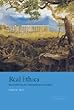
To anyone who studies Augustine, Rist’s book is necessary.  Just buy it.

US – Augustine: Ancient Thought Baptized

UK – HERE

And this is a hard book, but very rewarding.

US – Real Ethics: Reconsidering the Foundations of Morality

US Kindle – HERE

UK – HERE

Posted in Liberals, New Evangelization, Our Catholic Identity, Priests and Priesthood | Tagged ,
9 Comments

Fr. Z asks a favor for the priests in Newtown, CT – ACTION ITEM

Please, in your charity, read this.

HERE

Posted in Mail from priests, Priests and Priesthood | Tagged
13 Comments

A priest on what really freaks out liberals

At the blog Southern Orders, Fr. Allan McDonald had a few things to say about liberals and Vatican II and what freaks them out.

Here is a taste with my emphases and comments:

[…]

The progressive, liberal element of the Church since Vatican II has been a miserable failure for the Church, fragmented and lacking in common sense. [Do I hear an “Amen!”?] That truth is especially symbolized by the form and type of liturgy they would like to see for the Church and in fact have foisted upon two to three generations of Catholics since Vatican II, an iconoclastic liturgy and architecture to match it, an empty, sterile liturgy that focuses on the horizontal and leaves the vertical, the God aspect, on the periphery.

Infallibility that is creeping and creepy as it concerns Sacrosanctum Concilium is a liturgy that blurs the distinctions between the ordained and the laity, the holy of holies and the nave, that emphasizes what the symbols of the liturgy look like, taste like, smell like and act like while neglecting Jesus Christ and His clear mandates. Progressivism makes a god out of bread and wine eaten and drunk, standing to receive and liturgical actions and signs that are big and expansive. But it fails to connect the believer to God in any real sense of Mystery, awe, wonder and humility in the Divine Presence.

What really freaks progressives out is that traditionalists for the most part, while not entirely of course, accept Vatican II and the Liturgy it has wrought and appreciate Vatican II when interpreted within continuity with what preceded it. It freaks them out that the theology of Pope Benedict and his followers is on the ascendency while the post-Vatican II “spirit of the Council” is clearly descending into its own manufactured anarchy and decomposition. It is not long for this world or the next.

[…]

I think Pope Benedict’s view of things will impact the future of the Church in a way that no one ever imagined in the 1970’s, that is those from the 1970’s (like me, but at least I’ve tried to move on) who are still living as though it is still 1970 and can’t believe that God has reversed things on them through the Magisterium of the Church and by popular demand. God is good.

Being stuck in the 1970’s is tiresome and the 1970’s really is over except where it is still practiced by a dying generation.

OORAH!

Fr. Z kudos to Fr. McDonald.

On that note, I remind you of what I wrote here: Who are these ‘c’atholic liberals? Young Catholics don’t know and don’t care.

Moreover, aging-hippie liberals interpret everything within the Church still through the lens they formed during the anti-authoritarian civil-rights and anti-war protest movements.

When we try to uphold hierarchy and authority or rubrics or the older form of Mass or obedience to the Magisterium or decorum in liturgy and sacred music, an involuntary subconscious switch clicks in their heads. They take your faithful Catholic position of continuity to be an attack themselves and on Vatican II.

Vatican II cannot, in their minds, be separated from the protest movements they have idolized until they are actually paradigmatic, iconic, even mythic.

The Council itself – in the received liberal interpretation – cannot ever be questioned or subjected to the authority of the letter of the Council’s texts, because they cannot separate their understanding of the Council from those movements of protest.

The events outside the Church in the USA in those days are completely fused with the event of the Council and certain post-Conciliar reforms.  They interpret everything they do through the lens of this combined and unassailable myth.

A myth that is now itself dying.

Posted in Benedict XVI, Fr. Z KUDOS, Liberals, Liturgy Science Theatre 3000, New Evangelization, Our Catholic Identity, SUMMORUM PONTIFICUM, The future and our choices, Vatican II, Year of Faith | Tagged , , , , ,
29 Comments

Christmas vandalism

From The Catholic League:

Christmas Vandals Never Quit

December 19, 2012
Catholic League president Bill Donohue comments on Christmas vandals:

Every year at Christmastime, incidents of vandalism are rampant, and while this year was not as bad as last year, there still were too many instances. The following towns and cities were hit by vandals this year:

Birmingham, AL; Madison, AL; Live Oak, CA; Longmont, CA; San Diego, CA; Torrington, CT; Frostproof, FL; South Bend, IN; Granger, IN; Quincy, MA; Menominee, MI; Mt. Pleasant, MI; Angus, MN; Warren, MN; Dover, NH; Shrewsbury, MA; New York, NY; Portland, OR; Carlisle, PA; Chambersburg, PA; Spartanburg, SC; Nederland, TX; Ulster, NY; Forest, VA; St. Albans, VT; Covington, WA; Federal Way, WA; Beloit, WI; Clintonville, WI; Moundsville, WV.

The worst incident this year occurred in Huntington, WV, where a hand-painted baby Jesus figurine was stolen and defaced with sexual obscenities, anarchy symbols, anti-religious statements, the numbers 666, and an upside-down cross; horns were drawn on the head, and offensive markings were inscribed on the face, chest and groin.

It is our hope that law enforcement distinguishes between random acts of vandalism, often committed by drunken teenagers, and what happened in Huntington, WV. That was pure malice.

Posted in Liberals, Religious Liberty, The future and our choices, The Last Acceptable Prejudice | Tagged , , , ,
3 Comments

“I’m spiritual, but not religious.”

The amusing Eye of the Tiber (go visit!) hits it on the head with this one.  Funny… but not!

Lapsed Catholic Confirms She Is Still Spiritual

Sherman Oaks, CA–27-year-old Sara Matson confirmed to friends yesterday that she was indeed still very spiritual despite no longer attending Mass. Matson, a World Religions teacher at St. Francis Xavier Catholic School in Sherman Oaks, California reported to her friends that she feels her creator’s presence everywhere. “Not that there’s anything wrong with going to church,” Matson later confirmed. “There’s also nothing wrong with not going to church. And actually, if you really think about it…since our creator, call her what you will, is in everything, then really, everywhere is church, if you kinda think about it like that.” At press time, Matson has asked her friends not to judge her, since you don’t define another when you judge them, but rather, define yourself.

She’s, like, totally spiritual.

Perhaps after the school let’s her go, she’ll get an offer for a staff position with the National catholic Fishwrap.

Posted in Lighter fare | Tagged
22 Comments

Federal Appeals Court sides with Belmont Abbey against Obama Administration

From the Catholic News Herald of the Diocese of Charlotte:

Government must rewrite HHS mandate by March 31, court orders

WASHINGTON, D.C. — A federal appeals court in Washington, D.C., has sided with Belmont Abbey College in its lawsuit challenging the Obama administration’s mandate requiring most employers to provide free contraceptives in their employee insurance plans starting in 2013.

The three judges on the U.S. Court of Appeals for the District of Columbia Circuit issued their ruling Dec. 18, only days after sparring with lawyers on both sides of the case during lengthy oral arguments Dec. 14.

The Dec. 18 ruling does not overturn the controversial contraception mandate, yet it uses strong language ordering the Obama administration to rewrite the mandate so that it would not harm religious organizations such as Belmont Abbey College. It also gave the administration a deadline of March 31, 2013, and said it will review the administration’s actions every 60 days until it complies.

The ruling also puts the case on hold, so that if the college objects to the government’s rewritten mandate it will not have to refile the case.

Read the pdfappeals court’s ruling.

Dr. William Thierfelder, president of Belmont Abbey College, called the favorable ruling “a major victory” and “the answers to our prayers.”

“Christmas came early this year!” Thierfelder said in a written statement issued late Tuesday.

[…]

Read the rest there.

Posted in Brick by Brick, Our Catholic Identity, Religious Liberty, The future and our choices, The Last Acceptable Prejudice | Tagged , , , , , , ,
14 Comments

Prefect of CDF on Anglican Ordinariate and SSPX

From the UK’s best Catholic weekly, The Catholic Herald with my emphases:

Head of the CDF urges Catholics to welcome ordinariate converts

Catholics in England and Wales should welcome members of the Personal Ordinariate of Our Lady of Walsingham, the new prefect of the Congregation for the Doctrine of the Faith (CDF) has said.

In an interview with The Catholic Herald, Archbishop Gerhard Müller said: “Many of those who have entered into full communion through the ordinariates have sacrificed a great deal in order to be true to their consciences. They should be welcomed wholeheartedly by the Catholic community – not as prodigals but as brothers and sisters in Christ who bring with them into the Church a worthy patrimony of worship and spirituality.”

Archbishop Müller, who was appointed prefect in July this year, oversees reconciliation talks with the Society of St Pius X (SSPX) in his new role. He told the Herald that “the SSPX must accept the fullness of the Catholic faith and its practice” as “disunity always damages the proclamation of the Gospel by darkening the testimony of Jesus Christ”.

He said: “The SSPX need to distinguish between the true teaching of the Second Vatican Council and specific abuses that occurred after the Council, but which are not founded in the Council’s documents.”

He later continued: “Everyone who is Catholic must ask themselves if they are cherry-picking points from the Church’s teachings for the sake of supporting an ideology. Which is more important:?an ideology or the faith? I want to say to people in extreme groups to put their ideology to one side and come to Jesus Christ.”

Archbishop Müller also said that he had been an admirer of the current Pope since he was in seminary and used to read the Pope’s book An Introduction to Christianity during his formation. He said: “It was a new book at the time and the concentrated theological insights are ever present in my mind today.”

In his new position as prefect for the CDF he has a weekly meeting with the Pope for an hour. He said: “In private, we speak in our mother tongue, German, but in an official context we must speak in Italian.”

Benedict XVI is the Pope of Christian Unity.

Posted in Benedict XVI, Brick by Brick, New Evangelization, Our Catholic Identity, Pope of Christian Unity, SSPX, The future and our choices, Vatican II | Tagged , , , , ,
39 Comments

Archbp. Chaput on St. Thomas More in light of Obamacare

In the light of the Obama Administration’s attack on our religious freedom, this piece deserves wide circulation:

A Man for This Season, and All Seasons

by Charles J. Chaput
within Religion and the Public Square

December 19th, 2012

There is only one Thomas More: A man of tender nobility, subtle intellect, and forceful conviction, all rooted in profound fidelity to the larger commonwealth of Christendom outside and above Tudor England.

A day after the 2012 Summer Olympics closed in London, Joseph Pearce wrote that he felt like his “body had been covered in slime. I also felt a great sense of gratitude that I had shaken the smut and dirt from my sandals and had left the sordid culture of which I was once a part.”

Given the grand sweep of British history, those are harsh words from a former Londoner. An English Catholic convert and author, Pearce is now a resident Fellow at Thomas More College in New Hampshire. But he merely said what many people thought: that the Olympic closing ceremony they watched on global television was one long liturgy of overripe vulgarity, a jamboree of cheesy and offensive pop culture. In effect, it showcased a nation grasping to reinvent itself by escaping back to adolescence while ignoring its own real past.

This shouldn’t surprise us. Europe’s work of reinvention, or self-delusion, has been going on for decades, not only in Britain but across the continent. One of the key obstacles to the process is the depth of Europe’s Christian roots. As recent popes and many others have pointed out, there really is no “Europe” without its historic Christian grounding. Anyone wanting a new Britain, or a new Europe, needs to get rid of the old one first. So diminishing Christianity and its influence becomes a priority. And that includes rewriting the narrative on many of Christianity’s achievements and heroes.

By way of evidence: Consider the case of Thomas More, lawyer, humanist, statesman and saint; martyred by England’s King Henry VIII in 1535; canonized in 1935; celebrated in Robert Bolt’s brilliant 1960 play A Man for All Seasons; and more recently trashed as proud, intolerant, and devious in Hilary Mantel’s best-selling 2009 novel, Wolf Hall, now set for release as a 2013 BBC2 miniseries.

Critics of More are not new. His detractors had a voice well before his beheading. As Henry VIII’s chancellor, he earned a reputation as a hammer of heretics and a fierce opponent of Martin Luther and William Tyndale. Yet Erasmus of Rotterdam revered More as a scholar and friend. Jonathan Swift, the great Anglo-Irish writer, described him as “a person of the greatest virtue this kingdom [of England] ever produced.” When Pope John Paul II named Thomas More as patron saint of statesmen in 2000, he cited More’s witness to the “primacy of truth over power” at the cost of his life. He noted that even outside the Church, More “is acknowledged as a source of inspiration for a political system which has as its supreme goal the service of the human person.”

Ten years later, speaking to leaders of British society in Westminster Hall, Pope Benedict XVI returned to the same theme. Benedict noted that More “is admired by believers and non-believers alike for the integrity with which he followed his conscience, even at the cost of displeasing the sovereign whose ‘good servant’ he was, because he chose to serve God first.”

So which is it: More the saint or More the sinner? Was he the ruthless, sexually repressed rage addict suggested by historians like G.R. Elton, fearful of change and driven by helpless fury? Or was he the humble and generous “man for all seasons” praised by his friend Robert Whittinton and so many others among his contemporaries? Were there really two Thomas Mores: the young, open-minded humanist, and the older royal courtier, gripped by religious fanaticism?

The moral integrity of More’s life has been argued with persuasive skill in the various works of Gerard Wegemer, among many others. And Peter Ackroyd’s fine biography, The Life of Thomas More, vividly captures the whole extraordinary man–his virtues, his flaws, and the decisive nature of his moment in history. Travis Curtright has now added to the luster of the real More’s legacy with his excellent new book The One Thomas More.

As the title suggests,Curtright sees Thomas More’s life as a consistent, organic record of Christian witness, start to finish; a thoroughly logical integration of humanism, piety, politics and polemical theology. There is only “one” Thomas More–a man of tender nobility, subtle intellect, and forceful conviction, all rooted in profound fidelity to the larger commonwealth of Christendom outside and above Tudor England. For Curtright, More embodied “the Erasmian ideal of wedding learning with virtue,” lived through a vigorous engagement with temporal affairs. He treats More’s scholarly critics with proper respect while methodically dismantling their arguments; and he does it by carefully unpacking and applying three of More’s most important written works: The Life of Pico Mirandola, The History of Richard III, and Utopia.

Curtright correctly sees that More’s real source of annoyance for many modern revisionist critics is his faith. If revisionists like Elton implicitly define “humanism” as excluding religious faith, then a man like Thomas More and the whole vast Christian tradition of integrating faith and reason become serious irritants. As Curtright observes:

The entire structures of the two Mores and real More theories congeal around [critics’] notions of a “true” humanism that excludes the possibility of faith and reason working together, a position transparently stated by [G.R.] Elton and one that influences contemporary condemnations of More as a “fanatic.”

Bickering over the “real” Thomas More has importance beyond the scholarly community. Why? Because just as the nutty premises of Dan Brown’s The Da Vinci Code confused millions by reinventing the backstory of Christian belief, so too the novel Wolf Hall offers a revisionist Thomas More wrapped in popular melodrama. The author, Hilary Mantel, a lapsed Catholic whose disgust for the Church is a matter of public record, drew her portrait of More in part from the work of Elton. The “hero” of her novel is Thomas Cromwell–More’s tormentor, and in reality, a man widely loathed by his contemporaries as an administratively gifted but scheming and vindictive bully. Unlike the widespread European shock that greeted More’s judicial murder, few wept for Cromwell when he finally followed More to the scaffold.

The One Thomas More is not a book for beachside browsing. While it’s well-written, modest in size and rich in content, it is a scholarly effort. Some casual readers may find it heavier than they bargained for. But as a resource on Thomas More, it’s invaluable. Curtright’s final chapter, “Iconic Mores on Trial,” has special importance. It directly challenges Mantel’s loose treatment of facts, for which it deserves wide circulation.

Having said all this, Thomas More has been dead nearly 500 years. Why should his legacy matter today?

Barring relief from the courts, Christian entities, employers, and ministers in the coming year will face a range of unhappy choices. As the Affordable Care Act takes force and the HHS contraceptive mandate imposes itself on Christian life, Catholic and other Christian leaders can refuse to comply, either declining to pay the consequent fines in outright civil disobedience, or trying to pay them; they can divest themselves of their impacted Christian institutions; they can seek some unexplored compromise or way of circumventing the law; or they can simply give in and comply with the government coercion under protest.

Good people can obviously disagree on the strategy to deal with such serious matters. But the cost of choosing the last course–simply cooperating with the HHS mandate and its evil effects under protest–would be bitterly high and heavily damaging to the witness of the Church in the United States. Having fought loudly and hard for religious liberty over the past year, in part because of the HHS mandate, America’s Catholic bishops cannot simply grumble and shrug, and go along with the mandate now, without implicating themselves in cowardice. Their current resolve risks unraveling unless they reaffirm their opposition to the mandate forcefully and as a united body. The past can be a useful teacher. One of its lessons is this: The passage of time can invite confusion and doubt–and both work against courage.

Again: Why does Thomas More still matter? Why does he matter right now?

More’s final work, scribbled in the Tower of London and smuggled out before his death, was The Sadness of Christ. In it, he contrasts the focus and energy of Judas with the sleepiness of the Apostles in the Garden of Gethsemane. He then applies the parable to his own day and the abject surrender of England’s bishops to the will of Henry VIII: “Does not this contrast between the traitors and the Apostles present to us a clear and sharp mirror image . . . a sad and terrible view of what has happened through the ages from those times to our own? Why do not bishops contemplate in this scene their own somnolence?”

More urges the bishops not to fall asleep “while virtue and the faith are placed in jeopardy.” In the face of Tudor bullying, he begs them, “Do not be afraid”–this from a layman on the brink of his own execution.

Of course, that was then. This is now. America 2012 is a very long way, in so many different ways, from England 1535.

But readers might nonetheless profit in the coming months from some reflection on the life of Sir Thomas. We might also take a moment to remember More’s friend and fellow martyr, John Fisher, the only bishop who refused to bend to the king’s will; the man who shortly before his own arrest told his brother bishops: “. . . the fort has been betrayed even [by] them that should have defended it.”

Charles J. Chaput, a Capuchin Franciscan, is the archbishop of Philadelphia and the author of Render Unto Caesar.

Posted in Our Catholic Identity, Religious Liberty | Tagged , , , , , , , ,
7 Comments

Your 21 December End of the World Plans

Advent is more about the ending of the world and the Lord’s Second Coming than it is about His First Coming.


In the meantime, let’s talk about the Mayan calendar.

My friend the mighty P.P. of Blackfen, the Dean of Bexley, His Hermeneuticalness, Fr. Tim Finigan, is at his blog contemplating the end of the world.

The world is going to end, some say, … when was it? Pretty soon.

So, any recommendations for the big show?

Bombay Sapphire Martinis are on my list. I think I might have a steak. No… will it be Friday? Rats. No… not rats, in that sense… in the other “rats” sense. Maybe trout. And I could make some Hollandaise sauce. Before the end of the world, I need to make Hollandaise on a hotplate.

How about you? Anything planned?

Let’s get some ideas.

Posted in Lighter fare | Tagged ,
48 Comments

ACTION ITEM! AUCTION of art by Daniel Mitsui to help St. John Cantius in Chicago

I received this note from the well-known Catholic artist Daniel Mitsui:

Dear Father Zuhlsdorf:

Could you do me the favor of letting your readers know about a special Christmas auction of one of my original drawings that is being done to benefit the sacred music program at St. John Cantius Church in Chicago?

The auction is being processed through eBay, HERE.

The drawing is an original, colored ink on calfskin vellum.

I am also allowing the parish to sell prints of this work, HERE.

All of the proceeds from these sales will go to help fund the music program at the parish (the drawing and the license for the prints are a personal tithe/donation to the parish).

Thank you,

Daniel Mitsui

P.S. Here follows a complete description of the work:

CLICK FOR A LARGER VERSION

This original ink drawing of Christ’s Nativity was created by artist Daniel Mitsui. It will be auctioned to raise funds for the sacred music program at St. John Cantius Church.

It measures 8″ x 10″ and was made with colored inks on calfskin vellum. It is formatted as a page from a Biblia Pauperum.

The Biblia Pauperum (Bible of the Poor) is collection of illustrated typologies that circulated both in illuminated manuscripts and in blockbooks during the late Middle Ages. Each page of the book shows a particular event from the life of Christ, juxtaposed with two events from the Old Testament prefiguring it. The pictures are paired with rhymed Latin versicles and short expalnations. Four prophets are also included, each holding a banderole with his prophecy of the event.

For the Nativity of Our Lard, the two prefigurements are Moses before the Burning Bush, and the Flowering of Aaron’s Rod. The text, translated, reads:

Without pain thou givest birth, Virgin Mary (Star) of the Sea.

It glows and kindles, but the bush is not burned by fire.

We read in the Book of Exodus, chapter 3, that Moses saw a bush burning, and it did not burn up, and he heard the Lord speaking to him from the bush. The burning bush which is not consumed figures the Blessed Virgin Mary giving birth without corruption of her bodily integrity, because a virgin she gave birth and remained uncorrupted.

This is contrary to custom: a little rod bears a flower.

We read in the Book of Numbers, chapter 17, that the rod of Aaron one night leafed and bore blossoms, which rod figured the pure Virgin Mary who was to give birth without male seed to a Son, that is, Jesus Christ ever Blessed.

The prophecies are as follow:

Daniel: A cornerstone was cut out of a mountain without hands.

Isaiah: A child is born unto us, and a son is given to us.

Habacuc: O Lord, I have heard Thy hearing and was afraid.

Micah: Thou Bethlehem the land of Juda shall not be the least among the princes of Juda.

The artwork was inspired by various illuminated manuscripts, blockbooks, tapestries and panel paintings of the late Middle Ages, most obviously the Nativity panel from the 14th century Vyššì Brod altarpiece. The background ornament is composed of tiny plants and animals, and was inspired by 15th century millefleur tapestries.

Open-edition giclée prints of this drawing are also available for $80 each. Each print is signed in pencil by the artist. Giclée prints are made on a spray-jet printer from a high-resolution digital scan or photograph. Hahnemühle German Etching paper is the substrate.

Daniel Mitsui is an artist specializing in meticulously detailed ink drawings, done entirely by hand on paper or parchment. His work is especially inspired by the religious art of the Middle Ages. He lives in Chicago with his wife and two sons, and is a parishioner at St. John Cantius Church. More of his work can be seen at www.danielmitsui.com


Posted in The Campus Telephone Pole | Tagged , ,
Comments Off on ACTION ITEM! AUCTION of art by Daniel Mitsui to help St. John Cantius in Chicago