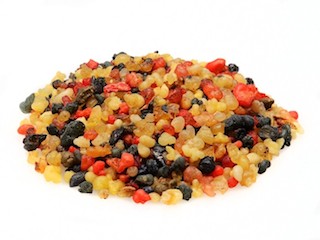
Looking for incense and hosts (altar breads)? Try Agnus Dei

Looking for incense and hosts (altar breads)? Try Agnus DeiFathers (and others), if you are looking for a source for both hosts and incense, here is a good possibility .You would be doing a large family a good turn.  They have 15 children from 19 to 1.  They homeschool and have a cottage business.

Agnus Dei communion breads.

They sent me, some time ago, some small samples of various types of incense they provide and it is very good.  I’ve tried it at Sunday Masses.  And it’s cool looking, too.

Looking for incense and hosts (altar breads)? Try Agnus Dei

Looking for incense and hosts (altar breads)? Try Agnus Dei

Etc.


Posted in The Campus Telephone Pole | Tagged , ,
8 Comments

Pope Francis wants a transformation of the papacy and a synodal Church

Francis Synod speech 50th annivSince the beginning of the pontificate of Pope Francis – or could we coin a new phrase? The “periphery of Pope Francis”? – I have been saying that his aim is to weaken the Roman Curia. HERE and HERE and HERE are examples.

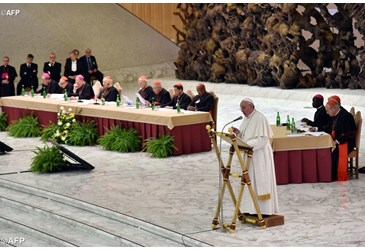
Today Francis addressed members of the Synod, et al., on the occasion of the 50th anniversary of the Synod of Bishops.

I think this speech (HERE) may be a turning point of some kind.  I don’t know what kind, yet.

Pope Francis wants a transformation of the papacy and a synodal Church

Clearly, the Pope wants a more “Synodal Church”.  He says that this has been his intention from the beginning of his pontificate… periphery. He said (my translations):

Fin dall’inizio del mio ministero come Vescovo di Roma ho inteso valorizzare il Sinodo, che costituisce una delle eredità più preziose dell’ultima assise conciliare.

…

From the beginning of my ministry as Bishop of Rome I intended to enhance the Synod, which constitutes one of the most precious legacies of the last conciliar assembly (i.e. Vatican II).

He goes on with comments about sensus fidei that I am going to have to parse with patience.   Including:

Il sensus fidei impedisce di separare rigidamente tra Ecclesia docens ed Ecclesia discens, giacché anche il Gregge possiede un proprio “fiuto” per discernere le nuove strade che il Signore dischiude alla Chiesa.

È stata questa convinzione a guidarmi quando ho auspicato che il Popolo di Dio venisse consultato nella preparazione del duplice appuntamento sinodale sulla famiglia, come si fa e si è fatto di solito con ogni“Lineamenta”. Certamente, una consultazione del genere in nessun modo potrebbe bastare per ascoltare il sensus fidei.

The sensus fidei prevents a rigid separation between the Teaching Church and the Learning Church, since even the possesses its knack (sense of smell, sniffing out ability- fiuto) to discern the new paths that the Lord is opening up to the Church.

It was this conviction that guided me when I prayed that the People of God would be consulted in the preparation of the twin synodal meeting on the family, as is and was usually done with every “Lineamenta” (guiding document). Certainly, a consultation of this kind would in no way be enough to hear the sensus fidei.

The tricky thing about sensus fidei or more precisely sensus fidei fidelium is that you have to be faithful to have it.  Anyway, he goes on for a bit about sensus fidei.

Then he moves into his own role as successor of Peter… as “Bishop of Rome”.

He moves then into his thought about how synodality is a constitutive element of the Church.  To wit:

La sinodalità, come dimensione costitutiva della Chiesa, ci offre la cornice interpretativa più adeguata per comprendere lo stesso ministero gerarchico. Se capiamo che, come dice San Giovanni Crisostomo, «Chiesa e Sinodo sono sinonimi»….

Synodality, as a constitutive dimension of the Church, offers us the more fitting interpretive framework to understand the same hierarchical ministry. [He was speaking of it earlier on.] If we understand what St. John Chrysostom said, “Church and Synod are synonymous,”….

I might add here what another great Eastern Church Father said, St. Gregory Nazianzus in ep. 131:

“If I ought to write the truth, I am of the mind that I ought to flee all meetings of bishops, because I have never seen any happy or satisfactory outcome to any council, nor one that has deterred evils more than it has occasioned their acceptance and growth.” 

But I digress.

He goes on about levels of synodality… local, regional, etc.

The real fireworks start here:

Il secondo livello è quello delle Province e delle Regioni Ecclesiastiche, dei Concili Particolari e in modo speciale delle Conferenze Episcopali. Dobbiamo riflettere per realizzare ancor più, attraverso questi organismi, le istanze intermedie della collegialità, magari integrando e aggiornando alcuni aspetti dell’antico ordinamento ecclesiastico. L’auspicio del Concilio che tali organismi possano contribuire ad accrescere lo spirito della collegialità episcopale non si è ancora pienamente realizzato. Siamo a metà cammino, a parte del cammino. In una Chiesa sinodale, come ho già affermato, «non è opportuno che il Papa sostituisca gli Episcopati locali nel discernimento di tutte le problematiche che si prospettano nei loro territori. In questo senso, avverto la necessità di procedere in una salutare “decentralizzazione”».

The second level is that of Provinces and Ecclesiastical Regions, of Particular (local?) Councils and, in a special way, Episcopal Conferences. We must reflect in order to bring about even more, through these bodies, the intermediate applications of collegiality, even by integrating and updating some aspects of ancient ecclesiastical ordering. The wish of the Council that such organisms would help contribute to the increase of the spirit of episcopal collegiality has not yet been fully realized. As I have asserted, in a Synodal Church “it is not opportune that the Pope replace the local Episcopates in the discernment of all the problems that present themselves in their territories. In this sense, I feel the necessity to proceed in a healthy “decentralization.”

He intends to weaken, if not gut, the Roman Curia.  That means devolving to regional conferences and perhaps even individual bishops some of the briefs of the dicasteries of the Roman Curia.

He then goes on about the Petrine ministry in a Synodal Church and repeats the phrase “una conversione del papato … a conversion (in the sense of “transformation”) of the papacy”.

Finally… the peroration…

Il nostro sguardo si allarga anche all’umanità. Una Chiesa sinodale è come vessillo innalzato tra le nazioni (cfr. Is11, 12) in un mondo che -pur invocando partecipazione, solidarietà e trasparenza nell’amministrazione della cosa pubblica- consegna spesso il destino di intere popolazioni nelle mani avide di ristretti gruppi di potere. Come Chiesa che “cammina insieme” agli uomini, partecipe dei travagli della storia, coltiviamo il sogno che la riscoperta della dignità inviolabile dei popoli e della funzione di servizio dell’autorità potranno aiutare anche la società civile a edificarsi nella giustizia e nella fraternità, generando un mondo più bello e più degno dell’uomo per le generazioni che verranno dopo di noi.

Our gaze extends also to humanity. A synodal church is like a banner raised among the nations (cf Isaiah 11:12) in a world which, even though invoking participation, solidarity and transparency in the administration of the public good, often consigns the destiny of entire populations into the greedy hands of restricted groups of the powerful. As a Church that “walks together” with men, participates in the travails of history, let us cultivate the dream that the rediscovery of the inviolable dignity of peoples and the exercise of service of authority will be able to help also civil society to be built upon justice and on fraternity, generating a more beautiful world, more worthy of mankind and for the generations that will come after us.

One hardly knows what to make of all this.  One thing I do know… watch liberals start up their conga dance line again.  We have no idea what this all means yet, but they will be insufferable.

Meanwhile, let us keep on our course of building up the Church through that indispensable path of renewal of our liturgical worship of God.  A hundred grand initiatives can be launched by Popes, Synods, Conferences, Congregations, Committees, etc., but nothing lasting or important will be achieved without a deep revitalization of our sacred liturgical worship of God.

Therefore, do not relent, do not be distracted, do not veer from your course especially of building in as many places as possible the offering of the Holy Sacrifice of the Mass according to the traditional, extraordinary form of the Roman Rite as well as celebrations of Vespers and traditional devotions.

Moreover, deeply examine your conscience, discern where you have also failed to act and makes sacrifices when, where and how you should have, and

GO TO CONFESSION.

Raise your petitions to God with a clean heart and soul.

Posted in ¡Hagan lío!, Be The Maquis, GO TO CONFESSION, Hard-Identity Catholicism, Our Catholic Identity, SUMMORUM PONTIFICUM | Tagged , ,
124 Comments

CQ CQ CQ #HamRadio Saturday – nets, cards and another field day

ham radio badassNow for another edition of Ham Radio Saturday.

I created a page for the List of YOUR callsigns.  HERE  Chime in or drop me a note if your call doesn’t appear in the list.

I checked into a local ARES net for the first time this week, using my little Baofeng UV-5R. I listened and got the gist of their MO. There is a controller, who directs traffic as it were, and a standard format they follow. When it seemed right, I checked in. People were cordial and courteous. I have found that to be true with most hams.

The MO of the net was interesting to me, in that a few of us here have tossed around the notion of creating a Catholic Net. It would be nice to see some of you hams pipe up about this.

I made a few QSOs this week and I sent some cards. I have visual confirmation that they were received by KD8ZFF and WB0YLE. We had a few minutes together, even though the conditions were pretty bad.

15_10_17_KD9ZFF

IMG_0431

That’s me in the lower corner.

However, I have moved to change my call.  We shall see.

I am continuing to work on my Morse Code.

Last Sunday a local elmer and I set up a big loop antena on the hill behind the church by the cemetery.

IMG_0379

Each end is a couple dozens of feet long.

IMG_0377

IMG_0382

IMG_0383

It would have been better to raise it much higher, but this was done on the spur of the moment.

IMG_0381

IMG_0385

As the sun set over the cemetery.  I do love those arbor vitae.  They remind me of cypresses.

IMG_0386

And, just because, I had an encounter with a chicken.  No, not an anonymous Fishwrap combox contributor.

IMG_0416

I was picking up something else and learned that there were also available freshly laid eggs.  I acquired a dozen. Some hens lay white eggs and some brown.

IMG_0418

To bring this post full circle, I had eggs with ham for breakfast.

Now for your ham news.

CQ CQ CQ #HamRadio Saturday - nets, cards and another field day

73
KC9ZJN
(Which may be the last time I post with that call!  Fingers crossed.)


Posted in Ham Radio, What Fr. Z is up to |
28 Comments

WDTPRS – 21st Sunday after Pentecost (1962): I am horrified when I hear the modernists say…

Let’s have a look at the Collect for the upcoming Sunday in the TLM – 1962 Missale Romanum.  This a portion from my article for The Wanderer.

This Collect has been in use at least since the time of the Liber Sacramentorum Gellonensis, which is a variation of the ancient Gregorian Sacramentary.  It survived the Novus Ordo cutter-snippers as the Collect for the 5th Sunday of Ordinary Time.

COLLECT (1962MR)

Familiam tuam, quaesumus, Domine, continua pietate custodi: ut a cunctis adversitatibus, te protegente, sit libera; et bonis actibus tuo nomini sit devota.

The first part was used almost like a template in other prayers, as in the Collect of the 5th Sunday after Epiphany: “Familiam tuam, quaesumus, Domine, continua pietate custodi, ut, quae in sola spe gratiae caelestis innititur, tua semper protectione muniatur.”   Note not only the similar beginning, but also a connection in the vocabulary with that form of protego.  This suggests to me that the prayers are related.

That word familia, though it seems so familiar, should have some attention.  Familia and forms of famulus occur often in our prayers.  Think of the line in the Roman Canon including “Memento, Domine, famulorum, famularumque tuarum… Be mindful, O Lord, of Your household servants and handmaids”.  These words look like “family”, as does familia, and that is often appropriate depending on the context.  However, the core meaning of the root of the word, fama, which comes from Latin’s ancient cousin Oscan must guide our minds to the whole body of people in an ancient household, including especially the servants.  The different words for “family” in Latin include all the servants and staff, with the extended family, not just the core.  The paterfamilias, “father of the family” had virtual power of life and death over most of his household and his word was law.

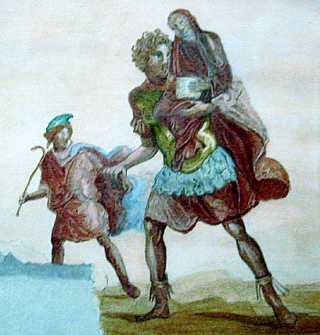
WDTPRS - 21st Sunday after Pentecost (1962): I am horrified when I hear the modernists say...Custodio, common in military language, means “to watch, protect, keep, defend, guard”. Pietas is complicated, as we have seen many times.  Obvious English “piety” comes from this, but the Latin is more involved.  Your Lewis & Short Dictionary, oddly cheap considering its usefulness, says pietas is “dutiful conduct toward the gods, one’s parents, relatives, benefactors, country, etc., sense of duty.” The classic application of pietas and the adjective pius is to the figure of Aeneas in the Latin poet Virgil’s Aeneid.  As Troy was being destroyed by the Greeks after the incident with the wooden horse, Virgil (+A.D. 19) has Aeneas carry his elderly father Anchises from the wreckage of the burning city while leading his little son along by hand.  This image of the man with his father on his back and his son by the hand perfectly expresses the duties Aeneas, future founder of what will become Rome, had toward his family, his pietas.  He was also scrupulous in relation to the gods.  So he is usually called pius Aeneas, which as you now know is far more complicated than the mere “pious Aeneas”.

Christians adapted ancient terms like this to a new context, to express new meanings. In Jerome’s Vulgate in both Old and New Testament pietas is “conscientiousness, scrupulousness regarding love and duty toward God.”  You see that the core of pietas remains “duty.”  Pietas is also one of the seven gifts of the Holy Spirit (cf. CCC 733-36; Isaiah 11:2), by which we are duly affectionate and grateful toward our parents, relatives and country, as well as to all men living insofar as they belong to God or are godly, and especially to the saints.  In loose or common parlance, “piety” indicates fulfilling the duties of religion.  Sometimes “pious” is even used in a negative way, as when people take aim at external displays of religious dutifulness as opposed to what they is “genuine” practice (cf. Luke 18:9-14).

All this is involved when we use pietas to describe ourselves, what human beings have regarding, God, family, country, etc.   But in our prayer today, we are asking God to guard us with His pietas.   When we speak of the pietas of God, we are generally referring to His mercy toward us.  While it is not strictly right to imply that God has a duty toward us, He has made promises and God is true to His promises.  We can depend on Him not because He is obliged by pietas, as we are, but because He is loving and merciful.  So, God’s pietas towards us has a different tone altogether.

I note as well that in that line from the Canon I quoted above in respect to familia, down the line a bit, we come to the Latin word devotio.  We have a form of that word in today’s Collect.  There must be a connection between the concepts of familia, pietas and devota, an adjective connected with familia.

Your L&S reveals that devoto “to dedicate, devote” as well as “to bewitch, enchant” and, in a related sense, “to invoke with vows”, and by logical extension it comes to mean “to curse”, though clearly today’s use doesn’t bear that connotation.  In the French source for liturgical Latin we call Blaise/Dumas, we find that the adjective devotus, a, um has a specially connection to devotion to service of the Lord.   We can also draw insight into what is really being said here by bringing in the force of devotio, an obvious derivative.  In classical usage devotio is “fealty, allegiance, devotedness; piety, devotion, zeal.” Devotio also means, as devoto implied, “a cursing, curse, imprecation, execration, a magical formula, incantation, spell.” Again, that is not our direction today.  Briefly, I hear devotio as “a devotion to duty”.  In that sense it picks up the meaning of pietas.  Our “devotion” leads us to keep God’s commandments and attend with focus to the duties of our state before all else.  If we are truly devout, pious, in respect to God, devoted to fulfilling the duties of our state in life truly is here and now, then God will give us every actual grace we need to fulfill our vocations. We are, in effect, fulfilling our proper role in His great plan and thus He is sure to help us.   God fulfills what He promises to us as we do our part in His plan in which He gave us a role from before the creation of the universe.

ICEL (1973 translation of the 1970MR):

Father,
watch over your family
and keep us safe in your care,
for all our hope is in you.

LITERAL TRANSLATION:

Guard your family, we beseech you, O Lord, with continual mercy, so that that (family) may be free from all adversities as You are protecting it, and in good acts may be devoted in Your Name.

This prayer speaks first of all to how interconnected we are as Catholic Christians.  By baptism, we are the adopted children of the Father.  We look to Him with the reverence of children, not merely as cowering slaves.  We belong to a family.  In the arc of our lives we have roles and states to fulfill.  Within the Church we have our manner of participation.  We are all in this together.  My strengths support yours.  My sins weaken us all.  My defeats become your concern. All our triumphs are shared as we raise them up to God.  In remembering our common bonds with each other in the Father, we must also remember a profound inequality in our bonds – children are no less members of the family than parents, but they are dependent they are not the equals of their parents.  God is not our peer.  We are not His equal.  We are all children before His gaze.

I am amused and horrified at times when I hear the modernist, progressivist types suggest that modern man is all grown up now and that we no longer have to kneel as if cowering before a stern master God.

Our prayer gives us an image that runs very much contrary to the prevailing values of the last few decades, a period in which the family as a coherent recognizable unit has been systematically broken down.  Our Latin prayers also often reflect the Church’s profound awareness of our lack of equality with God.  The prayers are radically hierarchical, just as God’s design reveals hierarchy and order.  The prayers are imbued with reverence.  Compare this attitude with prevailing societal norms.

Posted in Liturgy Science Theatre 3000, WDTPRS | Tagged , , ,
4 Comments

ACTION ITEM! POLL ALERT! “Should women be ordained deacons?” – UPDATED

Get to it!

___ ORIGINAL Published on: Oct 16, 2015 @ 09:15

I have an ACTION ITEM for you.  Perhaps other bloggers, in a spirit of collaboration, will pick this up.

You might consider going over to CRUX – again, in a spirit of cooperation! – to participate in a poll on their left side bar about the ordination of women.

–> HERE <–

As of this writing, it is on the front page, but you have to scroll down a bit and look on the left (where else) side.

15_10_16_POLL_00

As of this writing…

15_10_16_POLL_01

So, get to work!  You might ask your friends to lend them a hand.  After all, who doesn’t want a large sample for their poll?

UPDATE… 15 minutes after posting this

15_10_16_POLL_03

UPDATE 1607 GMT:

NO was up to 80.3 but it has slipped.  I think the heretics and low-information types are waking up.

15_10_16_POLL_04

A bit of humor….

I noted in the comments section for that poll – who knew there were comments for these polls? – that some of the liberals don’t like the fact that you are voting.

For example:

15_10_16_POLL_06

Followed by…

15_10_16_POLL_07

Well done, Luke.

Which leads me to advertise some of my Z-Swag!

You were originally accused of being “Zed-Heads” by one of the libs either at Crux or at the Fishwrap (who can tell them apart?). We should merrily embrace the epithet.

Here are some spiffy mugs and car magnets, to celebrate your mind-numbed minion status:

ACTION ITEM! POLL ALERT! "Should women be ordained deacons?" - UPDATED

CLICK to buy and to see more stuff!

UPDATE 2333 GMT:

15_10_16_POLL_08

GMT 0404 GMT:

From the comment at Crux.

Cristina – 1 hour ago [It is hard to deal with someone so poorly informed.]

I really find it abhorrent that the followers of Fr. Zuhlsdorf do his bidding with such unquestioning loyalty. [I wish!] This priest did not get the proper formation – something was obviously lacking in his RCIA formation and training [No, I wasnt asked to portray my life experience through macramé]. He lives and works as a total free agent, living thousands of miles and an ocean away from his bishop, having little to no communication with him, and most certainly not being supervised by ANY Catholic prelate. [Tell that to my bishop! LOL] That is not how the Church operates and is not how it was established by Jesus Christ. [Because YOU hold everything the Church teaches. Right?] Fr. Z operates as a Protestant, setting his own schedule, justifying his actions because of the current crisis in the Church – as Martin Luther did some centuries ago. [That’s what Luther did?] Pride is the deadliest sin. OK, so “Fr. Z” is fluent in several languages and “brilliant” – we get it. [No. You don’t “get it”.] He uses every opportunity to make others believe he has a superior intellect to the rest of us poor ignorant peons. [Yes.  YOU are a poor ignorant peon.  [eye-roll]  Therefore I will go easy on you here and pray for you offline. ] When will someone in Rome call this wayward priest to task? This is not how Catholic priests are supposed to behave – to just take off and set up independent shop in any jurisdiction they please, and solicit funds from the lay faithful for who knows what purpose… Doesn’t this guy have to at least give a financial accounting to someone???? [Believe me the IRS is deeply involved! Meanwhile, please sign up for a monthly donation?] Aren’t there some rules about this??? [???… !!!. ???? .. ??? … Let me add… ?!?!????!] He bans anyone who disagrees with him from making comments or giving their opinion. [No. I ban jerks.  Disagreements are fine, so long as they are not persistently pointless, heretical, ad hominem, scandalous, etc.] And Fr. Z supports wholeheartedly the schism of the Society of St. Pius X (the SSPX), [Have you ever read my blog? …. ??!?!? !?!] openly supporting the SSPX at any chance he gets – he edited their Spanish/Latin Missile for them, [I did?  I didn’t know that. Sounds like really dangerous work.] thus doing work for this illicit, breakaway group. Fr. Zulsdorf [sic] even encouraged Catholic parents to send their young children to the schismatic schools run by the SSPX. [Yah… that sounds like me. [eye-roll]] He insisted that Catholics can meet their Sunday obligation at SSPX Masses, which of course they cannot do. [Yes, they can.] Thanks for giving me the opportunity to vent. Maybe a faithful bishop will read this and decide to finally take action and reign Fr. John Zuhsdorf in, but I’m not holding my breath. [Please.  Do.] Piests seem to be able to get away with just about anything these days; there is no discipline at all.

Sad business.  In most comboxes you find the vilification of people, direct attacks on people rather than on ideas or thoughts.  I’ve edited by own interjected comments, above, since I at a few points I failed in charity… for which I apologize.  Usually this sort of thing rolls of my back, but it was a really nasty day and this sort of low-information, libelous ad hominem got under my skin.  In any event, I try to keep the combox here on a fairly even keel, deleting comments which clearly go over the line.

UPDATE 17 Oct 1507 GMT:

Have you voted today?  You might be able to vote again.

15_10_17_POLL_01

UPDATE 17 Oct 19:53 GMT:

The latest… slightly off but still showing well.

15_10_17_POLL_03

And now I see that dear old Phyllis Zagano has leapt to the defense her project!

NB: Apparently anyone who has expressed “No” to the ordination of women is “angry”.   Also, take note of that “again”. Fantasy.

15_10_17_POLL_02

Odd.  I don’t see a lot of anger in the comments in this thread, above.  Some jocularity, but no anger.

Who are the real angry folks, I wonder?

UPDATE 18 Oct:

Apparently you can vote everyday.

15_10_18_POLL_01

Posted in ¡Hagan lío!, Liberals, POLLS | Tagged , ,
73 Comments

Synod Nightmare Scenario: Card. Burke on devolution of doctrine to local bishops and conferences

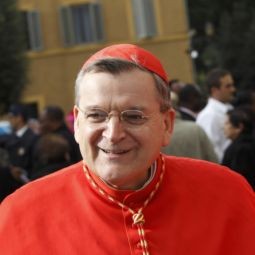
12_04_11_burkeFrom Lifesite… read the whole thing, but this is probably the most important bit.

There has been talk of devolving some decision making about various issues to regional conferences of bishops or to local bishops. That would, of course, be total disaster.

From the interview… my patented emphases and comments:

LSN: What do you make of the idea of “regional diversity” in the Church? Should local bishops have the authority on a pastoral level to deal with questions pertaining to the “social acceptance of homosexuality” and with “divorced and remarried persons?”

Burke: This is simply contrary to Catholic Faith and life. The Church follows the teaching of our Lord Jesus Christ as it has first of all been taught to us by God in the creation — what we call the natural law, what every human heart understands because it has been created by God — but it’s also then been explained and illuminated by the teaching of Christ and in the tradition of the Church.

And this Church is one all over the world. There is no change in these truths, from one place to another or from one time to another. Certainly the teaching of these truths takes into account the particular needs in each area. But it doesn’t change the teaching. The teaching sometimes has to be even stronger in places where it is more compromised. [The Kasperites and those who talk about bending the Church’s teachings (and practices) to “reality”, would indeed say that truth can vary from place place.  If they say that what might have once been true doesn’t necessary need to be true now, then why not also posit fluid truth based on location?  The German/Kasperite/Rahnerian approach replaces the philosophical grounding of theology with politics (cf. Robert Stark).  Truth changes according to shifting mores, values, etc.  To hell with reason (e.g., syllogisms).]

So, this is unacceptable. I don’t know where this idea comes from. [I have a couple ideas.] What it actually means is that the Church is no longer Catholic [universal]. It means that it’s no longer one in its teaching throughout the whole world. We have one faith. We have one [collection of] sacraments. We have one governance throughout the whole world. That’s what it means to be ‘Catholic.’

[NB] I’d also like to comment on this idea of what is “pastoral.”

In much of the discussion which has taken place, beginning with the infamous presentation of Cardinal Walter Kasper in the Extraordinary Consistory on February 20 and 21 of 2014, centered around this idea that somehow doctrine and pastoral practice are in conflict with one another.

This is absurd. [Do I hear an “Amen!”?] The pastoral practice exists to help us to live the truths of the faith, to live the doctrine of the faith in our daily lives. You can’t have a conflict [between these]. You can’t have the Church teaching, for instance, that marriage is indissoluble and then someone claiming at the same time for ‘pastoral’ reasons that a person who is living in an irregular union is able to receive the sacraments, which would mean that marriage isn’t indissoluble. These are just false distinctions — false contrasts — that we really need to clear up because it’s causing an immense confusion among the faithful and, of course, ultimately can lead people into serious error with great harm to their spiritual life and their eternal salvation.

Blessings upon Card. Burke.

Play video

Posted in Fr. Z KUDOS, One Man & One Woman, Our Catholic Identity, Synod | Tagged ,
23 Comments

Card. Arinze speaks on issues discussed at the Synod

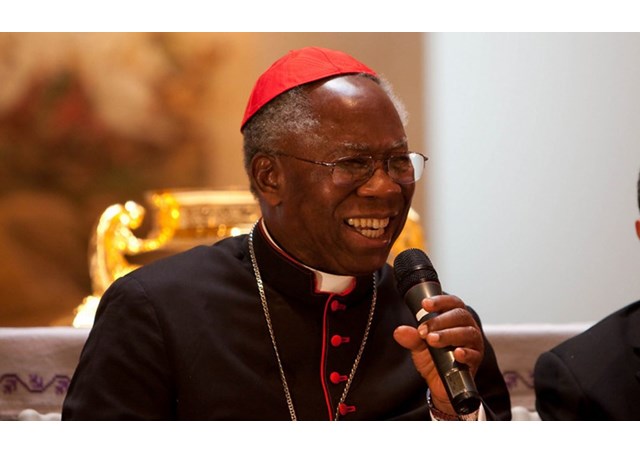
Card. Arinze speaks on issues discussed at the SynodThe formerly nearly ubiquitous John L. Allen, Jr. has an outstanding interview with the great Francis Card. Arinze, 82 year old Cardinal Bishop of Velletri-Segni and quondam Prefect of Divine Worship.  Allen dubs His Eminence as Africa’s Lion in Winter.

HERE

You should read the whole thing, but here are a couple samples.  Note the Cardinal’s unhesitating clarity.

You are convinced it’s not possible to invite divorced and civilly remarried Catholics to Communion?

That is correct, in the sense that Christ has said, “What God has joined, let no man put asunder,” and the Catholic Church traditionally has interpreted it to mean that a consummated marriage sanctified by the sacrament cannot be broken by any authority.

Including the authority of the Church?

Yes, not even the authority of the Church can break it. That being so, if a man leaves a woman or asks her to go away, or she does the same, and they get a fresh partner, that can’t be approved. Christ has one word for a person who does that: “Adultery.” We cannot improve on what Christ has said. We cannot be wiser than him, or say that “there is a circumstance he did not foresee.” We cannot be more merciful than Christ.

We must look for a way to help the divorced who are remarried, [but] we don’t help them by saying, “Come and receive Holy Communion.”

The Eucharist is not something we possess, and we can give to our friends and those with whom we sympathize …. The idea of sin is not something new invented by modern conservative people in the Church. It is Christ himself who called it a sin, and he used that word “adultery.” He knows what he’s talking about. Without departing from Christ, how can we backpedal?

Remember, only God will conduct the last judgment, not us, not even half a dozen cardinals from the Vatican. God will judge each person’s circumstances, but objectively we cannot approve [divorce and remarriage].

[…]

There has been conversation in the synod about a finding a “new language,” especially on homosexuality, meaning something that’s more inclusive and welcoming. How does that look from the African perspective?

I would be suspicious, because I would wonder what type of new language you want. Shouldn’t we call things by their name, calling good “good” and evil “evil”? We don’t condemn the person, but we don’t approve the action.

One of the duties of bishops is to teach, and it is very important that the Gospel be undiluted, without adding salt or pepper, but without subtracting them, either. The message is not ours. Christ’s message must shine clearly on what marriage is. If two men come together for business purposes, we’re not worried about that. But if they begin to call it marriage, don’t you see that it’s not all right anymore?

[NB: And now what I think is out Nightmare Scenario, one of the worst of possible products of this Synod…] Some at the synod have talked about allowing decisions on the divorced and remarried or on homosexuality to be decentralized, made at the level of regional or national bishops’ conferences or by individual bishops. How do you feel about that?

Are you going to tell me that we can have a national bishops’ conference in one country that would approve something which, in another conference, would be seen as sin? Is sin going to change according to national borders? We’d become national churches. Have there not been other religious affiliations in the world that came dangerously near to that?

National bishops’ conferences are important and should have a clear role, [a very limited role, perhaps] but I don’t think it should include these areas. It looks dangerously like nationalizing right and wrong.

[…]

There’s quite a bit more.

Posted in SESSIUNCULA, Synod | Tagged , , ,
17 Comments

SSPX priest allowed to say Mass regularly by Italian Archbishop

SSPX priest allowed to say Mass regularly by Italian Archbishop

From Eponymous Flower:

SSPX Clergy Invited to Help in Ravenna Archdiocese by Archbishop

(Rome) As auxiliary bishop of  Reggio Emilia-Guastalla (2006-2012)  Msgr. Lorenzo Ghizzoni was a bitter opponent of those faithful who sought to celebrate the Holy Mass in the Immemorial Rite of All Ages.   It was an opposition which undermined the Motu Proprio  Summorum Pontificum.

As Archbishop of Ravenna-Cervia,  Msgr. Ghizzoni is allowing, on the first and second Sundays in October, a priest of the Society of Saint Pius X (FSSPX) to celebrate the Holy Sacrifice of the Mass. 

The celebration will take place in the parish of Saint Maria del Torrione and follows from the formation of a stable group of  the faithful desiring the Traditional Rite, who’ve asked the Archbishop for it.

The celebrant was Father  Enrico Doria of the priory of  “Madonna di Loreto” in Rimini.

The online edition of the paper „Prima Pagina Reggio“ described it: “It seems that Pope Francis’ recognition of the legitimacy of the sacrament of reconciliation given by lefebvrian priests has also quickly led to a new course in the Italian Episcopate.  This, what was unthinkable yesterday, (the opening of parish property to Lefevrians, who had previously been regarded as lepers), are today not only tolerated but welcome.  Those of the faithful community close to Econe will celebrate, but also all other faithful of the Catholic Church, we are convinced, will make use of this.”

Msgr. Lorenzo Ghizzoni was named in Dezember 2012 by Pope Benedict  XVI. as Archbishop of Ravenna and enthroned in January 2013.

That’s interesting.  I know of at least one case like this from way before Summorum Pontificum.  But this is interesting.

It is unusual for a priest who has been irregularly ordained to be given permission to offer (technically, an illicit) Mass. There’s no indication in the article whether the archbishop has given him faculties, or is merely permitting him (looking the other way?) to offer Mass and permitting the faithful to attend.

This smacks of that gray chaotic area Pope Francis seems so fond of.

If it were to come out that the archbishop gave him faculties, then we’d be in a very interesting canonical ballpark.  It would likely have to be cleared through the Holy See and whatever irregularities that exist would need to be lifted (perhaps by the Pont. Comm. “Ecclesia Dei“).

Since he would have been ordained without proper dimissorial letters, he would have been ipso facto suspended from the exercise of Holy Orders (can. 1383). This suspension is a censure which presumably prohibits the licit celebration of the sacraments (can. 1333) and prohibits the reception of stipends and demands the return of those stipends even if they had been given and received in good faith (can. 1333, 4). This suspension would need to be lifted. It does not appear that this censure is reserved to the Holy See.  Therefore a bishop could probably lift it for one of his subjects, but only if that subject has purged his contempt (can. 1347, 2 and can. 1358, 1). This also might possibly require adjuration of the impaired communion the SSPX is currently in, as well some indication of a desire to return to the full, unimpaired communion enjoyed by other priests.

Posted in Priests and Priesthood, SSPX | Tagged , , , , ,
19 Comments

Card. Burke: “Yes, I’m a fundamentalist”

Card. Burke: "Yes, I'm a fundamentalist"

Click to buy in English

In Italian bookstores a new book by Card. Burke has appeared in Italian: Divino Amore incarnato – La santa Eucaristia sacramento di Carità (Cantagalli). This is the Italian translation of His Eminence’s Divine Love Made Flesh.

For the occasion, the Italian Il Foglio interviewed Card. Burke.  A few snips with my translation:

Card. Burke: “Yes, I’m a fundamentalist”

“I’m open to the world, but I insist on the fundamental things.  Like the Eucharist.”  Thus says Raymond Card. Burke.

“The Church must be clear on her identity.  If, for ‘fundamentalist’ one means someone who insists on the fundamentals, I’m a fundamentalist.  As a priest, I don’t teach for myself and I don’t act for myself.  I belong to Christ.  I act in his person.  I teach only what He teaches in His Church, because this teaching will save souls.”

[…] Burke says quit labeling, which “is a way to discount a person and to not consider the truth which he teaches or what he does.  I am a Roman Catholic, I hope to be so always, and, at the end of my earthly life, to die in the arms of the Church.”

[…]

Card. Burke: "Yes, I'm a fundamentalist"

The position of Card. Kasper is not reconcilable with the teaching of the Church on Holy Communion and the indissolubility of matrimony.  Certainly, the Most Holy Sacrament is for sinners – which we all are – but for repented sinners.  A person who lives in an irregular union is bound to another in marriage, and therefore lives publicly in the state of adultery, according to the clear teaching of the Lord in the Gospel.  So long as the person in the irregular union, that is in the context contrary to the truth of Christ in matrimony, does not correct his particular situation, he can’t draw near to receive the sacraments because he has not manifested the repentance necessary for reconciliation with God.

[…]

If the Church were to permit the reception of the sacraments (even in a single case) by a person who is in an irregular union, that would mean that either matrimony is not indissoluble and this the person is not living in a state of adultery , or that Holy Communion is not communion in the Body and Blood of Christ, which instead requires the proper disposition of the person, that is, repentance about grave sin and the firm resolution to sin no more.

[…]

Many priests and bishops tell me that many people who are living in irregular unions are convinced that the Church has changed her teaching and, therefore, they can receive the sacraments.  In a large city that I visited last May, at the main door of a parish church there was an poster that said that in that church the divorced and remarried had access to the sacraments.  In certain countries, it seems that various bishops have simply decided to admit to the sacraments whoever is in an irregular union.

[…]

There is no doubt that the confusion in the Church is great, and that Church, for the good of souls and for her faithful testimony to Christ in the world, must affirm clearly her perennial teaching on the indissolubility of marriage and on Holy Communion.

[… I’m cutting a lot…]

He went on to explain that the way of saying Mass that is centered on the priest and congregation rather than the real presence of Christ has added to the difficulty we face.

He speaks of the contribution of the African Church right now.

Then… smiling…

I am entirely open to the world and I am full of compassion for the situation of our world, which is confused and in error about the most fundamental truths: the inviolability of human life, the integrity of matrimony and its incomparable fruit, the family, religious liberty which is the expression of the irreplaceable relationship of man with God.  For this motive, I embrace the world with true compassion which offers to the world the truth in charity.  I’ve discovered, during the 40 years of my priesthood, that what man (even secular man) awaits from the priest is Christ,

There’s more.  I suppose the whole thing will be converted into English one of these days.

Fr. Z kudos to Card. Burke!

Posted in Fr. Z KUDOS, Our Catholic Identity | Tagged
17 Comments

The Left seems to win constantly. What would happen if…

At Radical Catholic there is a post about Newark’s Archbp. Myers’ recent letter to his priests about the fact that people in mortal sin shouldn’t receive Communion.

To what point have we finally arrived when a bishop has to send such a memo to his parish priests?  O tempora….

If you go over there, take note of the unhinged goofy musings of Prof. Reid at the Univ. of St. Thomas in my native place, the Twin Cities.  But I digress. Canonist Ed Peters takes Reid apart HERE.

Radical Catholic made a point worthy of discussion:

Perhaps one reason why the progressives always seem to have the upper hand is that the Hegelian dialectic is set up to grind conservative resistance into dust. If the only directional force being exerted is leftward, why be surprised at the continual leftward drift? So, what would happen if we changed things up by proposing something radically conservative – restorationist, even? For example, what would happen if a Cardinal or Bishop at the Synod started proposing that we require penitents to declare their mortal sins publicly before the entire congregation, kneel in the back during the Mass of the Catechumens, and then leave the Church before the start of the Mass of the Faithful? This was a common practice during the early medieval period, after all. If it was good enough for St. Theophilus, it’s good enough for us, right? Maybe then the Church’s present practice would reveal it’s true character: as merciful as possible without overtly condoning sin. Or, conversely, maybe the cilice would make a comeback….

Discuss.

One possible point of consideration is the fact that conservatives and trads seems constantly to be bickering among themselves, fighting over their tiny little wrinkle of ground.  Thus, divided we don’t band together to get done what needs doing.  Divided, we fall.  Instead, what would happen were we to put aside our small differences and work more collaboratively?

A storm is on the horizon and our efforts are not well focused.

Posted in ¡Hagan lío!, "How To..." - Practical Notes, Cri de Coeur, Hard-Identity Catholicism, Semper Paratus, The Campus Telephone Pole, The Coming Storm, The Drill, The future and our choices | Tagged
53 Comments