A new Archbishop for Denver

Denver has a new Archbishop: His Excellency Most Rev. Samuel Aquila, formerly of Fargo.

We have read about him quite a few times here.

You may remember that during this round of ad limina visits, the Holy Father received well certain propositions that Archbishop Aquila made about the ordering of the Sacraments of Initiation. HERE.

I am confident that you will stop and say a prayer for Archbp. Aquila.


Posted in The Campus Telephone Pole | Tagged ,
44 Comments

More beautiful art from Daniel Mitsui! Five new color prints, including Pentecost, Christ the High Priest (think “ordination gifts”!)

I have written several times about the art of Daniel Mitsui.

For Mr. Mitsui’s site click HERE.

He has sent me a few more things, this time from a series of drawings for the Holy See’s Vox Clara Committee (the translation liaison with the Congregation for Divine Worship) for use as illustrations in the interim edition of the Roman Pontifical.

The originals, he informs me, were in colored calligraphy on Bristol board in a style influenced by 15th century panel paintings, tapestries and incunabula from N. Europe.

Here is a view of the Pentecost scene.

20120526-143522.jpg

A detail.  I am using my iPhone.

20120526-143530.jpg

St. Augustine is at the top right.

20120526-143537.jpg

The Last Supper.  You see the words Hoc est enim corpus meum in the corners and there are prefigures on the edges.

20120526-143543.jpg

There is so much going on and each element is well thought out and well attested in the history of art.

Judas doesn’t get a halo, but he has his bag of money.

20120526-143550.jpg

The wise virgins seems squared away.  They have nice bright lamps and are properly dressed for the wedding banquet and the Bridegroom.  There is nice angel with them.

20120526-143607.jpg

The foolish virgins… not so much.  No flames, poorly dressed.  They get a creepy devil and some large critter which looks quite willing to chomp on them.

This is what I imagine the LCWR Assembly is like.

20120526-143614.jpg

Christ the High Priest seems appropriate for today!

20120526-143620.jpg

A detail of the Lord’s feet.  Notice the elements on the globe.  Subtle. Very cool.

20120526-143626.jpg

I think we could have a little discussion about what all that means.

I am shooting through the plastic cover, btw.

The Presentation.

20120526-173046.jpg


The Crucifixion.

20120526-173039.jpg
They are all 8.5″ x 11″ color glicee prints using pigmented inks on acid-free rag paper.

He is selling them for $80 each or $320 for the set of five, plus shipping.

The print of Christ the Priest would be an EXCELLENT gift to a newly ordained priest or to a priest or bishop for his Jubilee.

The Presentation would be a nice gift to a woman religious.

I am sure you could find other occasions or reasons.  For example, someone interested in the charismatic movement might like Pentecost.  The Crucifixion would be good as a private devotional picture in a place where you habitually pray.  The Last Supper would be good on the wall of a dining room in a family home.  Individual prints or a set could be donated to a parish for an auction.

Think of your own!

Mr. Mitsui’s site is HERE.


Posted in The Campus Telephone Pole | Tagged
32 Comments

QUAERITUR: I don’t know if the priest gave me a penance during confession. Are my sins forgiven?

QUAERITUR: I don't know if the priest gave me a penance during confession. Are my sins forgiven?From a reader:

Father,
I went to Confession this weekend and the confessor was a man with a very thick [FOREIGN] accent. On top of that, while pronouncing the absolution he seemed… a little out of it (that sounds like a bit much to me, but it’s the best way I can describe it). He ended with ‘thank you, have a nice day’ before I had a chance to say an Act of Contrition, and I also couldn’t tell if he gave me any penance (in hindsight, I should have asked, but I was rather surprised by the brevity of the exchange, and it was also only my third confession; I prayed 1o Hail Mary’s just in case).

My question, then, is whether the Rite of Reconciliation requires the act of contrition by the penitent or the giving of a penance by the confessor (cf. can. 981)?

I love this.  It was your third confession and you quoting canon law like a vet.  Well done!  I like informed Catholics.

I have written before about the matter of validity of absolution even if you do not do the penance assigned during confession.  HERE.

Nevertheless, it is clear in the Latin Church’s law that the confessor is to give penances.  If he doesn’t give one, the absolution is still valid.

That said, let’s go over a few things.

We are obliged to do penance for sins that we have committed.  This is a matter of justice.

That said, the imposition of a penance is not required for validity of the absolution.  In normal circumstances it should not be omitted.   I can envisage situations when I as confessor would not give a penance, as when I am absolving an injured teen in an overturned car while the emergency teams are cutting it up with the saw to get him out.   Another moment might be when I have, with some difficulty, heard the confession of native Hmong speaker having only a few words in English or French, with no translator or even book to point to.  Rather than make the situation an ordeal, a confessor might just be confident in the penitent’s sincerity, absolve, and send the frustrated fellow on his way, satisfied that the confession itself was a penance.

Also, some confessors keep track of the penances they give penitents and then do them themselves afterward.

In the situation you describe, considering the linguistic difficulties, it may well have been that the priest imposed a penance but you did not understood.

In normal circumstances, when you are not sure about the penance and you and the confessor are communicating reasonably well,. you can always ask for a clarification when in doubt.   “Father, I didn’t understand the penance.  Could you repeat it, please?”

But that’s water under the bridge at this point.

People will, once in a while, forget the penance that was assigned.  This can happen when some well-meaning priest assigns one of those loopy, long, open-ended penances, such as, “Read the seventh chapter of the Second Book of Kings and spend some time under an elm tree counting ladybugs while you think about the impact your use of fossil fuels has on the environment.”

In those cases, just substituted some good work, as you seem to have done.

Going to confession the next time you could say that you didn’t do an assigned penance because you didn’t understand it, forget it, couldn’t do it.. whatever… and that you, instead, substituted 10 Our Fathers and 10 Hail Marys.

In the meantime, rest confident in the fact that your sins were forgiven.   You can receive Communion without any qualms on that point of the penance.

Posted in "How To..." - Practical Notes, ASK FATHER Question Box, Liturgy Science Theatre 3000 | Tagged , , , , ,
12 Comments

Is it easier to pray in your car in the parking lot than in church before or after Mass?

Today on the digital, full version of the UK’s best Catholic Weekly, The Catholic Herald (to which you can subscribe from anywhere in the world), I found a good letter to the editor, an image of which I post, below:

Is it easier to pray in your car in the parking lot than in church before or after Mass?

“But Father! But Father!”, some of you are saying, “This fellow sounds like an old curmudgeon.  Isn’t church our Father’s house?  Shouldn’t houses be filled with life and activity and, yes, the chatter of the Father’s children?  Vatican II said we ought to talk in church! You are mean and so is he.  We are Church and community no matter what you papist throwbacks want.  You hate Vatican II and I’m a Eucharistic Minister!”

In the face is such reasoned objections, how can I respond?

I’ll bet YOU can!

Posted in "But Father! But Father!", "How To..." - Practical Notes, Liturgy Science Theatre 3000, Our Catholic Identity, The future and our choices |
73 Comments

France: Muslims enter church, throw rocks during mass

I picked this up from the blog Etheldreda’s Place of frequent commentator here, Supertradmom.

You know, these days there just aren’t enough girls being named “Etheldreda”.

In any event, take a look at this, which I lifted from the aforementioned.  Go visit there, too:

Pay attention Christians in France–you voted for this…

[…] France: Muslims stone Christians in church during mass

No one will take much note of this. It is just one story among the thousands that together tell the tale of France’s decline and Islamization. Eurabia Update: [Eurabia was not coined by the provocative Oriana Fallaci, but she popularized the term…] Here is my translation of “Carcassonne Des fidèles caillassés pendant la messe à Saint-Joseph,” by Yannick Bonnefoy in Midi Libre, May 27 (thanks to David):
Carcassonne: The faithful stoned during Mass at St. Joseph

Yesterday at 6:20PM, as Fr. Roger Barthes began to celebrate mass, four youths, aged 14 to 18, broke into the Church of St. Joseph, before launching handfuls of pebbles at 150 faithful present at the service. Immediately, men began pursuing the young troublemakers, but in vain. They managed to vanish into thin air, heading towards the city La Conte.
Interrupted by regrettable unexpected event, Mass was finally able to proceed as planned. Although no one was injured and nothing was broken in the church, located along the Avenue Jean Moulin, the parishioners, many of whom are elderly, were greatly shocked by the disrespectful act of the youths of North African origin….

and from a comment on the website, “North African origin”—read, “Muslim”.

Carcassonne has been under Muslim conquest before. In 725, the Wali Ambisa took the city following the Islamic conquest of the Visigoth kingdom of Spain. The city remained in the hands of Muslims until 752, when it was freed by the Franks led by Pippin the Short.

Can you imagine the crazy hell that would break loose if some Christian kids had thrown rocks at Muslims in a mosque during prayer?

“But Father! But Father!”, some of you Fishwrapers are saying, “Pebbles? Really?  You are going to make a big deal about young people throwing pebbles?  Muslims “stone” Christians?  Really? Exaggeration!”

When someone has rocks thrown at her, she is being stoned.  Pebbles are rocks.  Young people grow up.  When they do, they can throw grown up rocks.

If these little darlings are willing to go into a church to do this, and not even just stand outside before or after Mass, they are already well on the way to being radicalized.  A young person, impressionable, passionate, these days often dumb, can be convinced by someone to press a button.

Most liberals don’t get what is happening in some parts of Europe.  There are areas of some cities where the police will no longer go without serious, practically military, support.

Sts. Nunilo and Alodia, pray for us.

Posted in The future and our choices, The Last Acceptable Prejudice | Tagged , ,
26 Comments

Very Cool Stuff: A dad and IRLP (that’s Ham Radio lingo) and panning for gold

As some of you know, I have been studying for my Ham Radio license.  I am squared away with the Technician’s License material and could do that exam at any time, but right now life is really – excuse the pun – up in the air.  I decided to delay it.  In the meantime, I am acquiring some Morse Code skills and soaking in the General material.

In digging around on the internet about Ham Radio I found useful videos from a couple good YouTube sources.  One of them is USNERDOC, a man in Oregon who is still a fairly new ham (KF7ETX) and is also interested in preparedness. His handle suggests that he was in the Navy, perhaps is in the reserves, and is in emergency medicine.  He has, as a matter of fact, a cottage company dealing with emergency medicine. He has become part of a volunteer network of ham operators who could help out in the case of an emergency, such as a natural or man made disaster.  His videos are really helpful, because he explains what he is doing and how he does it.  Also, he often uses a handheld radio which one of you readers gave me.

I have had the growing idea of taking a few emergency medicine courses and then perhaps connecting with one of these volunteer ham networks (which are everywhere).  It could be good to have a priest involved for those Really Bad Times not to mention TEOTWAWKI.

QUAERITUR: Will it be even easier for the newly formed Civilian National Security Force to hunt me down when the the First Gay President becomes President for Life?  At the rate our first freedoms are being eroded by this administration, and with the global economy the way it is, and after what I have written and said and what I stand for ….   Okay, enough with that digression.

In any event, below is a video USNERDOC did which shows how he used his little handheld radio with an external mag-mount antenna (the type you could put on your car) affixed to a metal cookie sheet (yes, you need to put in on a metal surface for it to work properly), to RF to a repeater and then using internet radio linking connect to another ham who, in turn was connected by RF to a repeater.  Very cool.  He mentions that this could be useful where cellphone signals are weak (which is a problem in some places, you know, despite what the commercials say).

I also love the fact that, as a father, he is introducing his son to really cool stuff (including panning for gold!) and is enjoying his son’s enjoyment immensely.  He just can’t help going off on a tangent about his son because he is just so jazzed about what the kid is doing.  How great is that?

It is important for kids to be exposed to Very Cool Stuff.  It sparks their imaginations and expands the interests way past the horizon.

In any event, here is the video.  If you are not into the subject matter, you can at least enjoy that he is a mensch.

73s

[wp_youtube]CyoVCXP4pKY[/wp_youtube]


Posted in "How To..." - Practical Notes, Ham Radio, Just Too Cool, TEOTWAWKI | Tagged , , , ,
11 Comments

7 October: Sts. John of Avila and Hildegard of Bingen to be proclaimed Doctors of the Church

7 October: Sts. John of Avila and Hildegard of Bingen to be proclaimed Doctors of the ChurchFrom VIS:

ST. JOHN OF AVILA AND ST. HILDEGARD OF BINGEN TO BE PROCLAIMED DOCTORS OF THE UNIVERSAL CHURCH

Vatican City, 27 May 2012 (VIS) – After celebrating Mass this morning in the Vatican Basilica for the Solemnity of Pentecost, the Holy Father appeared at the window of his study to pray the Regina Coeli with pilgrims gathered in St. Peter’s Square.
Before the Marian prayer the Pope announced that on 7 October, at the start of the Ordinary Assembly of the Synod of Bishops, he will proclaim St. John of Avila and St. Hildegard of Bingen as Doctors of the Universal Church. “These two great witnesses of the faith lived in very different historical periods and cultural environments”, he said. “Hildegard was a Benedictine nun during the height of the German Middle Ages, a true master of theology and a great scholar of the natural sciences and of music. John was a young diocesan priest of the Spanish Renaissance, who participated in the travails of the cultural and spiritual renewal of the Church and society at the dawn of the Modern Age”.
The sanctity of their lives and the profundity of their doctrine mean that these two saints “retain all their importance. The grace of the Holy Spirit enabled them to experience profound understanding of divine revelation and intelligent dialogue with the world, two factors which represent the perennial goal of the life and activity of the Church”.
St. John and St. Hildegard are particularly significant on the eve of the forthcoming Year of Faith, and in light of the new evangelisation to which the Synod of Bishops will be dedicating its attention. “Also in our own day, and through their teaching, the Spirit of the risen Lord continues to make His voice heard and to illuminate the path which leads to the Truth, which is the only thing that can make us free and give full meaning to our lives”, the Pope said.

[…]

Another item to update in the traditional Roman calendar!

Posted in Saints: Stories & Symbols, Year of Faith | Tagged , ,
6 Comments

Any Good News?

What is your good news these days?

Posted in SESSIUNCULA |
31 Comments

Your Sunday Sermon Notes

Were there some good points in the sermon you heard for Pentecost?

Let us know what they were.

Posted in SESSIUNCULA |
24 Comments

A Sunday afternoon riff on salty bread and Chinese noodles

I am enjoying a break in my evening for a bit of frivolous entertainment. I was going to watch Bladerunner, but opted for something considerably lighter.

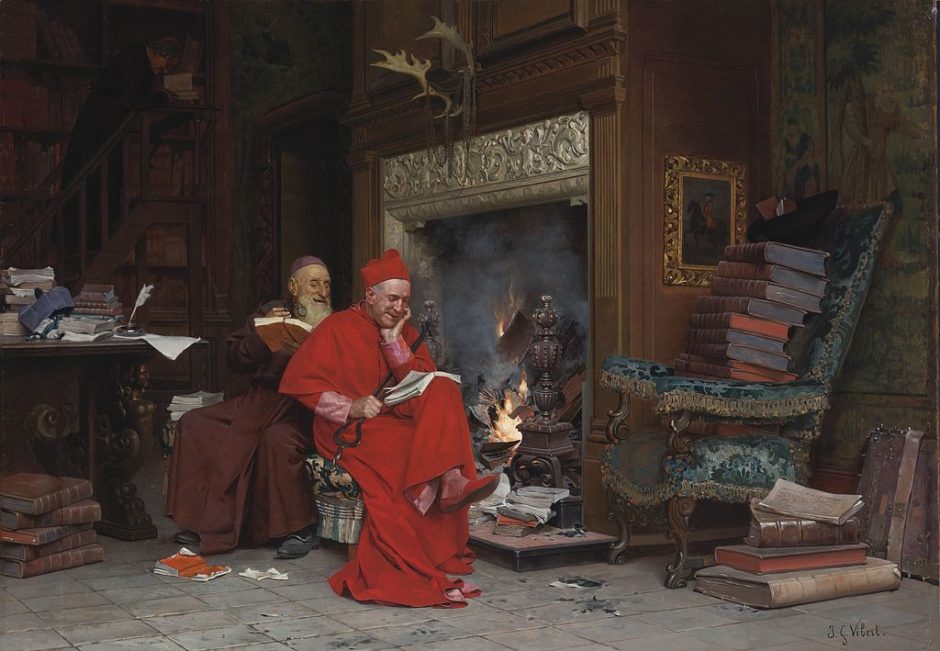
However, in a moment of post-modern self-conscious connection-making I’ll make a connection between this great quote from the movie I am watching and another quote from a favorite work.

First,…

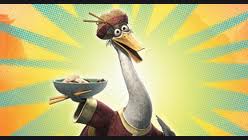
Mr. Ping: Of course. Of course. You have a job to do. Far from home. In a strange city, filled with strange people and strange noodles. Facing horrible danger from which you might never return!

Connect that with:

Tu lascerai ogne cosa diletta
più caramente; e questo è quello strale
che l’arco de lo essilio pria saetta.

Tu proverai sì come sa di sale
lo pane altrui, e come è duro calle
lo scendere e ’l salir per l’altrui scale.

Thou shalt abandon everything beloved
Most tenderly, and this the arrow is
Which first the bow of banishment shoots forth.

Thou shalt have proof how savoureth of salt
The bread of others, and how hard a road
The going down and up another’s stairs.

Okay, that was a downer.

A Sunday afternoon riff on salty bread and Chinese noodlesAnd, now that I look at the two, the first doesn’t really have all that much to do with the second, …

… except for the point that when you eat unfamiliar food you are more acutely aware that you are not in your native place.

The Florentines of Dante’s time didn’t use salt in their bread. Eating salty bread, therefore, becomes a symbol of the pain of exile.   In a similar way, by muscle memory we get used to stairs being of a certain measure, and we learn the feel of the places where we live.  When you lose your home and are forced to go to another place, well…. the bread is salty and the steps are hard to climb. Wherever you are, it is someone else’s.

Mr. Ping isn’t really talking about exile, in the sense that he is being driven from his home, but he is talking about being separated from someone he loves.  We are restless when we are apart from that which we love.  For Christians, this whole world is out of our comfort zone in fundamental ways.  We are apart from love, in a strange city, the City of Man.  We are in exile trying to get to where we truly belong, where there is vera iustitia, verus amor.

(I’m just multitasking here as I watch the fun eeeeevil peacock.)

Many of you were taught by the sisters in school to avoid the company of bad friends.  We can lose our way and stray from the right path.  We can be deceived away from the way by bad friends.  We are surrounded by dangers in our exile, dear reader.  All created things, in way, are false friends who take us to parts unknown, where you find strange noodles.  If we aren’t careful, we can be seduced by strange noodles.

We can, in fact, lose what Christ won for us.

Let me noodle this a bit more.

Since Mr. Ping mentioned strange cities, and Augustine wrote the City of God, I’ll stick with Augustine.

Augustine, knew by his science of his age that the weight of a thing was caused by an interior property constantly seeking to go to the place it belongs.  That is why Augustine said, “pondus meum amor meus… My weight is my love.” (conf. 13)  Our hearts can’t be at peace when given over to any created thing.  They will strive to go to God.

In his Confessions Augustine wrote that we are always going to be restless if our hearts are given over to something created.   “Fecisti nos ad te et inquietum est cor nostrum donec requiescat in te. …You have made us for yourself, O Lord, and our hearts are restless until they rest in you.” (conf. 1)

In this world our hearts imperfectly in harmony with God and some of us is apart from us and from Him.  We won’t truly be at rest until we enjoy the sight of God the Holy Trinity in the Beatific Vision of heaven.   We are in exile here in this life.  Our true homeland is elsewhere.  Augustine often refers to our returning to the patria, our true fatherland.  He gives us a pointer about how to get there in a sermon:

Qui ergo tanta potuit, esurivit, sitivit, fatigatus est, dormivit, comprehensus est, cæsus est, crucifixus est, occisus est. Ista est via: ambula per humilitatem, ut venias ad æternitatem. Deus Christus patria est quo imus: homo Christus via est qua imus

He who was capable of such great things, hungered, thirsted, was weary, slept, was taken, struck, crucified, slain. This is the path: walk in humility, that you may come to eternity. Christ, God, is the fatherland to whom we go: Christ, man, is the path by which we go. (s. 123)

If Christ walked that hard path to open that path, we must walk that hard path to attain the goal He won.  He is both the goal and means to get there.  He did what He did in humility.  We must do what we do in humility.  He explicitly gave us His Holy Church and the sacraments as the ordinary means by which we can already be with Him which still going to Him.  The Church is His way for us to both walk by Him and to Him.  We must stick to the path on which Holy Church guides us.

This is all made possible by the indwelling of the Holy Spirit, who breathed life into the Church on that first Pentecost and who makes our hearts His own dwelling in baptism, confirmation and the Holy Eucharist.  Apart from the indwelling of the Holy Spirit, the state of grace, we are lost and there can never be true rest for the heart.

Enough riffing.

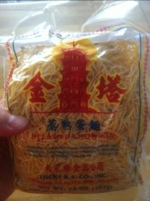
20120527-185010.jpgIn any event, that is how I got from Mr. Ping noodle shop to Augustine’s Christus via et patria.

I shall now make some Chinese noodles and enjoy the final moments of the eeeeevil peacock.

BTW… did you know that in ancient Christian art the peacock was a symbol of eternal life?  The ancients thought that peacock flesh didn’t decay, and so it was a symbol of immortality.

Moreover, the use in the movie – and I am sure you know which one it is by now – of animation based on Chinese paper shadow puppets was really cool.  I first saw them in the Zhang Yimou film To Live (UK HERE… great movie… book, not so much…).  Fun moment: the sight-challenged bunny playing the pipa during the battle in the square, a topos in wuxia, I think, blind musicians and battles, such as the great moment in another film by Zhang Yimou, Hero, (UK HERE) in which Nameless and Long Sky fight a battle in their minds as if rains while a blind man plays a guqin.

And to bring this full circle, the actor who did the voice of Mr. Ping – also born in my native place of Minneapolis was also in Bladerunner!

Have a lovely Sunday rest on this beautiful feast of Pentecost.
A Sunday afternoon riff on salty bread and Chinese noodles

Posted in Fr. Z's Kitchen, Patristiblogging, Random Thoughts, Wherein Fr. Z Rants | Tagged , , , , ,
9 Comments