QUAERITUR: A convert hungry to learn more

Catechism of the Catholic ChurchFrom a reader:

Now that I have been a Catholic for one year, I am finding that I am still thirsting for info on Catholic doctrine. I read all I can but at almost 60 I am finding it overwhelming. I am raising an 8 year old grandson who was baptized at the same Easter Vigil as my confirmation last year. The Parish that I am going to at the moment is very large, and the smaller ones have no kneelers and seem foreign to me. Please recommend somethings I can do to get a better understanding of my new faith.

Faith seeks understanding.

We always seek to know more about the things or people we love.

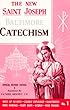
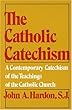
Fr. John Hardon, SJYou might try, for yourself, the Catechism of the Catholic Church, or its Compendium.  Also the Catholic Catechism by the late, great Fr. John Hardon is good for adults.  To help with the instruction of your grandchild, to give you ways of putting things in way he can understand, you could look at editions of the Baltimore Catechism, even perhaps finding a way to make a game of memorization (good for you too).  There are different editions of the Baltimore Catechism.  You can find the one that is age appropriate for an 8 year old.  Perhaps a reader here can chime in on which one that would be.  There is also My Catholic Faith, a wonderful book.

BTW… I my own conversion process I used Fr. Hardon’s book.  Very useful.

If there are any readers who were, shall we say, already “seasoned” when they came into the Catholic Church, perhaps they especially could offer some observations.

Posted in "How To..." - Practical Notes, ASK FATHER Question Box, New Evangelization, Our Catholic Identity | Tagged , , ,
41 Comments

Terry Hatty with Marcus Grodi

Many elements of this man’s journey cross with my own.

I once had a Guild.  I still have a 6 string Bozo Bell.  My case has stickers from many countries.

Would it surprise you that I busked through Europe for months?

I still have my 12, but someone stole my Asturias, may his soul fry in the deep cinders of hell… unless it helped to save his (pernicious thieving) soul.

Once I had some real game with the wood and metal.  I maintained a long thumbnail for a long while and still understand superglue.

[wp_youtube]ZzNF4wnVTKY[/wp_youtube]

Posted in Just Too Cool, Our Catholic Identity | Tagged ,
11 Comments

Starship Supper … awful… wonderful…

There is a reader here who really liked the 1997 movie Starship Troopers.

It was incredibly loosely based on the Heinlein novel we oooolllld people read when we were kids.  And when I say loose, I mean loose.

There is now a sequel to this really bad but engaging flick.   It’s reallllllly bad.  So bad, it’s good.  It even ridicules prayer!  I feel persecuted.  And the women are tougher than the men.

Why are women in flicks now always tougher and better killers than men?

In the meantime I had supper.

Since people were complaining, and since I am within the penumbra of my anniversary, I did a little more.

Pre-Supper, a couple ounces of JWBlack on ice.  I would rather have had a Lagavulin 16.

First, on-sale-Brussels-sprouts.

20110521-093316.jpg

Then, I whipped up some Bearnaise, though I had to use dried Tarragon from the fall.  It was still aromatic and inspiring.

20110521-093326.jpg

Then, I pulled from the oven the pork loin I started a couple days ago and which I marinated in serious peppercorns and ranch dressing.

20110521-093335.jpg

Rare.

I made Freedom Fries… crispy.

20110521-093345.jpg

Roast loin of pork, marinaded in ranch dressing and peppercorns, steamed Brussels sprouts, crispy Freedom Fries, Bearnaise sauce.

With a great S. American Trappiche Bonarda.

This was good, even if I say so myself.

Dessert?  None.

I’ve been eating little more than sandwiches and salad and soup for a while.  I lost my interest in cooking.  Trying to get it back.  Spring helps.

This pork loin, friends, was so good… the Bearnaise was so good… I was tempted to cut it like potato chips and eat the sauce like dip.

Posted in Fr. Z's Kitchen | Tagged ,
41 Comments

UPDATE: TLM with female servers at U. Cambridge v. Universae Ecclesiae 28

The Instruction on Summorum Pontificum called Universae Ecclesiae, in paragraph 28, excludes service at the altar by females for the Extraordinary Form.

You will recall that the chaplain at the University of Cambridge’s Fisher House, Fr. McCoy, decided to have celebrations of the Extraordinary Form of Mass with service at the altar by female servers.

A one time event at Cambridge?

I received this today:

I regret to tell you that the Chaplain of Fisher House, University of
Cambridge, said a Mass in the Extraordinary Form this evening and once
again used female altar servers
, despite paragraph 28 of Universae
Ecclesiae. Can I please ask for your prayers that Fr McCoy may be made
to see the pain and hurt that his actions are causing. I also ask you
to pray for him.

The Pontifical Commission “Ecclesia Dei” has competence in this matter.  If there is a conflict about the provisions of Summorum Pontificum or the points of Universae Ecclesiae which have the force of law (paragraph 28 is one of them), then the PCED will have to make some ruling.

Pray for those involved.

Posted in "How To..." - Practical Notes, 1983 CIC can. 915, Liturgy Science Theatre 3000, SUMMORUM PONTIFICUM, Universae Ecclesiae | Tagged , , , , , , ,
71 Comments

Mickens of The Pill K.O.’s “Universae Ecclesiae”!

Robert Mickens of The Pill (aka The Tablet aka RU486), found something really wrong with Universae Ecclesiae, something truly disturbing.

Some puir slow-witted gowk in the CDF or Pontifical Commission “Ecclesia Dei” screwed up the title or “incipit” of the Instruction on Summorum Pontificum entitled Universae Ecclesiae!

I can hardly bring myself to write, so struck am I with confusion.  Just read:

Someone at the Congregation for the Doctrine of the Faith (CDF) seems to have slipped up. Or perhaps it was an official at the Pontifical Commission Ecclesia Dei (PCED), which Pope Benedict XVI connected to the doctrinal office a few years back.

It would appear that no one in either office checked the index of names of Vatican documents – not even those issued relatively recently. If they had, they would not have called the new PCED “instruction” Universae Ecclesiae (UE).  [Well! There it is.  That’s the knock out punch, isn’t it?]

Vatican documents are usually named for the first couple of words in the opening line of the official Latin text and John Paul II issued a document back in 1984 with that same name. Yes, Universae Ecclesiae (or perhaps we should we now call it UE-I) is the title of an apostolic letter the late Pope issued on 6 May of that year to mark the canonisation of the 103 Korean Martyrs. It is quite surprising that this could have slipped the attention of the PCED officials, especially since apostolic letters of the popes carry greater authority than instructions issued by commissions.

But there is a simple way to save face and try to make a clearer distinction between the two texts in the future – just add the third word of each document’s opening sentence to their respective titles. The new instruction would thus be referred to as Universae Ecclesiae Litterae (UEL), whereas the 1984 apostolic letter would be known as Universae Ecclesiae Gaudium (UEG). It’s not the most elegant solution, but it would bring clarity. [I’d be satisfied with the clarity resulting from people reading it and following it. But there’s more…] This probably could have been avoided in the first place if other Vatican departments had been given an opportunity to see the new PCED instruction before it was issued. [Think about that.] But this does not usually happen with documents issued by the commission or the CDF.

The problem is, there is no rule that an incipit cannot be repeated in another document.  It happens now and then and it is no big deal.

A rapid glance at the index of documents in Denzinger-Schoenmetzer reveals this:

  • Benedictus Deus: used by both Benedict XII and Pius IV
  • Consideranti mihi: Gregory I, Agatho
  • Cum sicut accepimus: Pius II, Innocent XI
  • Ex parte tua: Innocent III used it twice
  • Humani generis: Pelagius I, Pius XII
  • Inter ea quae: Hormisdas twice
  • Pastoralis officii: Clement XI, Leo XIII
  • Regimini universalis: Martin V, Callixtus III
  • Romanus Pontifex: Pius V, Paul V
  • Ubi primum: Benedict XIV, Leo XII, Pius IX twice
  • Universi dominici gregis: Gregory XV, Clement XI… Bl. John Paul II.
  • Vas electionis: Pelagius I, John XXII

Et cetera.

The Third-Word-In-The-Sentence Solution is why the 1988 Motu Proprio is sometimes called Ecclesia Dei adflicta: there are heaps of old documents starting with Ecclesia Dei.  Another reason is that many people like to underscore that the Church has been afflicted with something.  Sometimes titles point to the purpose of the document.  The title of this Instruction drives home an important point.  The provisions of Summorum Pontificum are for the whole Church.  Not just part.

In any event, we shall see if Mickens, a Third Worder, takes his own advice.

If he doesn’t, contemplate the mayhem his articles will cause among readers of The Tablet!  Every time the 2011 Instruction is mentioned without the Third Word, readers will instantly confuse it with the document about the Korean Martyrs!

After all, whenever I read the words Humani generis I think of Pelagius I’s 557 letter to King Childebert.  Don’t you?

Maybe we should add a Fourth Word… just to be sure?  A copy of the Instruction with the Fourth Word could be kept for consultation in the archive of the the CDF.

Adding a third word to differentiate it is as harmless as it is unnecessary.  Third Word it, don’t Third Word it.  I suspect for the near future, people will get which document we are talking about.

But think about Micken’s other solution, the Wider-Consultation SolutionMore offices of the Roman Curia should have had a chance to review the Instruction.  That would have solved the confusion of the Instruction’s title, right?  No…. that would have been a good way either to kill the Instruction, or screw it up so badly that it had no meaning by the time it was issued.

Finally, we must ask:

When did The Tablet and Robert Micken’s take a stand against recycling?

Posted in Biased Media Coverage, Green Inkers, Lighter fare, O'Brian Tags, Puir Slow-Witted Gowk, SUMMORUM PONTIFICUM, Throwing a Nutty, Universae Ecclesiae | Tagged , , ,
12 Comments

WDTPRS: Secret for Votive Mass of Mary on Saturday: a densely-packed lovely little theological gem

IngresThis morning’s Mass included a prayer I’ve said numberless times over the last nearly 20 (in a few days) years.  In the traditional Roman calendar today the priest can say a Votive Mass of Holy Mary on Saturday, Sancta Maria in Sabbato.  There are several formularies for this Votive Mass, depending on the season of the liturgical year.

Very often priests will say certain Votive Masses on certain days of the week.  For example, Monday – Trinity, Tuesday – Holy Angels, Wednesday – St. Joseph, Thursday – Christ, High Priest, Friday – Sacred Heart, Saturday – BVM.  There are lots of variations.

The Secret for today’s Votive Mass is a densely-packed lovely little theological gem:

Tua, Domine, propitiatione,
et beatae Mariae semper Virginis intercessione,
ad perpetuam atque praesentem haec oblatio
nobis proficiat prosperitatem et pacem
.

This is not an ancient prayer, in that it does not go back to the earliest centuries of the Christian experience.  Even the notions it expresses suggests that it comes from a later period.  However, it is in quite a few English medieval manuscripts, including those of Benevento (11/12 c.), Canterbury (11 c.), Milano (9 c.), Sankt-Gallen B (9 c.), among others.  So it goes back to least the 9th century and seems to have made its way north over time.

Propitiatio in its fundamental meaning meanings and “an appeasing, atonement,  propitiation”.  The dictionary of liturgical Latin Blaise also gives us a view of the word as “favor”.  This makes sense.  God has been appeased and rendered favorable again towards us sinners by the propitiatory actions Christ fulfilled on the Cross.  We have faithfully (?) renewed these through the centuries in Holy Mass.

LITERAL VERSION:
By Your propitiation, O Lord,
and by the intercession of ever virgin Blessed Mary
may this sacrificial offering be useful for us
unto perpetual and present prosperity and peace.

ANOTHER WAY FROM AN OLD BOOK:
By Thy gracious mercy, O Lord,
and by the intercession of Blessed Mary ever Virgin,
may this oblation avail us
for peace and welfare both now and for evermore.

This prayer did not escape the reforms of the Consilium unscathed.  The last part was hacked off and another piece glued on: Tua, Domine, propitiatione, et beatae Mariae semper Virginis intercessione haec nostra obtineat oblatio, ut Ecclesia tua fidelium numero crescat, et iugiter fulgeat ubertate virtutum.

Nice prayer, but an example of the rampant tinkeritis which dominated the Conciliar reformers.

The concept of propitiation is central to this Secret, and indeed the prayer leads off with it with a focus on the first word “YOUR”.

Prayer of propitiation is a begging for God to be appeased and show us mercy because we are sinners and for mitigation of the punishments we justly deserve for our sins both in this world and temporal punishment in the next.  Propitiation is distinguished from impetration (from Latin impetro, “to accomplish, effect, bring to pass; to get, obtain, procure, especially by exertion, request, entreaty”).  Impetration is an appeal to God’s goodness asking for spiritual or temporal well-being for ourselves or others.

So, whereas by impetratory prayer we beg God for benefits, by propitiatory prayer we beg Him more specifically for the benefit of mercy and forgiveness.

So, our densely-packed Secret has the marks of a prayer of both propitiation and impetration.

Throughout the ages people have raised the question of whether or not it makes any sense to pray to God at all, given the fact that – if God is truly God – then he is omniscient and utterly eternal, not limited by past, present or future.  There is no thing that has happened, is happening or could happen that God does not know.  God is entirely simple in His perfection and wholly unchangeable.  He orders all things to their proper end, which is what we call divine providence.  Since God’s will and His knowledge and being are the same, what God knows will come to pass must of necessity come to pass.

Does it make any sense or any difference to offer prayers to such a God?

Various solutions to this problem have been proposed over the centuries.

Among the ancients some held that human affairs are not ruled by any divine providence and so it useless to pray and to worship God at all.  Others held that all things, even in human affairs, happen from necessity, whether by reason of the immutability of divine providence, or through the compelling influence of the stars, cosmic or physical forces, or what have you.  This view similarly eliminates the utility of prayer.  Others held that divine providence indeed rules human affairs and things do not happen of necessity. They thought that God and His providence is changeable, that His will is changed by our prayers and rites of worship.

What we as Catholics have to do, in figuring out what to pray and how, and even why to pray at all, is account for the usefulness and effectiveness of prayer in such a way as to avoid imposing fatalistic necessity on human affairs and also not to imply that any aspect of God is changeable.

We have to ask God for things without treating Him as if He were a cosmic concierge.

St. Thomas Aquinas (+1274) looks into whether it is a fitting thing to pray to God (STh II, IIae, q. 83, a. 2) saying,

“In order to throw light on this question we must consider that divine providence disposes not only what effects shall take place, but also from what causes and in what order these effects shall proceed. Now among other causes human acts are the causes of certain effects. Wherefore it must be that men do certain actions, not that thereby they may change the divine disposition, but that by those actions they may achieve certain effects according to the order of the divine disposition: and the same is to be said of natural causes. And so is it with regard to prayer. For we pray not that we may change the divine disposition, but that we may impetrate that which God has disposed to be fulfilled by our prayers, in other words, ‘that by asking, men may deserve to receive what Almighty God from eternity has disposed to give,’ as (St.) Gregory (the Great) says (Dialogues).”

The same applies to begging for God’s mercy (propitiatory prayer), which we can do with confidence.

In His earthly life Jesus demonstrated that our petitions are effective.

He was moved by His Mother at Cana to change water to wine, by the Syro-phoenician woman to exorcise her daughter, by the Good Thief to remember him in His Kingdom, and many others.  We know that the intercession of saints can obtain favors from God.  We were taught to pray to God the Father by God the Son Himself.

The example of the Lord being moved by His Mother at Cana, brings me full circle back to the points raised in the Secret.  We refer to God’s propitiation and Mary’s intercession.  She interceded to bring mercy, calm or peace to the banquet, and also a great benefit, a richness or prosperity in the form of wine at the beginning of a, hopefully, fruitful marriage.

Our prayer should be raised to God with humility and gratitude for what we know He has disposed in His divine providence.

He grants favors according to what from all eternity He has known about us, our needs and disposition.

Posted in WDTPRS | Tagged , , , , , , ,
12 Comments

Fending off death by starvation: Linguine Edition

I have had a few emails from readers complaining that I haven’t posted many cooking posts lately.

I haven’t been cooking much lately.

However, it seemed a good idea to do something a bit more interesting than a bowl of cereal tonight.  Looking at my ingredients, what occurred to me was a pasta preparation at a place in Rome much frequented by American seminarians and priests, near the Basilica of the Twelve Apostles, Ristorante Abruzzi ai SS. Apostoli.

They do a tomato based sauce with mushrooms, peas, and cream.

So, I browned mushrooms and then added onion and garlic.

20110520-065647.jpg

I added vermouth and sweated it down while adding my ground black pepper.

Then whole San Marzano tomatoes (sent by a reader from my wishlist).

20110520-065741.jpg

I chopped them up with a spoon in the pan, keeping the heat fairly high.

I wanted to reduce them.

20110520-065805.jpg

I had some frozen peas, which I thawed.

20110520-065819.jpg

I would eventually want to use some panna, which you can’t get here.  So, I used this new Philly product instead.  It is fairly tangy, so taste before adding.

20110520-065830.jpg

Because the creme stuff and the peas, as they burst in the heat, would add some moisture, I reduced the sauce well, making sure that it was pretty tight before adding the peas.  You can push the sauce away from an edge of the pan and watch to see if clearer liquid separates.

20110520-065855.jpg

I didn’t have any chitarra, so I used linguine (sent by a reader from the wishlist).

It is al dente, ready to fight off my teeth.

20110520-065905.jpg

In go the peas.

20110520-065916.jpg

Time to assemble.  You can take different approaches. You can mix is all together, or pile it up and let the eater blend it.

I used some grated pecorino and ground pepper.

20110520-102854.jpg

I would love to have had some fresh basil.   No joy.

20110520-102905.jpg

But this was really good and so very simple.

20110520-065938.jpg

You would want to serve this with a cold, dry white wine such as Sauvignon Blanc.

I prepared a large portion, but then set aside half of it for tomorrow.  The rest of the sauce, without cream added, will go into the freezer, which does not look like the new appetite-ruining statue of John Paul II.

Posted in Fr. Z's Kitchen | Tagged ,
21 Comments

PODCAzT 119: The Holy Name and Blasphemy

Today is the feast of St. Bernardine of Siena (+1444) in both the Extraordinary and the Ordinary Forms of the Roman Rite, and therefore I use this opportunity to offer something from one of his discourses about the Most Holy Name of Jesus.

St. Bernardine was famous for his preaching about the Holy Name and against the horrible sin of blasphemy.

We hear today a short selection from St. Bernardine’s Discourse 49, about the glorious Name of Jesus chosen for today’s Office of Readings in the Liturgy of the Hours.  I read a bit of the Italian… sorry, it’s modern Italian… I don’t have the medieval original version, alas, and then English.

Then I rant for while.

The piece is very thought provoking and useful for an examination of conscience.  We are made in the image and like of God, brought into being by the Word, now the Word made flesh.  We are made to speak with words.  But we so often fail in speech to live up to our dignity as images of God.  At least I do.  We occasionally lapse, but sometimes people fall into habits of speech, sometimes even habits of blasphemy which causes scandal making it easier for others to sin.

We have to examine closely our habits of speech and not by our speech disfigure the image of God, the Word made flesh.

Posted in Our Catholic Identity, PODCAzT, Saints: Stories & Symbols | Tagged , , , , , , , ,
18 Comments

The Feeder Feed: Catbird Seat Edition

Some interesting things are happening at the Sabine Feeder.

First, Mr. Catbird has come. He sings beautifully.  He also likes grape jelly.

Mrs. Oriole may be changing her frock.

I am now seeing not one, but two Indigo Buntings.

They are very striking.  I’ll try to get a shot with one hanging out with the Team Goldfinch.

Brown Thraser is around and having battles with the suet cage.

Feed the birds. They eat from your donations.


Posted in The Feeder Feed | Tagged , , ,
5 Comments

Pfleger Pfollies: developments!

One of Julius Caesar’s principles of warfare was that you do well to leave your enemy an honorable escape route unless you plan to crush or fight to the death.

In the Chicago Tribune we find this, with my emphases and comments:

Cardinal restores Pfleger to St. Sabina

Ending a standoff between Chicago’s Roman Catholic archbishop and one of Chicago’s most famous Catholic priests, Cardinal Francis George lifted the suspension of the Rev. Michael Pfleger today and said he would visit St. Sabina Catholic Church in the near future.

Both men also released statements pledging to work together and prepare a plan, by the end of the year, for a transition at St. Sabina Catholic Church[A transition period.  This is the honorable escape route.]

“If my remarks in a radio interview seemed to be a threat to leave the priesthood, I am sorry,” Pfleger said in his statement. [He simply had to say that publicly.  Good.] “That was not my intention. I am committed to the priesthood and the Catholic Church.”

Pfleger said he would prepare a transition plan for the cardinal by Dec. 1.

“In our conversations, Cardinal George and I recognized that the Church has been hurt, and this concerns us both,” Pfleger said. “For the people of St. Sabina and the Church as a whole, I will do all in my power to foster healing for all. We trust in the healing power of God.”

George said he approved Pfleger’s statement as a “genuine step toward healing the hurt and clarifying the confusion.”

“Many people have been personally affected by these events, including the people of St. Sabina Parish, and I hope that our statements now will bring the peace necessary to strengthen the mission of the Church,” George said.

Pfleger will celebrate mass at St. Sabina on Sunday, which is also his 62nd birthday.

My understanding is that Fr. Pfleger has never, since the day he was ordained, been assigned anywhere other than St. Sabina parish.

All in all, I think we have to say that this is a step in the right direction for Fr. Pfleger and the parish.

Posted in SESSIUNCULA | Tagged , ,
27 Comments