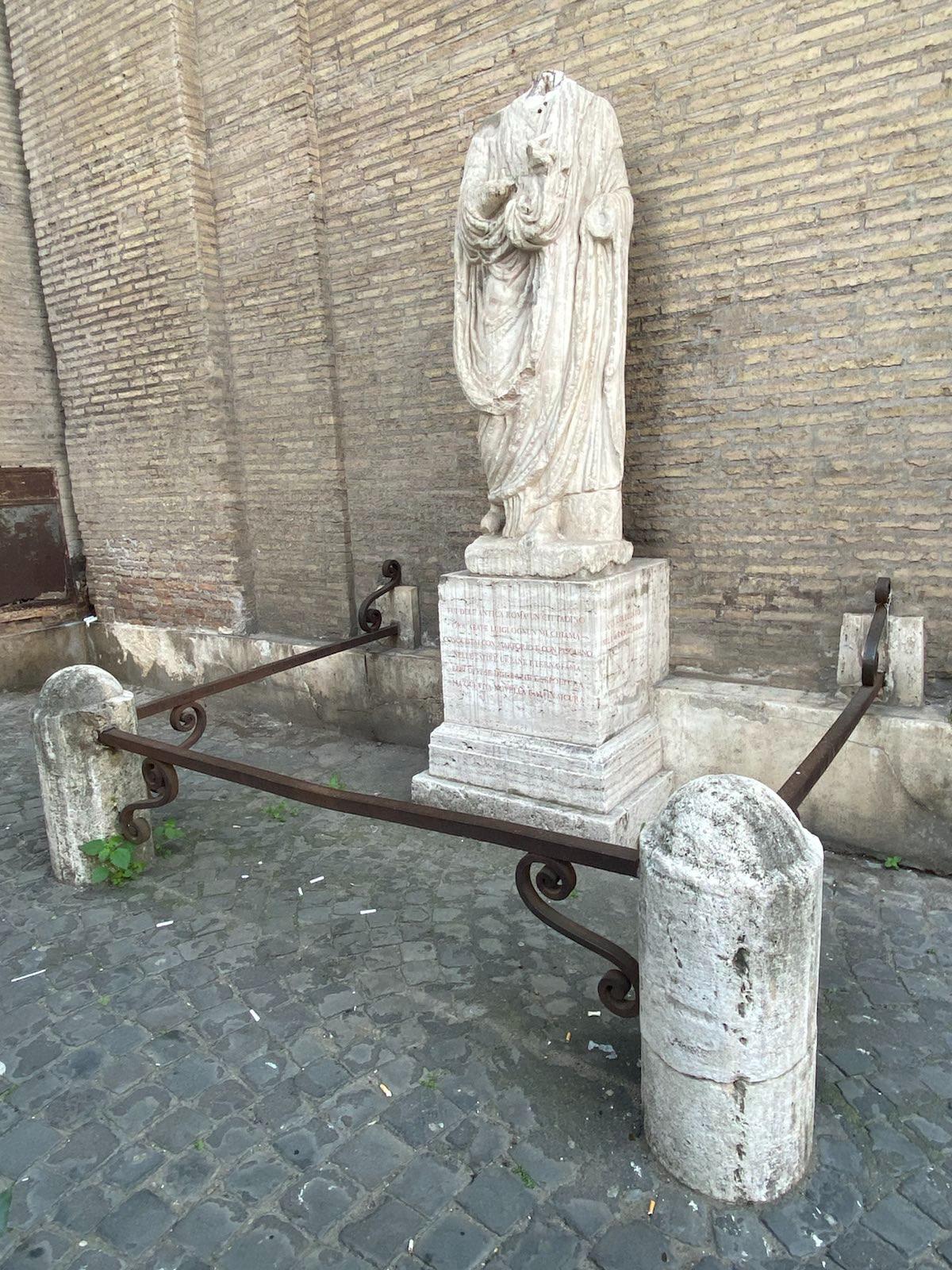
Daily Rome Shot 455, etc.

Daily Mass Sermons

Today

“O tu che m’hai rubbato la capoccia,
vedi d’ariportalla immantinente
sinnò, voi véde?, come fusse gnente
me mànneno ar governo. E ciò me scoccia!”

Use your phone’s camera!

Reminder: Your use of my Amazon affiliate link is a major part of my income. Please remember me when shopping online. Thanks in advance.

US HERE – UK HERE

Play video

Posted in Sermons | Tagged ,
1 Comment

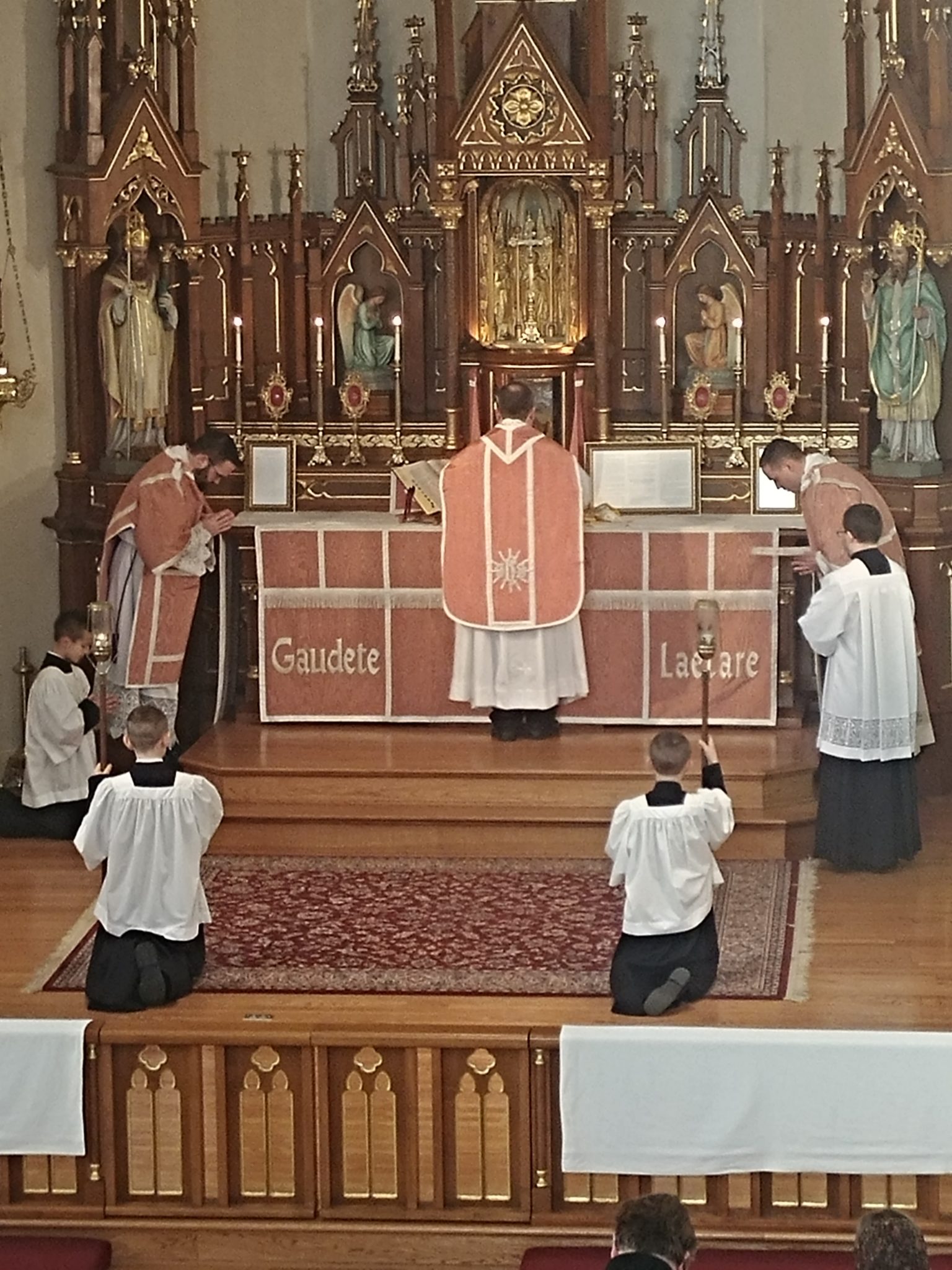
ASK FATHER: Subtle different between “Laetare” and “Gaudete”?

From a reader…

QUAERITUR:

Can you explain the difference between gaudete and laetare? Gaudete seems to be 2nd person plural, imperative, while laetare appears to be an infinitive, both seem to mean rejoice in those respective forms. But the roots are different, so is there a subtle difference in meaning? Thanks and happy Laetare Sunday!

Firstly, Laetare and Gaudete Sundays are slight liturgical breathers before plunging back into the last period of preparation before the great feasts of, respectively, Easter and the Nativity of the Lord.

Both Gaudete and Laetare are imperatives.  However, laetare only looks like an infinitive because the verb it comes from is laetor, which is deponent (passive in form but active in meaning).   There is laeto in Latin, but that is not what’s used here: it is deponent laetor and the form is imperative, just as gaudete is imperative.

The nickames for the Sundays are derived from the first word of the Introit antiphon. Gaudete (plural imperative of gaudeo) is from Philippians 4:4-6 and is Latin for Greek xairéte. Laetare (singular imperative of laetor which is deponent) is from Isaiah 66:10-11 and Latin for Hebrew samah.

There is no substantial difference in meaning between the forms of gaudeo and laetor here.  You can go to the context of Philippians and of Isaiah and see if the prophet and the Apostle are talking about different objects of joy.  Also, one could go into the weeds and make distinctions about the sense of inward joy and also its outward expression.

Isaiah 66 has the prophet explain how God rewards right worship.   He rewards with abundance and blessings.  Bad worship… not so much.  Philippians 4 says be joyful and peaceful for the Lord is near, so give yourself over to good things.

I will add that in Latin when we sing Lætáre, Ierúsalem, it sounds in Latin as if we are exhorting Jerusalem to rejoice. However, in Hebrew Isaiah says, “(Ya’ll) Rejoice WITH Jerusalem”.

10 “Rejoice with Jerusalem, and be glad for her,
all you who love her;
rejoice with her in joy,
all you who mourn over her;
11 that you may suck and be satisfied
with her consoling breasts;
that you may drink deeply with delight
from the abundance of her glory.”

12 For thus says the Lord:
“Behold, I will extend prosperity to her like a river,
and the wealth of the nations like an overflowing stream;
and you shall suck, you shall be carried upon her hip,
and dandled upon her knees.
13 As one whom his mother comforts,
so I will comfort you;
you shall be comforted in Jerusalem. (RSV)

This imagery is the foundation for why this Sunday has also been called “Mothering Sunday”, the original version of Mother’s Day before commercialization.

There are differences in tone between the Lenten and Adventen Sundays, as you might expect.  But don’t read much into the forms Laetare and Gaudete.  Go to the Biblical context and frame the whole context in the moment of Mass (Introit) and season.

Posted in "How To..." - Practical Notes, ASK FATHER Question Box, Liturgy Science Theatre 3000 | Tagged ,
3 Comments

Your Sunday Sermon Notes: 4th (Laetare) Sunday of Lent – and a POLL

Too many people today are without good, strong preaching, to the detriment of all. Share the good stuff.

Was there a GOOD point made in the sermon you heard at the Masses for the 1st Sunday of Lent?

Tell about attendance especially for the Traditional Latin Mass.  I hear that it is growing.  Of COURSE.

Any local changes or (hopefully good) news?

Those of you who regularly viewed my live-streamed daily Masses – with their fervorini – for over a year, you might drop me a line.

I have some written remarks about the TLM Mass for this Sunday – HERE

About the COLOR OF VESTMENTS you saw, let’s have a POLL.

Pick your best answer.  Anyone can vote, but only registered and approved members can comment.

On Laetare Sunday 2022 the color of the vestments (on the celebrant) for Mass was...

View Results

Loading ...
Posted in Liturgy Science Theatre 3000, Our Catholic Identity, POLLS |
12 Comments

Daily Rome Shot 454, etc.

Daily Mass Sermons

When shopping online please use my Amazon affiliate links. Thank you.

US HERE – UK HERE

Easter is coming. Think ahead.

Posted in SESSIUNCULA |
2 Comments

Daily Rome Shot 453, etc.

Use your phone’s camera!

Posted in SESSIUNCULA |
Leave a comment

Daily Rome Shot 452, etc.

Daily Mass Sermons

Photo by The Great Roman™

Play video

OPPORTUNITY
10% off with code:
FATHERZ10

Posted in SESSIUNCULA |
Leave a comment

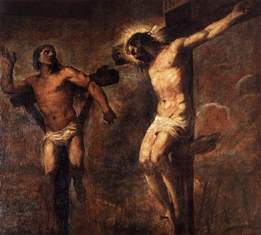
25 March: Feast of St Dismas, the Good Thief “who stole heaven”

Titian_Christ_Good_Thief_Dismas_smToday is Lady Day, the Feast of the Annunciation, the instant of the Incarnation.

However, 25 March is also the Feast of the Good Thief, St. Dismas!

Fulton Sheen famously quipped of this thief-saint that he “stole heaven”.  A good thief indeed!

Many saints have their feast days assigned to the day when they were born into heaven (read: died).  There is a tradition that that first Good Friday was on the same day as the Annunciation, 25 March.

Luke 23:39-43:

And one of those robbers who were hanged, [Gesmas] blasphemed him, saying: If thou be Christ, save thyself and us. But the other [Dismas] answering, rebuked him, saying: Neither dost thou fear God, seeing thou art condemned under the same condemnation? And we indeed justly, for we receive the due reward of our deeds; but this man hath done no evil. And he said to Jesus: Lord, remember me when thou shalt come into thy kingdom. And Jesus said to him: Amen I say to thee, this day thou shalt be with me in paradise.

It makes the heart ache, to read these words addressed to that penitent sinner.  Would that they were address to each one of us.

But wait!  They can be.

Holy Church has the Lord’s own authority to forgive sins, to loose and to bind! It is exercised by His bishops and priests!

GO TO CONFESSION!  

There is, by the way, a legend that, during the Holy Family’s flight from Herod to Egypt, they ran into Dismas, who was exercising his trade of thievery.

Dismas was going to rob them, but seeing the Infant Jesus, he instead gave them shelter in his lair and let them go on their way without harming them.  Dismas would continue to be a nefarious ne’er-do-well.  His intellect still darkened by sin on Calvary kept him from recognizing Christ’s Mother.

This is another proof that sin makes you stupid.

Finally, Fathers, mark on your calendar that in the back of your traditional Missale Romanum there is a Mass formulary for the 2nd Sunday of October  in honor of the Good Thief for use in prisons and in houses of reform of mores and of the discipline of amendment.

Posted in Classic Posts, Liturgy Science Theatre 3000, Saints: Stories & Symbols | Tagged ,
3 Comments

ASK FATHER: Abstinence on a Friday of Lent that is also the Feast of the Annunciation. What to do?

From a reader…

QUAERITUR:

What is required / recommended regarding fasting and abstinence when a solemnity falls on a Friday in Lent?

And another…

I can’t make out if the Lenten Friday rule of abstinence applies to the Solemnity tomorrow?

I presume you are Latin Church Catholics.

Those who are bound by the law are to do penance on Fridays of Lent.

However, tomorrow, Friday is 25 March, the Solemnity (in the Novus Ordo calendar, which the 1983 Code presumes) of the Annunciation.

Please attend to can. 1251.

Can. 1251 Abstinence from meat, or from some other food as determined by the Episcopal Conference, is to be observed on all Fridays, unless a solemnity should fall on a Friday. Abstinence and fasting are to be observed on Ash Wednesday and Good Friday.

For those who don’t like the Usus Recentior or the Novus Ordo… your likes or dislikes make not the slightest difference. If you are a subject of the Latin Church, the 1983 Code pertains to you.

Because in the Novus calendar the Feast of the Annunciation has the rank of a Solemnity, and because can. 1251 applies to you, you are not bound to your Friday penance.

Of course you can do as you please. Do penance if you choose. You are not bound to it.   There are conflicting goods: celebrating a great feast of Incarnation of the Second Person of the Trinity, for even those feasts concerning Mary always look to the Lord, as she herself did, or, due to the penitential season, the proper desire to practice some denial for the sake of Lenten disciplina.

In these cases of great feasts during Lent, I generally suggest that people keep their festivities somewhat muted. The Solemnity is a true feast day.  That doesn’t mean necessarily extravagance.  It also includes refraining from unnecessary things.

Be penitentially festive. Or, if that doesn’t do it for you, be festively penitent.


Posted in "How To..." - Practical Notes, ASK FATHER Question Box, Canon Law, Liturgy Science Theatre 3000, Our Catholic Identity | Tagged ,
14 Comments

Help needed from EASTERN Catholics, Byzantine, Slavic about a title of the Blessed Virgin

In another post here, concern was raised about a way that the Blessed Virgin is to be addressed in the upcoming (tomorrow) Consecration of “all humanity” and “especially” Russia and Ukraine.   Mary is referred in pretty much all language versions as “Land of Heaven” or else “Earth of Heaven”.  This seems very much like a term for the demon Pachamama.  It is at least very curious.

HOWEVER, a friend of mine thought that it might be in a Byzantine hymn and… kapow!… he was right.    I put that in a comment and someone found something.

Concerning the title, “Earth of Heaven” I found one reference to this as a Marian title which appears to predate the pachamama nonsense. It’s from Bose though…

https://www.monasterodibose.it/en/prayer/ecumenical-martyrology/974-september/2587-september-8

What’s there?

It is from the Monastery of Bose, which is a weird place.  However, even if it is weird, if they got it right about a Slavic hymn to Mary, the plot has thickened.

At the Bose site for an 8 September entry:

The birth of the virgin Mary
This feast is a celebration of the birth of the woman who became “earth of heaven” – in other words, the fertile terrain offered by humanity so that the Word’s Incarnation might take place in human history

The birth of the virgin Mary

Today Eastern and Western churches celebrate the birth of Mary, the mother of Jesus.
As had happened with John the Baptist, whose nativity began to be commemorated in the West at the end of the fourth century, the early Church felt that a solemn celebration of Mary’s birth was called for.
September eighth was chosen because it was the date of the dedication of St. Anne’s basilica in Jerusalem. The church was built on the site where Mary’s parents Joachim and Anne had lived, according to an ancient tradition.
The feast of Mary’s nativity spread to Constantinople in the fifth century, and was introduced to the West in 701 by Pope Sergius I, who was of Syriac ancestry. Much loved by the Eastern and Orthodox churches, it is a celebration of the birth of the woman who became “earth of heaven” – in other words, the fertile terrain offered by humanity so that the Word’s Incarnation might take place in human history, fulfilling God’s plan of salvation.


A READING

Holy Mary,
mother of the Lord,
your faith guides us.

Turn your gaze
towards your children,
Earth of heaven.

The road is long and night descends upon us:
intercede with Christ for us,
Earth of heaven.

(Byzantine-Slavic hymn to the Mother of God)

I hope there are some Easterners out there who know this hymn.

Please steer us in the right direction.

Posted in "How To..." - Practical Notes, Both Lungs, Our Solitary Boast, The Drill |
25 Comments

A moment of joy – Your Good News

This may seem trivial in the in face of global plandemics, potential world war and a degenerating Church demographic, but good news is good news and I’ve got some.

I’ve been processing boxes of books, some of which have been in storage for a long time.

Last night I opened a box and… EUREKA!

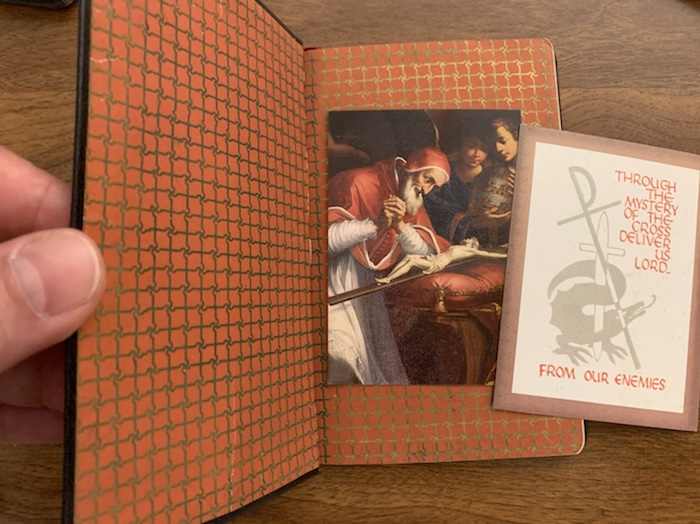
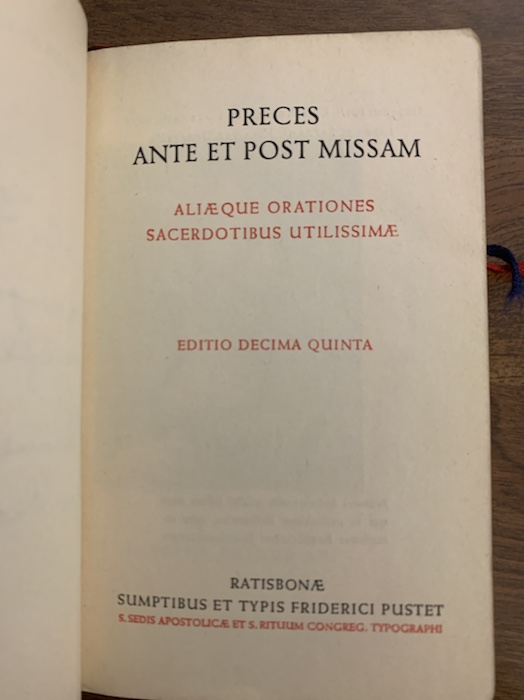
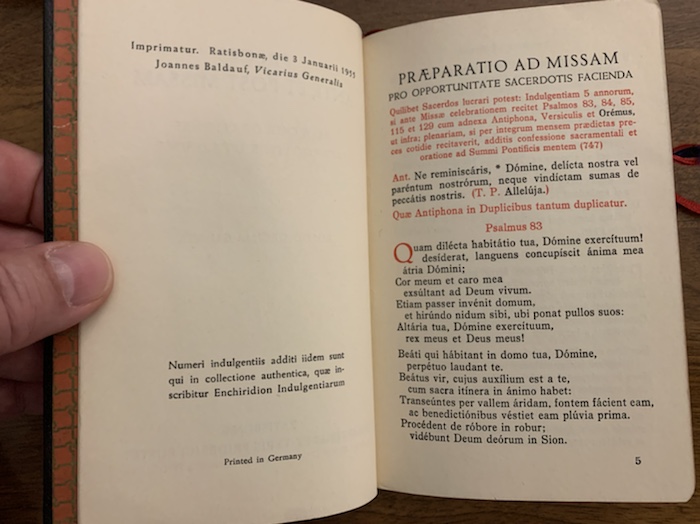
I found a little treasure, a beautiful little prayer book so elegantly printed and bound in Germany before they lost the Faith. Lovely leather and gilded pages, for the use of priests, all in Latin. Essentially, it put into breast-pocket-size the devotional parts of the Breviarium Romanum (more about those later) and some other helpful prayers for priests.

I thought I had lost it. Actually I thought I had perhaps left it in a car that I traded in to VW when they had the “Diesel Disaster”.

There is was. I was like the woman who swept and found the coin she had lost. So I’m inviting you, my neighbors, to rejoice with me.

So, after a really dreadful day I had that happy moment.

Not on the scale of importance like, say, the rise of one party left-wing domination fueled by full-scale cross-border invasion and massive inflation… but still pretty good.  It made me smile, and I don’t get a whole lot of that right now.

What is YOUR good news?


Posted in Lighter fare, SESSIUNCULA |
10 Comments