UPDATE 19 April 2017:
The full, transcribed text of Bp. Morlino’s sermon is available HERE
___ Originally Published on: Apr 12, 2017
 Last night, Tuesday in Holy Week, His Excellency Most Reverend Robert C. Morlino, the Extraordinary Ordinary, Bishop of Madison, celebrated the Chrism Mass. The bishop blessed all the special oils used during our sacred rites in the upcoming year. Customarily, the priests of the diocese who are able attend the Chrism Mass, not only in a sign of unity but also, practically, to receive the oils for their parishes.
My friend Fr. Heilman, who writes at Roman Catholic Man, records that, this year, Bp. Morlino asked the priests of the diocese – beginning in September – to encourage reception of Holy Communion on the tongue, while kneeling.
Thus,…
In his Chrism Mass homily, Bishop Morlino highlighted the fact that the Catholic Church is very good at social issues at every level – Catholic organizations, dioceses, parishes and individuals – but, ours is a crisis of faith, revealed by less than 25% of Catholics attending Mass any longer (less than 5% in many parts of Europe). Where we are failing is in a lack of fervor in our faith, Bishop stated. This is most evident in how we, as priests, are offering the Mass, and how the faithful are praying the Mass.
Bishop Morlino went on to speak about “actuosa participatio” as being more about “actual participation” than “active participation.” [Sound familiar?] Bishop lamented that we seem to feel everyone needs to be busy “doing something” at the Mass, when it is more important that we are deeply contemplating what is being done at the Mass … that God is made Present – Body, Blood, Soul and Divinity. This should stir our soul and fill us with awe and wonder. But, are we too busy to take notice?
Last Fall, as part of [the] Bishop’s overall plan to add sacred beauty and reverence to all Masses in his diocese, Bishop Morlino encouraged all of his priests to strongly consider Cardinal Sarah’s call to offer the Mass ad orientem. Bishop Morlino then announced he would, from now on, be offering all of his Masses ad orientem.
Now, during last evening’s Chrism Mass, Bishop Morlino concluded his homily by appealing to all of his priests in his diocese to strongly encourage their parishioners to begin receiving Communion on the tongue while kneeling, beginning this September.
Praise be Jesus Christ! Now and forever!
THIS is the New Evangelization, my friends.
What Bp. Morlino did brought to my mind the phrase cura animarum, now somewhat outdated, fallen into desuetude.
Cura animarum, “the care of souls”, is the office, or duty, of those to whom, pastoral roles are entrusted, to help the souls in their their care get to heaven. The cura animarum in mainly connected with the offices of bishop and parish priests, pastors, though there are other roles in which a priest can care for souls. The cura animarum involves, especially, the exercise of the threefold munera or offices of priest, prophet and king. The pastor (French curé) tends to his flock and shepherds them towards heaven through catechetical instruction, sermons and other admonitions. He sanctifies them through administation of the sacraments. He has to be shrewd and prudent and use many methods and tactics to attain his goal: more souls in heaven, for their good and for God’s glory. The pastor of souls, with the cura animarum, is responsible before God for the souls in his charge. He will answer to God for these souls when his time for judgment arrives… and it will arrive.
The priest who senses the weight of the cura animarum, relying on the help of God to make his own hands strong enough for this work – so that ever good work is Christ crowning His own works in us – will come to sense zelus animarum, “zeal for souls”. You might know the famous first antiphon for Tenebrae of Holy Thursday, Matins, Zelus domus tuae comedit me… Zeal for your house consumes me. Since the first time I ever sang that antiphon at the first Tenebrae I ever participated in, that’s been it for me. Zeal for souls, zeal for God’s “house”, which means souls who are, as Paul describes, the stones that build up the Church, should animate a priest and a bishop.
Priests and bishops are not here to make you feel good about yourselves. They are given by Christ the High Priest to the Church, to you, to help you get to heaven. There are zillions of routes by which priests can work for the care of souls. Sometimes it happens that they must stress material needs… but always with an eye on the true and over riding goal: a soul for heaven.
Earthly life is short. Eternity is long.
Was it St. John Bosco who said, “Da mihi animas! Caetera tolle!”?
Fathers, think about souls for heaven, not about being “liked”. Don’t take the soft and deceptive road which might prompt plaudits and coos in this life. Be a priest! Be that immediately, local manifestation of Christus Medicus. Hard times need hard love. The doctor doesn’t stop applying the remedy just because the patient screams for him to stop. “Nice” doesn’t get souls into heaven. And you will be judged for your care of souls, dear Father… ohhhhh yes. One day you will be in the presence of the Iustus Iudex, and you will have an explanation. “These, who were mine, were lost!”
I cannot shake the sense that we are entering into a dark time such as we have never experienced before. Christians have always, since the Ascension of the Lord, sensed themselves in the “end times”, and I don’t want to diminish that. However, Our Lord also told us to watch the “signs of the times”. I’m watching the signs of the time and I don’t like what I see. I am left discomforted, which I suppose we all ought to be, given that one day we will go before the King of Fearful Majesty to render an account of our works and what we love.
What Bishop Morlino is going is exactly right. It’s time to start growing more and more into serious, transformative sacred liturgical worship as individuals and as communities in the Church, small and large, families, parishes, dioceses, nations. We have to sober up and grow up.
Our sacred liturgical worship was, as Benedict XVI so aptly described, fractured in the improper implementation of the reforms mandated by Vatican II. We didn’t actually get what the Council Fathers mandated. This rupture has reeked havoc with our Catholic identity. Vast swathes of the nominally Catholic have little sense of the content of the Catholic faith, by which I mean both the fides quae creditur and the fides qua creditur. Our liturgical worship has been screwed up for so long that the Lord’s vinyard as been, as Card. Sarah recently described, “devastated”. Only the blind and obtuse – or those responsible for the devastation – don’t see this.
Years ago I posted my manifesto about the connection of what goes on in the wider world with our liturgical worship. HERE and especially HERE For example,
Do we believe the consecration really does something? Or, do we believe what is said and how, what the gestures are and the attitude in which they made are entirely indifferent? For example, will a choice not to kneel before Christ the King and Judge truly present in each sacred Host, produce a wider effect?
If you throw a stone, even a pebble, into a pool it produces ripples which expand to its edge. The way we celebrate Mass must create spiritual ripples in the Church and the world.
So does our good or bad reception of Holy Communion.
So must violations of rubrics and irreverence.
Mass is not merely a “teaching moment” or a “celebration of unity” or a “tedious obligation”. Our choice of music, architecture, ceremonies and language affect more than one small congregation in one building. We are interconnected in both our common human nature and in baptism. When we sin we hurt the whole Body of Christ the Church.
If that is true for sin, it must also be true for our liturgical choices. They must also have personal and corporate impact. Any Mass can be offered for the intentions of the living or the dead.
Not even death is an obstacle to the efficacy of Holy Mass.
Celebrate Mass well, participate properly – affect the whole world. Celebrate poorly – affect the whole world.
If our liturgical worship as a Church is disordered, then everything else in the Church will be disordered. The Eucharist is different from the other sacraments in that the Eucharist IS what It symbolizes. The Eucharist is the great jewel around which the other sacraments glitter in Its glory. The Eucharist, that is the Sacred Species as well as their celebration which is Holy Mass, is described as the “source and summit” of who we are, what we do. Everything flows back and forth across our individual and collective lives in the Church, and therefore in the whole world, from and to the Eucharist. If we don’t get this right, nothing else will be right. If our worship isn’t properly ordered, then no other effort or initiative we undertake in the Church will bear fruit.
We have to rebuild our Catholic identity soul by soul. The concrete physical gestures of worship, including getting down on our knees before GOD in the Blessed Sacrament, receiving rather than taking, humbly recognizing the anointed hands of the priest, help us in our spirit. We are body and soul, both. We need physical reminders of the invisible realities.
Hence, what Bp. Morlino did is exactly right. He has provided a personal example. He has shown leadership. He has prudently allows a congruent period of time for instruction as well as dialogue with the priests and faithful. This is great blessing to Holy Church as he fulfills faithfully his heavy mandate. May his example be taken up by many pastors of souls.

 Many of you out there are godparents or sponsors for confirmands (from Latin confirmandus… “someone about to be confirmed”. Some of are are about to take on this responsibility.
 From a reader….

 The XIVth Popes are pretty impressive Pontiffs.


 From a reader…
 Last night, Tuesday in Holy Week, His Excellency Most Reverend Robert C. Morlino, the Extraordinary Ordinary, Bishop of Madison, celebrated the Chrism Mass. The bishop blessed all the special oils used during our sacred rites in the upcoming year. Customarily, the priests of the diocese who are able attend the Chrism Mass, not only in a sign of unity but also, practically, to receive the oils for their parishes.
 The priest who senses the weight of the cura animarum, relying on the help of God to make his own hands strong enough for this work – so that ever good work is Christ crowning His own works in us – will come to sense zelus animarum, “zeal for souls”. You might know the famous first antiphon for Tenebrae of Holy Thursday, Matins, Zelus domus tuae comedit me… Zeal for your house consumes me. Since the first time I ever sang that antiphon at the first Tenebrae I ever participated in, that’s been it for me. Zeal for souls, zeal for God’s “house”, which means souls who are, as Paul describes, the stones that build up the Church, should animate a priest and a bishop.
 Our sacred liturgical worship was, as Benedict XVI so aptly described, fractured in the improper implementation of the reforms mandated by Vatican II. We didn’t actually get what the Council Fathers mandated. This rupture has reeked havoc with our Catholic identity. Vast swathes of the nominally Catholic have little sense of the content of the Catholic faith, by which I mean both the fides quae creditur and the fides qua creditur. Our liturgical worship has been screwed up for so long that the Lord’s vinyard as been, as Card. Sarah recently described, “devastated”. Only the blind and obtuse – or those responsible for the devastation – don’t see this.
 My good friend Fr. Gerarld Murray has a sobering, withering, and yet salubrious piece today at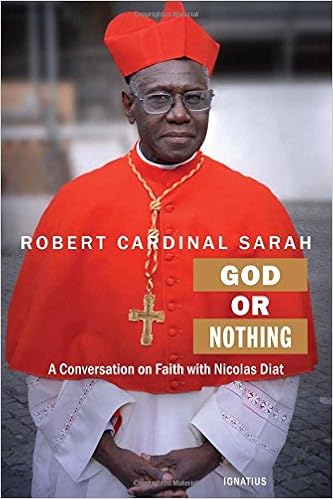





 One of the worst of the hyper-liberal
  I come from a parish where in 30 years there were 30 First Masses. I live in a diocese where in a decade the bishop turned around vocations from 6 to 30.




























