It is often said, by liberals, that because in ancient Rome there was a shift from Greek to Latin for the Roman liturgy, and since Latin was the vernacular back then, we should abandon Latin now and use the vernacular which is English, pray the way people speak today.
The flaw in that argument is that when the shift was made away from Greek, the Latin that was adopted for the ancient Roman liturgy was not at all the “vernacular”. The Latin used in liturgy was not the way people spoke in daily life. The Latin was highly stylized, though remaining terse, with words used in a very different way than that which had been common, if the unlettered had ever even heard them at all. Romans would have know that what was being said was Latin, and they would have heard intelligible prayers, but they would have been challenged to know what they meant without explanations. Eventually, they would have become used to a new style of prayer and new vocabulary with the new concepts the vocabulary communicated. Just as there was a sacral Latin style for prayer in the pagan era, Christian Romans would have recognized a Latin style for sacral use, for prayer. It was more demanding.
I now see this in the UK’s best Catholic weekly, The Catholic Herald. My emphases and comments.
The King James Bible, like the new Mass translation, would have been condemned as ‘inaccessible’
Both translations seek to avoid “Gas Board English” and create a suitable language to express transcendent truths
By Fr Alexander Lucie-Smith on Wednesday, 8 June 2011
This year we are all supposed to be celebrating the 400th anniversary of the King James Bible, otherwise known as the Authorised Version. It is four centuries since King James VI and I (as he should properly be called) commissioned what was to become the standard English translation of the Bible. Of course the King James Bible is a Protestant Bible, and its publication stirred the Catholic Church into producing the Douai Bible for English Catholics, or so the story goes, but in fact the Douai Bible precedes the Authorised Version by several years, and may well have been an influence on it. Again, while the King James Bible dates from 1611, it drew on the work of Miles Coverdale and William Tyndale, who had worked about 80 years earlier. Moreover, as I have discovered through reading an excellent book produced to mark the anniversary, this drawing on older sources was done quite deliberately. In other words, the translators of the King James Bible did not want to use up-to-date English, but deliberately chose archaic language.
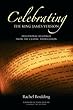
The book I have been reading is called Celebrating the King James Version and consists of a series of devotional readings and commentary by Rachel Boulding, who is the deputy editor of the Church Times. The book makes a good case for the idea that the King James anniversary is more than just a matter of Anglican celebration; insofar as the King Kames Version is a masterpiece of English prose, it is to be celebrated by everyone who speaks the language. The King James Version shows us to what heights language can rise. It is the opposite of what Ms Boulding calls “Gas Board English”. [What would be an equivalent in the USA? “Cereal Box English”? “High School Graduate”? “Social Security Administration”? “Sit-Com”? Rather different styles, but each incomprehensible and execrable.]
Ironically, though of course he would not see it that way, even Professor Dawkins is celebrating, though he does warn us that “It is important that religion should not be allowed to hijack this cultural resource”. [ROFL!]
The mention of Gas Board English is particularly significant for Catholics right now, facing as we do the imminent new translation of the Roman Missal. As the bishops’ recent pastoral letter made clear, the new translation is trying to do what the King James translators did so well, namely create a suitable language that will express transcendent truths. This is by no means easy, but it can be done. [And we shall see if the new, corrected translation does it. But let’s not fool ourselves. It ain’t King James English.] It is interesting to note that those who seemingly [?] oppose the new translation would presumably also have opposed the King James Version as archaic and no doubt “inaccessible”: [Of course they would have!] but, and here is the key point, the King James Version, which has lasted 400 years, is anything but inaccessible. It has been a huge success, and opened up the Bible to countless generations. [“anything but inaccessible”… well… I wonder if that is true today. I do know, however, that with greater exposure to it would be gradually more accessible than at first glance or hearing.]
Let us hope that the new translation of the Roman Missal may do the same and open up the transcendent mystery that is the Mass to people of our own time, as well as to many generations to come. [Do I hear an “Amen!”?]
Well done!
Discuss.

 So, first I’ll sing through the prayers and texts using the new book from the canons. Then I will switch books and sing all three versions of the Preface of the Holy Spirit. You will notice the different introductory dialogues. I suggest before singing the tonus solemnior that perhaps you could start with the tone for the tonus solemnis, which people are more likely to know, and then switch seamlessly into the tonus solemnior. That way, you don’t have chaos at the beginning.
 The National Catholic Fishwrap is still running down Pope Benedict and defending Bp. William Morris, formerly of Toowomba, Australia, present cause célèbre of Catholic liberals.
 R2D on Pagliarani and Leo at Tanagra: “My hope would be after such prayer that he would be open to cooperation with divine grace so that “the…”






























