The Catholic Herald reviews the Holy Father’s Papal Visit

The UK’s best Catholic weekly, the Catholic Herald, has an issue devoted in large part to the Holy Father’s recent visit to Scotland and England.

You will want to be sure to check it online and, if you can, in print.  The print edition promises even more.

The Catholic Herald

The Catholic Herald

Posted in SESSIUNCULA |
1 Comment

Filipino Archbishop really seems to understand Pope Benedict

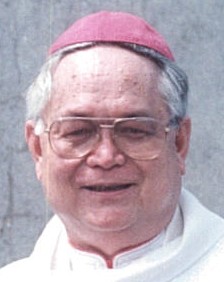
Archbishop Jesus Dosado of Ozamis

Archbishop Jesus Dosado

Our friends at Rorate found an extended piece from UCANews (you might remember the liturgical opinions of its editor).  You will want to read this whole thing, but here it is with my emphases and comments:

The liturgical renewal I would like to see
By Archbishop Jesus Dosado of Ozamis

Looking back, some of the culprits for me for the gradual loss of the true reform of the liturgy were the so-called “liturgists” who were more like technicians and choreographers rather than pure students of liturgy. [OORAH!]

They had a peculiar affinity for refined liturgical celebrations coupled with disdain for the old rites and devotions. Unfortunately, some bishops, not pure students of liturgy either, gave in to their terrorist proclivities. [I must say it is refreshing, from a bishops.]

A search for creativity and community were dominant projects in “reform-minded” Catholic circles in the 1960s and beyond. In itself, this might not have been bad. But the philosophy that the community was god, and that “God” was not fully “God” without the community was the source of ideas that have done most damage to the Church.

This secular notion of community made its way into the liturgy to gradually supplant the inherited Christian tradition.

These self-appointed arbiters of the reform were, and I hate to say this, liturgical hijackers who deprived ordinary parishioners – and bewildered pastors – of their right to the normative worship of their own Church. Hence, there was the need for a reform of the reform.

[Tell me if this doesn’t sound familiar…] A major goal of Pope Benedict XVI is the restoration of our Catholic identity. Liturgy is a key component of such an endeavor.

Benedict’s broad liturgical approach can be described in terms of “continuity,” i.e. recovering elements of the liturgical tradition which he believes were too hastily set aside or downplayed in the immediate period after the Second Vatican Council.

The idea of a new liturgical movement came with strength from his book, Spirit of the Liturgy.

A relevant section: “I am convinced that the crisis in the Church that we are experiencing today is to a large extent due to the disintegration of the liturgy … in that it is a matter of indifference whether or not God exists and whether or not he speaks to us and hears us. … Such circumstances will inexorably result in a disintegration. This is why we need a new Liturgical Movement, which will call to life the real heritage of the Second Vatican Council.”

[This is good…] Pope Benedict XVI in his Pastoral Letter to Catholics in Ireland situated the sexual abuse of children in the wake of fast-paced social change and a decline in adherence to traditional devotional and sacramental practices. [Change the way we pray, you change what we believe.]

To his priests in the Diocese of Rome he said, “In the Eucharist we do not invent something, but we enter into a reality that precedes us, more than that, which embraces heaven and earth and, hence, also the past, the future and the present. … Hence, the liturgical prescriptions dictated by the Church are not external things, but express concretely the reality of the revelation of the body and blood of Christ and thus the prayer reveals the faith according to the ancient principle ‘lex orandi – lex credendi.’” (“the law of praying establishes the law of believing.”)

To be sure, the Pope has great regard for the Novus Ordo. He issued a Letter to the Bishops on the Occasion of the Publication of Summorum Pontificum where he narrated why he wanted to expand the use of what is now called the Extraordinary Form of the Roman Rite and, in so doing, he deliberately responded to the fear that this expansion was somehow intended to demote the Novus Ordo or undermine the Vatican Council’s call for liturgical reform, saying it was unfounded.

For the former Cardinal Joseph Ratzinger, (now Pope Benedict XVI) the liturgy is of its nature an inheritance, a space we inhabit as others have inhabited it before us. It is never an instrument we design or manipulate. Self-made liturgy is a contradiction in terms, [!] and he distrusts liturgies that emphasize spontaneity, self-expression and extreme forms of local inculturation.

In his own book, Spirit of the Liturgy, Cardinal Ratzinger scathingly compared such liturgies to the worship of the Golden Calf, “a feast that the community gives itself, a festival of self-affirmation. Instead of being worship of God, it becomes a circle closed in on itself: eating, drinking and making merry … It is a kind of banal self-gratification … no longer concerned with God but with giving oneself a nice little alternative world, manufactured from one’s own resources.”

In his view, the liturgy is meant to still and calm human activity, to allow God to be God, to quiet our chatter in favor of attention to the Word of God and in adoration and communion with the self-gift of the Word incarnate.

The call for active participation seems to Benedict XVI to have “dumbed” down the mystery we celebrate, and left us with a banal inadequate language (and music) of prayer.  [Do I hear an “Amen!”?]

The “active participation” in the liturgy for which Vatican II called, he argues, emphatically, does not mean participation in many acts. Rather, it means a deeper entry by everyone present into the one great action of the liturgy, its only real action, which is Christ’s self-giving on the Cross. [“actual participation”]

We can best enter into the action of the Mass by a recollected silence, and by traditional gestures of self-offering and adoration – the Sign of the Cross, folded hands, reverent kneeling.

For the Pope, therefore, liturgical practice since the Council has taken a wrong turn, aesthetically impoverished, creating a rupture in the continuity of Catholic worship, and reflecting and even fostering a defective understanding of the Divine and our relationship to it.

His decision to permit the free celebration of the Tridentine liturgy was intended both to repair that rupture and to issue a call to the recovery of the theological, spiritual and cultural values that he sees as underlying the old Mass.  [Yes.  This one gets it.]

In his letter to the bishops of July 2007, he expressed the hope that the two forms of the one Roman liturgy might cross-fertilize each other, the old Missal being enriched by the use of the many beautiful collects and prefaces of Paul VI’s reformed Missal, and the celebration of the Novus Ordo recovering by example some of the “sacrality” that characterized the older form.

[For some time I have thought that, perhaps, Anglicanorum coetibus was also intended as a model for the SSPX.  But I digress.  Watch how His Excellency moves from Summorum Pontificum to…] It is just like Anglicanorum Coetibus, the Apostolic Constitution providing for personal ordinariates for Anglicans entering into full communion with the Catholic Church, about which the Pope talked to the Bishops of England and Wales in their ad limina visit.

“It helps us to set our sights on the ultimate goal of all ecumenical activity: the restoration of full ecclesial communion in the context of which the mutual exchange of gifts from our respective spiritual patrimonies serves as an enrichment to us all,” Anglicanorum Coetibus reads.

Despite Summorum Pontificum, Pope Benedict himself has only celebrated the ordinary form of the Mass in public, “facing the people” in the manner of the Novus Ordo, using modern languages, all as stipulated in the Liturgical Books of the different countries where he celebrated. [I would say “mostly”, not “only”.]

Many people, for example, were waiting for him to use “for many,” instead of “for all” in the United States, but he did not do so. [We all will be doing so, soon.]

The Pope celebrated ad orientem (to the east) once more at the newly renovated Pauline Chapel, whose altar was repositioned so that it could be used to celebrate both ways – and the Pope chose the traditional direction in the Mass he celebrated with members of the International Theological Commission. [And at other times in the Sistine Chapel.]

Small changes to the accessories, vestments and ritual rubrics point to the Pope’s Reform of the Reform. On Corpus Domini of 2008 he began to give Communion exclusively on the tongue to the kneeling faithful.

In November of that year with a new master of pontifical liturgical ceremonies, the Crucifix and candle holders returned to the papal altar, from which the post-Conciliar liturgical reform had taken them away putting the Cross to the side and replacing the candelabra, if at all, by little temple lights.

On the Feast of the Epiphany last year, the Pope wore the guitar-shaped [well…] so-called Philippine [Actually, after St. Philip Neri.] chasuble instead of the post-Conciliar flowing chasuble, to underscore the continuity between past and present, manifested through liturgical vestments.

Then there are the ritual silences during the liturgies, observed after readings, after psalms, after the homily, and most especially, after Communion.

With these silences, [NB] the Pope is starting to educate the faithful who follow papal liturgies to a better, more appropriate attitude of concentration and meditation.

What is the Pope up to? In the words of Monsignor Guido Marini, “I think what the Holy Father is trying to do is to wisely bring together traditional things with the new, in order to carry out, in letter and spirit, what Vatican II intended, and to do it in such a way that papal liturgies can be exemplary in all aspects. Whoever takes part in, or watches, a papal liturgy should be able to say, “This is the way it should be done. Even in my diocese, in my parish!” [Do I hear an “Amen!”?]

And that is how I would like the direction of the liturgical renewal to take with the Mass to be recast, yes, but in order to remain what it is, Calvary and the Upper Room.

Huge WDTPRS kudos to Archbp.

https://www.amazon.com/dp/0898707846?tag=whatdoesthepr-20&camp=0&creative=0&linkCode=as1&creativeASIN=0898707846&adid=0R8XVH2A2HJT96RN2AZW&
Posted in Brick by Brick, Fr. Z KUDOS, New Evangelization, Our Catholic Identity, Pope of Christian Unity, SESSIUNCULA, SUMMORUM PONTIFICUM, The Drill | Tagged , ,
17 Comments

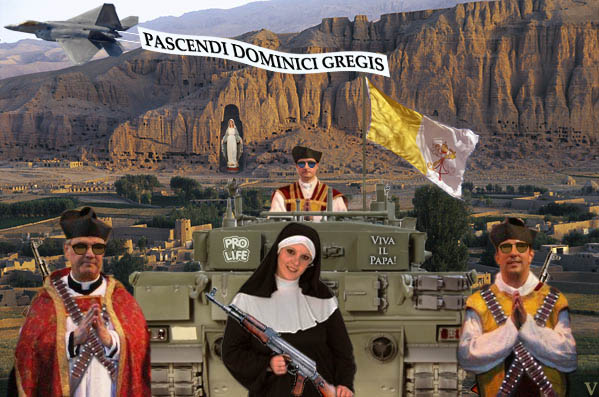
AIYEEYEEE! TALIBAN CATHOLICS! AIYEEYEEE!

I think the first time I ever heard of “Catholic Taliban”, it was years ago in an editorial by Al Matt, editor of The Wanderer.  He was referring to a brand of traditionalist who is, as I sometimes identify them, “happy only when they are unhappy”… and they share it all too willingly.

AIYEEYEEE! TALIBAN CATHOLICS! AIYEEYEEE!

Then a while back my friend John Allen, sadly still writing for the National Catholic Fishwrap, took up the epithet, applying it to those who practice “a distorted, angry form of the faith that knows only how to excoriate, condemn, and smash the TV sets of the modern world.”  Not to far from what Al Matt intended, as a matter of fact.

Continuing the trend, Austen Ivereigh, former spokesman for Card. Murphy-O’Connor of Westminster and now a journalist, donned the burnous in an interview with the aforementioned John Allen.  Ivereigh is discussing the different groups who applied to participate in the Catholic Voices project he was involved with.

My emphases:

We didn’t get an application from a Lefebvrite. We did get a few from what you would call the “Taliban Catholics,” who of course have become very vociferous on the blogosphere in the last few years. They’re very critical of the bishops for compromising too much with modernity and not promoting Catholic truth as they see it. We also had applications from people in favor of the ordination of women, and who in general believe that the reforms of Vatican II have been insufficiently implemented, and who are angry at the bishops for the opposite reasons.”

I’m safe,… I think.  After all, I like The West Wing, Battlestar Galactica, Spooks (MI-5 in the USA), and look forward to the final season of Smallville.

And I watch b… ba… base…

AIYEEYEEE!

…baseball, too!  And the news!

So, some of you WDTPRS readers had better examine your …. AIYEEYEEE! AIYEEYEEE! … consciences … AIYEEYEEE! …. sorry, I can’t help myself….

I have been tempted, of course.  I know where I can f… fi … AIYEEYEEE!…. find these groups of TALIBAN CATHOLICS!

Catholic Taliban

VIVA IL PAPA!

Posted in Lighter fare, Throwing a Nutty | Tagged , ,
28 Comments

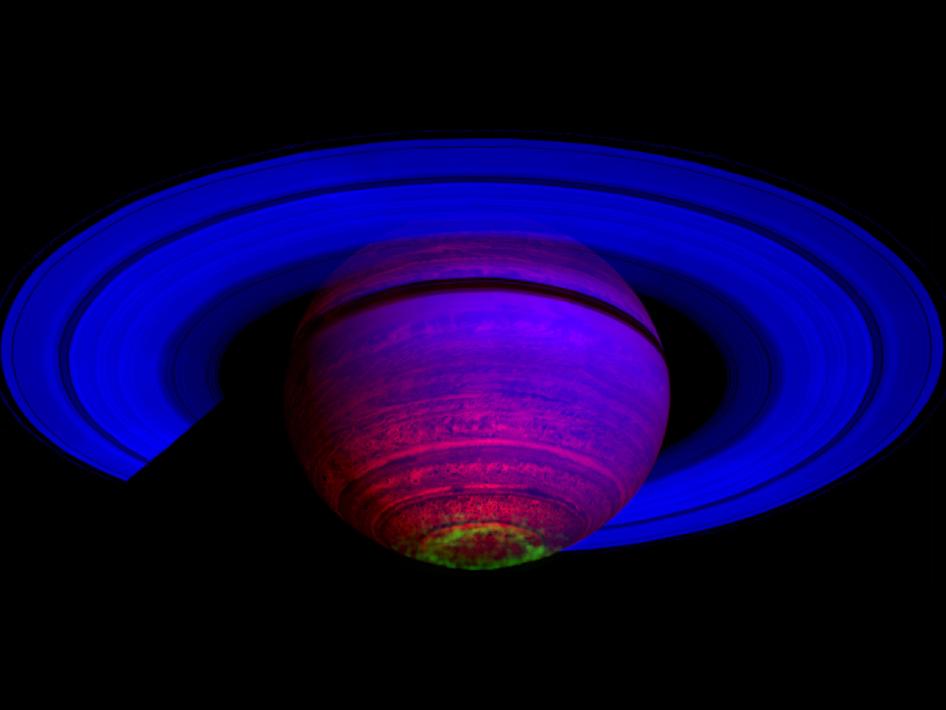
A different sort of “Saturno”

Wow.  Look at the colors.

False light images of Saturn with its aurora

False light images of Saturn with its aurora

Posted in Just Too Cool | Tagged , ,
5 Comments

Some random thoughts: a few great moments in the Star Trek movie

Star Trek

Star Trek

Tonight I unwound a bit with something totally unlike everything else I did today: I watched some of the latest Star Trek movie.

It was a real re-imagining of the whole thing.  Some people hated it.  I thought it was a great time!

Some fun moments in the new Star Trek movie:

  1. The tiny sad nod by Lt. Kirk when his wife says that he should be there.
  2. The music when you see the little trial of shuttles escaping the scene of battle.
  3. The whole scene between Spock and his mother. It begins with him no where in sight.
  4. Uhura interested in this guy in the bar in spite of herself.
  5. Captain Pike asking, “R’you alright son?”
  6. The little toy ship.
  7. The angle of the shot on Spock’s face when they beam back from the planet, minus one person.  He looks just like a little boy again.
  8. “I don’t know.  But I like him!”
  9. The glimpse of the number on the side of the ship being built.
  10. “Out of the chair.
  11. Kirk hitting on the nurse even when incredibly ill.
  12. Gene Roddenbury style chick crew uniforms with ghasty 60’s original Star Trek hairdos.
  13. A planet imploding.
  14. “Kirk to Enterprise” for the first time.
  15. Spock has green bruises.
  16. The shape of the Romulan boot.
  17. Really cool ice-planet critters.
  18. “Damn it man, I’m a doctor, not a physicist!”
  19. “Not this time.”
  20. The tribble.
  21. “Ё моё!”
  22. Jumping without a chute (as Pike suggested in the bar).
  23. 20th century forklifts and florescent lights.
  24. Classic body language: Spock standing and straightening his uniform.  McCoy’s hand thrust for emphasis.  Sulu turning in his chair.  Chekov slouching.  Kirk’s head bobble as he enters the bridge.
  25. “Fencing”.  And seeing the sword later.
  26. Lot’s of light flares through the lens.
  27. At the start everyone outranks Kirk.
  28. The musical motif when a Kirk takes over: walz.
  29. “Green-blooded hobgoblin!”
  30. “Preferably not.”

Just a few.

Posted in Just Too Cool, Random Thoughts | Tagged
22 Comments

A Jesuit theologian opines about the 60’s and Pope Benedict

An alert reader caught this and passed it along.  I am, as you can guess, unlikely to read The Huffington Post, on my own.

The last response amused me.

My emphases and comments.

How The ’60s Transformed The Catholic Church Forever: An Interview With Rev. Mark Massa

By Daniel Burke

Religion News Service

(RNS) For generations, thousands of Catholics — from archbishops to people in the pews — saw the Catholic Church as eternal, timeless, and unmoved by the tides of history. [Well… from the onset that isn’t true.  Of course the Church moved in the tides of history.  And the Church shaped the tides of history as well.  I think we have to reject this premise, at least as stated.]

But the Second Vatican Council in the 1960s unleashed a sea of changes — none more significant than the recognition that Catholicism has, and continues to be, shaped by historical events, [See above.] argues the Rev. Mark Massa in a new book.

Massa’s intellectual history, “The American Catholic Revolution: How the ’60s Changed the Church Forever,” describes how celebrating the Mass in English, butting heads with the pope on birth control, and priests protesting the Vietnam War opened new possibilities — and controversies — in the church.

Massa, [SJ] dean of Boston College‘s School of Theology and Ministry, spoke about his book; some answers have been edited for length and clarity.

Q: Why should American Catholics care what happened in the 1960s?

A: Starting with Vatican II, Catholics became aware that the church, its worship, and its beliefs change — that the church develops over history. The current battles between the left and the right are really between those who want to press a historical awareness of change and those who want to view the church as timeless. [See above.]

Q: Why did the “Catholic Revolution,” as you call it, begin in 1964?

A: The new Mass (which was introduced in America that year) made real, or concrete, the changes that Vatican II made in ways that theology, or other declarations from the council could not. [On the face of it, this doesn’t take into account the poor implementation, and the spirit of discontinuity at work at the time.]

Q: Why is change — not sex [That’s right, reporter, go for the groin.] — the church’s dirty little secret?

A: A great majority of Catholics (once) thought of the church as outside of time altogether [There it is again.  I wonder if this is true.  I suspect it isn’t.] — that what they did on Sunday is what Jesus did at the Last Supper, and early Christians did in the catacombs. Vatican II attacked this notion of the church as providing a timeless set of answers to life’s questions about meaning. [Really?]

Q: And that became a personal crisis for Catholics in the 1960s?

A: Catholics, like all believers, want security. [I think, if they have a strong identity, they want salvation and a path amid the vicissitudes of this world.  That doesn’t mean that Catholics are blinkered about history.] The world seems, and can be, a very scary place; and they want their religion to provide them with some form of certainty, security, and peace of mind. But faith is a stance in history; [?] it doesn’t preserve us from messiness, or from change, including to religious institutions.

Q: How much was the “Catholic Revolution” affected by the cultural tumult of the’60s?

A: There was always an international dimension that made the Catholic ’60s different from the general culture, because of this long devotion to Rome and the primacy of the pope. My sense is that most of the important stuff wasn’t a reaction to events and ideas outside the church but to things happening inside the church itself. [Hmmm… ]

Q: Pope Benedict XVI has been among those arguing that Vatican II was not a disruption in the church’s usual course of business, right?

A: I think, basically, Benedict is a classicist and he thinks that human essence and things like that stay the same. [Doesn’t that sound rather like the stance of a classic Modernist?  Modernists see man as evolving past the limitations of the past, regardless of how they may provide models and inspiration.  Ultimately, the past must be rejected.]

Q: So, is he trying to put the “change” genie back in the bottle, or does he deny there is any genie to bottle up?

A: I think he knows the genie exists. He’s very smart, a world-class theologian — he knows the stakes. I think he see that the changes made by Vatican II led to fewer priests and fewer (members of religious orders) and so something went really wrong. [So, Benedict’s project is based on, what, practical or utilitarian grounds, rather than on what is … I don’t know… right or wrong?]

Q: As a Jesuit, are you worried about publicly disagreeing with the pope?

A: No. [Said the member of the Society of Jesus.] I’m a historian. I’m only laying out the past. The argument stands or falls according to whether it makes the most sense of the most data from the past. I’m not making moral judgments.

[Here it comes…] Q: How does Benedict’s recent reform of the Mass in English and support for the Latin Mass fit into your theory?

A: It’s partly personal preference. He’s Austrian, [Noooo…..] and likes looking back to the past. [This is an old liberal canard.  They sneer and mutter “nostalgia”.] He likes the smells and bells. I do, too. I suspect there’s more to it than that, but I don’t know. [Indeed.]

In a way I am comforted by the fact that Fr. Massa, SJ, doesn’t seem to know much about liturgy, or about the Holy Father’s liturgical writing.  There is an old adage that a man can’t be simultaneously a good liturgist an a good Jesuit.

Most people can, however, correctly place the Holy Father’s birthplace in GERMANY, in Bavaria.

Austria… Germany… what-e verrrrrr.  Close enough for HuffPo readers.

Fr. Massa’s little Anschluss did bring a chuckle.

UPDATE: A commentator remind me of this, so here it is again.

[Modernist]nBtDIVfhh8k[/Modernist]

Posted in Liturgy Science Theatre 3000, The Drill | Tagged , , , , ,
35 Comments

Browser issues with new blog template

I am getting reports that IE does not display at all or does not display correctly.Follow Fr. Z on Twitter

Firefox works.

Opera seems to work.

Safari on Windows seems not to load.

Reports?

Posted in SESSIUNCULA |
57 Comments

Mass, priesthood and sacrifice must never be separated

A while ago I sent in my weekly column for The Wanderer.  This week I wrote about the Hanc igitur in the Roman Canon.

Here is an excerpt:

[…]

Return for a moment to that phrase “servitutis nostrae”.  Servitus was sometimes in ancient times used as a form of address.  We mustn’t stretch this too much, but tune your ear to how our ancient forebears would have heard words such as servitus.   In the writings of the Fathers of the Church servus is used for the priest or bishop.  St. Pope Leo I, “the Great” (+461) refers to himself in this way (ep. 108, 2).  Servitus or “Servitude” was much as Sanctitas or “Holiness” is for the Pope today, or Excellentia or “Excellency” is for a bishop. I don’t hear of many bishops today welcoming the title “Your Servitude”.  St. Augustine (+430) used servus servorum (ep. 217).  One of the venerable titles of the Bishop of Rome is, from the time of the aforementioned St. Gregory I, “Servus Servorum Dei… Servant of the servants of God”.  The altar is the supreme place of priestly service.  An altar is about sacrifice.  Priesthood is about sacrifice.  Priesthood and sacrifice must never be separated in our minds.

We must never lose sight of Mass as propitiation, or of the priest as offering sacrifice to God.  This deep current in Holy Mass must inform every word and gesture, ornament and sign.

For example, when the priest is standing at the altar in the place of Christ, Head of the Church (in persona Christi capitis), he isn’t always talking to you in the congregation– or at least he shouldn’t be.  If Father’s style during Mass, his ars celebrandi as Benedict XVI calls it (cf. Sacramentum caritatis) reflects talk show host chumminess or open mic night at the Ha Ha Club rather than the priest renewing our deliverance from eternal damnation, perhaps it would be good gently and respectfully to help him get reoriented.

Tell him your aspirations for our sacred liturgical worship.  Treat Father like a priest, not a pal.  Support clerical dress, especially the use of the cassock – at least in church.  Provide materially for liturgical decorum through the purchase of worthy vestments and vessels.  Do not praise liturgical abuse.  Pray, fast and give alms for the intentions of your priests.  Pray for and encourage vocations to the priesthood.

Liturgy is language.  Signs, words have meaning.  The spaces and silences among and between the them brim with mystery. Sacramental realities are no less real just because they cannot be easily sensed through the bodily senses.

Posted in Our Catholic Identity, WDTPRS, Wherein Fr. Z Rants |
7 Comments

Are any registered users having a problem posting comments?

I received a note from a reader saying:

When I try to leave a comment in reply to someone else's comment, the box appears, but I'm not able to put my cursor in the box to type.  In the text box is the word 'null'.  Is anyone else having this problem?  Any suggestions or is this a WordPress issue?  I'm on Firefox 3.5.13.

The problem apparently lies with the new function allowing threaded or nested comments, whereby you can reply to individual comments creating their own thread.

I tried this and found a pesky "null" in the combox, after which I couldn't post anything.

Are any registered users having a problem posting comments?

I have turned off the threaded comments for now.

Anyone know how to fix this?  It would be nice to have the feature.

Posted in SESSIUNCULA |
32 Comments

Benedict XVI asks prayers for Catholic-Orthodox talks

From CNA:
 

.- The Pope called the faithful to a greater commitment to Christian unity during Wednesday's audience. The "peace and harmony" of Christians, he said, shows the world an "authentic" witness to the Gospel message.

At the end of Wednesday morning's audience in St. Peter's Square, Pope Benedict drew attention to the concurrent plenary meeting of the Joint International Commission for Theological Dialogue between the Catholic Church and the Orthodox Church.

The meeting is taking place in Vienna, Austria this week, with participants examining "the role of the Bishop of Rome in the communion of the Universal Church," particularly in the first millennium of Christianity.

Of this, the Holy Father said, "obedience to the will of the Lord Jesus and consideration for the great challenges facing Christianity today, oblige us to commit ourselves seriously to the cause of re-establishing full communion among the Churches.

"I exhort everyone to intense prayer for the work of the commission and for the ongoing development and consolidation of peace and harmony among the baptized, that we may show the world an increasingly authentic evangelical witness."

Benedict XVI is the Pope of Christian Unity.

Posted in Pope of Christian Unity |
17 Comments