CH: China awaits its Waugh

The full, online, digital edition of the UK’s best Catholic weekly, The Catholic Herald, has some excellent pieces this week.  I found this one particularly engaging, giving my penchant for Chinese cinema.

You can subscribe to the digital, full-edition of the paper by going HERE.

China awaits its Waugh

The next great Catholic novelist will come from Beijing, says Roy Peachey

CH: China awaits its WaughMo Yan, the 2012 Nobel Prize winner, rarely mentions Christianity in his books, but his 1996 novel, Big Breasts and Wide Hips, opens with a Swedish missionary looking at a stained painting of the Virgin and Child. We soon discover that it is not just the picture that it is stained: the pastor himself has been having an affair with one of the  villagers and, when the Japanese invade, he commits suicide by throwing himself off the church tower, leaving his former lover to care for their two illegitimate children.
Such a portrayal of the foreign missionary as an alien and destructive presence is not unusual in Chinese Leftist literature. Both the missionary and, by extension, his Protestant or Catholic religion, offer nothing that cannot be better supplied by China and the Chinese.
But there is another story, not heard so often in the West, in which Christianity is a powerfully influential and positive force. Christianity, like Buddhism, may be a foreign religion, but it is one, as the Chinese scholar Chen Weihua recently argued, that has helped change Chinese literature out of all recognition in the 20th century.
This fascination with Christianity, and often specifically with Catholicism, has continued into the 21st century. In recent years several writers, including Liu Enming, Yiwen and Su Liqun, have written novels about Jesuit missionaries to China, while Hua Zi’s biography of Mother Teresa, Walking in Love, is not only a bestseller but is now required reading in schools from Shanghai to Guangdong.
One of the most unusual short stories with a Catholic theme to have appeared in recent years is Alex Kuo’s The Catholic All-Star Chess Team in which a group of Catholic schoolchildren take on the Governor of Hong Kong’s chess team. Despite being underdogs, they lose only after Billy Graham
is expelled from the venue for whistling “Onward, Christian Soldiers” too loudly and after one of their players, Teresa Avila, starts to levitate towards the end of her match.
More striking even than this story has been the return of the committed Christian novelist. One of the leading figures of the Chinese avant-garde, Bei Cun, converted in 1992 and has since written a number of novels in which his Protestant faith looms large. Another convert from atheism, this time to Catholicism, is Fan Wen, who has written a trilogy of novels about Tibet centred around the Tibetan Catholic village of Yanjing. Rejecting magic realism in favour of what he calls “divine realism”, Fan Wen has achieved both popular and critical success, with the People’s Daily choosing Dadi Yage (or “Canticle to the Land”) as one of its top five novels of 2010.
A Chinese turn to Christianity can also be seen in recent films by some of China’s big-name directors. The Flowers of War, directed by Zhang Yimou and starring Christian Bale, is set in and around a Catholic church during the Japanese destruction of Nanjing in 1937. Based on a novella by Yan Geling, the film portrays the plight of Chinese Catholic schoolgirls and a group of prostitutes, all of whom seek shelter in the church and some of whom, in a boldly Christian gesture, lay down their lives to save the others.
What is particularly striking about this film is the way in which Zhang Yimou sidesteps Yan Geling’s crude stereotyping of the priests in her novella and provides instead a much more sympathetic impression of Catholicism in China.
Zhang Yimou is not the only director to present Catholicism in a broadly positive light. Feng Xiaogang’s most recent film, Back to 1942, which has just been released in China following a premiere in Rome, features an American journalist and a Catholic priest (played by Adrien Brody and Tim Robbins respectively). The priest, based on Thomas Megan, the Bishop of Sinsiang, who witnessed the 1942 famine in Henan, during which three million people died, is a far cry from Mo Yan’s missionary pastor.
Feng is no hagiographer. In his 2008 romantic comedy If You Are the One the main character spends so long confessing his sins that the priest falls asleep in the confessional. This makes his positive portrayal of Bishop Megan all the more interesting.
What we see in contemporary Chinese literature and film, in other words, is not rampant anti-Catholicism but something much more complex and nuanced. The position taken by individual writers varies enormously, but overall there is a fascination with religion in general and Christianity in particular that might surprise many readers in
the West.
This is not to suggest that the Church in China has no problems, but what Chinese literature can show us is that the situation is neither as simple nor as bleak as an examination of Church politics might lead us to believe.
The good news is that there is still more to come. We only need
to look at South Korea to see what potential is unrealised in China.
If Claudia Lee Hae-in, a Korean Benedictine nun, can sell more than two million copies of her most recent poetry collection and if Kyung-Sook Shin, another Catholic author, can win the Man Asia Literary Prize and sell over two million copies of her novel, Please Look After Mother, what sort of impact might Chinese Catholic writers still be able to make on world literature?

Roy Peachey is a teacher at Woldingham School


Posted in Just Too Cool, SESSIUNCULA | Tagged , , , ,
6 Comments

A first TLM experience recounted

From a reader:

At home for Christmas break from the seminary where I teach, I had occasion to meet with a single mother and daughter whom I befriended when working in a parish internship long ago. The daughter is now 20 and attending___, and she normally goes to the “Newman Mass”…. While home, she and her mom attended the Extraordinary Form liturgy [read: Mass] offered at a local parish (it was her first time). Since she had just gone the day before we met, I asked her about her observations. Since I thought you and your readers might be interested in her response, I had her write it up. Here is what she said:

“As for the Latin Mass, I found it to be very conducive to praying and really feeling the presence of God. Contrary to what I thought before going, it felt very personal. Compared to a ‘regular’ mass we have today, it just seemed more religious in nature. I don’t even remember how long it was because the one hour time limit that we generally place on mass today just didn’t seem applicable. Even though I was only able to understand a few parts or pick up on a few of the written words, I still knew the basics of what was going on, and that made it more enjoyable (other than not knowing when to sit/stand/kneel). My favorite part of it was Communion because it certainly didn’t have the assembly line feel that a regular mass has. It felt like it was about connecting with God in that moment and making a conscious choice to receive Him when ready, not simply when it was your turn in line. I know we talked a bit about the prayers before the Mass, and I really liked the idea of that as well. It presented a time to prepare both individually and as a church.“

Sounds about right.

The New Evangelization continues.


Posted in "How To..." - Practical Notes, Brick by Brick, Just Too Cool, Liturgy Science Theatre 3000, New Evangelization, Our Catholic Identity, SUMMORUM PONTIFICUM | Tagged , , ,
23 Comments

Mr. Roy Bourgeois gets his letter

I detect in myself a touch of schadenfreude as I read of this new at the site of the Fishwrap, whose editors have pressed poor Roy to their collective bosom for so very long.

Bourgeois receives official Vatican letter dismissing him from priesthood

Roy Bourgeois, the longtime peace activist and Catholic priest dismissed by the Vatican because of his support for women’s ordination, [more than “support”] has received the official letter notifying him of the move three months after it was made.
The letter, which comes from the Vatican’s Congregation for the Doctrine of the Faith, is signed by the congregation’s prefect on behalf of Pope Benedict XVI and states that the pope’s decision in the matter is “a supreme decision, not open to any appeal, without right to any recourse.”

Written in Latin, the letter dismisses Bourgeois from the priesthood and restricts him from all priestly ministries. It asks Bourgeois to return a signed copy “as a proof of reception and at the same time of acceptance of the same dismissal and dispensation.”

The letter, dated Oct. 4, was made available Wednesday by Bourgeois, who said he received it last week from the Maryknoll Fathers and Brothers, the U.S. missionary society he served as a priest for 40 years. Bourgeois said he did not plan to return a signed copy. [If he cannot be obedient in the greater, who expects that he would be obedient in the lesser.]

The congregation’s letter does not make reference to specific charges against Bourgeois or mention his support for women’s ordination, saying, “for the good of the Church, the dismissal from the said Society must be confirmed, and moreover, also the dismissal from the clerical state must be inflicted.”

“There’s no mention of what I did,” Bourgeois said. “There’s no mention … of women’s ordination. What crime did I commit that brought about this serious sentence? There’s no mention of that. What did I do? What am I being charged with?”  [For pity’s sake, Roy.]

Bourgeois said he found the request to sign the letter “somewhat laughable” at first because he could not fully understand its contents until he obtained an English translation of the Latin from a translation service. [From a translation service?]

His signature, Bourgeois said, would indicate he accepts the letter’s contents.

“I do not accept it,” he said. “I think it’s a grave injustice. I think it’s mean-spirited. I think it contradicts whatever Jesus had talked about and taught us.”  [His fidelity and Christology are on par.  And by his disobedience and dismissal he has taken another step toward being completely irrelevant.]

[…]

The letter also asks Maryknoll to “exhort [Bourgeois] assiduously so that, once [his] proud behavior has been purified, [The Latin says “contumacia“, which indicates persistent, inflexible, defiance of proper authority.  It is not “proud behavior”.  He was exhorted by everyone under the sun and he would not obey.] he will participate in the life of the People of God in conformity to his new condition, will give edification and in this way will show himself a worthy son of the church.” [That would be a fine thing.  No? At that point I would shake his hand.  Also, the fact that Maryknoll (indeed in the Latin “Auctoritas ecclesiastica, cui spectat Decretum praefato notificare, hunc enixe hortetur…“) is asked to continue to work on him underscores the strong medicinal element of this move by the Holy See even though he has been dismissed from the obligations of the clerical state and from Maryknoll itself, even – so it seems – as a lay brother.]

[…]

Comparing women’s ordination to the abolition of slavery and women’s suffrage, Bourgeois said “this movement of gender equality … is rooted in God, equality and justice. It’s not stoppable.”  [ROFL!]

[…]

Neither is this decree from the Vicar of Christ, to whom Christ committed the power and authority to bind and loose.

Yes, I feel a little schadenfreude over this, but I feel more anger and grief.  This confused man has brought all this onto himself.  He has endangered his soul and caused scandal.  He has endangered the souls of others, by his support.  I sincerely hope that, over time, his dismissal from the clerical state will be medicinal.

In the meantime, to those wymyn out there who make the claim that “nothing prevents women from being ordained as deacons”, I say…

… just try it.  See what happens next.

Posted in Benedict XVI, Liberals, Our Catholic Identity, The Drill | Tagged , , , , , , ,
36 Comments

2011 Deaths… by….

A reader sent me this.

2011 Deaths... by....

Posted in "How To..." - Practical Notes, The future and our choices | Tagged
28 Comments

Plus ça change…

Plus ça change...From the Martyrologium Romanum for today, 10 January, for the predecessor of Pope Sylvester:

1. Romae in coemeterio Callisti via Appia, santi Miltiadis, papae, qui, ex Africa oriundus, pacem Ecclesiae a Constantino imperatore redditam expertus est, sed a sectatoribus Donati acriter vexatus ad comparandam concordiam prudenter incubuit.

He died in 314.

How ’bout you giving us your perfect, yet smooth, renderings?


Posted in Saints: Stories & Symbols | Tagged ,
7 Comments

Z-Cam fun: Ray!

I have dubbed all male Cardinals “Ray”.

It was nice to see Ray on Father Z TV this morning, live from the Steam Pipe Trunk Distribution Venue.

Z-Cam fun: Ray!

Which reminds me… I have to redo the playlist.

UPDATE:

Then the Missus showed up.

Z-Cam fun: Ray!

Posted in LIVE STREAMING, The Feeder Feed | Tagged ,
16 Comments

Fr. Anscar Chupungco, OSB – R.I.P.

Fr. Anscar Chupungco, OSB - R.I.P.Fr. Anscar Chupungco, OSB, a well-known and influential liturgist, has died. He was 73.
I will remember him in my prayers, sincerely. In my opinion he created a lot of damaging confusion to our understanding of liturgical worship and inculturation.

An era is passing. The Biological Solution is working … on all of us.

Memento mori.

Posted in Liberals, Liturgy Science Theatre 3000 | Tagged
23 Comments

Sodality of St. Augustine – to pray for the conversion of loved ones

My friends of the Latin Mass Society in England have a new and worthy initiative.

The Sodality of St Augustine of Hippo

From the website:

The purpose of the Sodality is to unite the prayers of members for the conversion of those dear to them. There can be few Catholics today who do not have family members or close friends who have either lapsed from the practice of the Faith, or never had it; it is a particular source of grief when parents see children and grandchildren living without the support of the Sacraments. We take heart from the example of St Augustine, converted at last by the prayers and tears of his mother St Monica, and wish to demonstrate our fellowship with others in the same position, by praying not only for our own dear ones, but for those of others who will do the same for ours.

The Sodality takes advantage of three principles of Catholic prayer:

1. The Public Prayer of the Church is more pleasing to God than private prayer.

Not only are the Sodality’s prayers supported by regular Masses, but the Sodality’s own prayer is a Collect of the Roman Missal, linking our individual prayers further to the Church’s prayer and the Masses being said for the same intention.

2. The united prayer of a group of Catholics is more pleasing to God than the prayers of individuals alone.

The prayers of Sodality members are united for a single intention: the conversion or return of our friends and family to the Faith.

3. Prayers motivated by charity are more pleasing to God than prayers motivated by necessity.

By praying for each others’ friends, members of the Sodality show fraternal solidarity and charity, even towards those unknown to them.

St Thomas Aquinas wrote (quoting someone else):

“Necessity makes us pray for ourselves, fraternal charity urges us to pray for others. But sweeter before God is prayer which is not sent from necessity, but commended by fraternal charity.”
(“…pro se orare necessitas cogit, pro altero autem, caritas fraternitatis hortatur. Dulcior autem ante Deum est oratio, non quam necessitas transmittit, sed quam caritas fraternitatis commendat.”)
Summa Theologica II, Q88 a.7 c.

So please join the Sodality!
There is no fee, you just send us an email: info@lms.org.uk

You can arrange your own Masses for the intentions of the Sodality, but the LMS is offering the service, which will be convenient for some people, of passing on Mass Offerings to priests for such Masses. We are also going to have at least one Mass a year said publicly, with more solemnity, for this intention, which we will advertise, towards which you can make a donation.

The Sodality prayer:

Deus, qui caritátis dona per grátiam Sancti Spíritus tuórum fidélium córdibus infudísti : da fámulis et famulábus tuis, pro quibus tuam deprecámur cleméntiam, salútem mentis et córporis ; ut te tota virtúte díligent, et quæ tibi plácita sunt, tota dilectióne perfíciant. Per Dóminum nostrum Iesum Christum Fílium tuum, qui tecum vivit et regnat in unitáte eiúsdem Spíritus Sancti, Deus, per ómnia sæculórum. Amen.
O God, who, by the grace of the Holy Ghost, hast poured the gifts of charity in the hearts of thy faithful, grant to thy servants and handmaids, for whom we entreat thy mercy, health of mind and body; that they may love thee with all their strength and, by perfect love, may do what is pleasing to thee. Through our Lord Jesus Christ thy Son, who liveth and reigneth in the unity of the same Holy Ghost, God, world without end. Amen.

Fr. Z wholeheartedly endorses this good initiative.

Perhaps some priests could offer their services to take a Mass or two from the Sodality for intentions, if they wish to coordinate such an endeavor.

Posted in "How To..." - Practical Notes, Brick by Brick, Fr. Z KUDOS, New Evangelization, Our Catholic Identity, The future and our choices | Tagged , , , , , , ,
24 Comments

JUST TOO COOL: Of Niobids and Rovers

This is simply too cool.

Every once in a while, we find something from antiquity that we knew about but thought lost.

Check this out, from Gazzetta del Sud.  Dorothy King’s PhDiva has a lot of photos.  With a biretta tip to rougeclassicism. La Reppublica HERE.

Archaeologists discover Augustan-era sculptures near Rome

08/01/2013
Sculptures found in villa in Ciampino tell myth of Niobe

Archaeologists discover Augustan-era sculptures near Rome

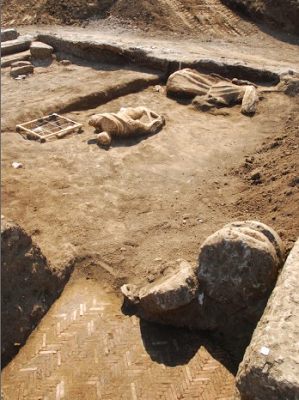
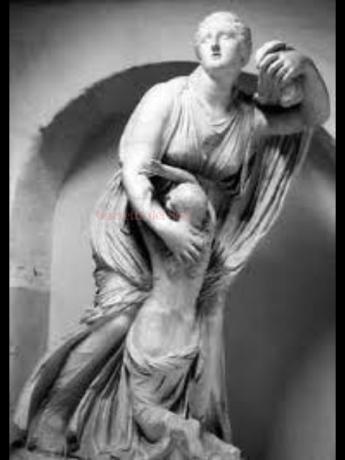
Rome, January 8 – Archaeologists say they’ve uncovered an “exceptional” group of sculptures dating to the 1st century BC in a villa in Rome’s suburb of Ciampino. The sculptures, found in an ancient villa owned by Roman general Marcus Valerius Messalla Corvinus, a patron of the poet Ovid, tell the myth of Niobe, the proud daughter of Tantalus who lost all her 14 children after boasting to the mother of Apollo and Artemis, Leto, about her fertility. Niobe, regarded as a classic example of the retribution caused by the sin of pride or hubris, was turned to stone. Excavations at the villa have also revealed a thermal bath area with fragments of artistic mosaics and a swimming pool as long as 20 meters with walls painted blue. Inside the bath area were found seven sculptures dating to the Augustan age, as well as a complete series of fragments that experts say can be reassembled. The group tells the story of Niobe, which figured in Ovid’s epic poem of transformation, the Metamorphoses, published in AD 8. La Repubblica newspaper said Tuesday a team of archaeologists made the valuable discovery last summer. “Statues of Niobe have been found in the past, but in the case of Ciampino, we have a good part of the group,” of statues, said Elena Calandra, superintendent of archaeological heritage. According to their reconstruction of the bath area, experts say the statues were carved on all four sides of the swimming pool, which may have been buried by an earthquake in the 2nd century AD. (file photo of Niobe statue)

This is as cool as another story on the other end of the spectrum, as it were.  The Mars rover Curiosity has – for the first time – used its brush!  Yes!  It has!  HERE.

PASADENA, Calif. — NASA’s Mars rover Curiosity has completed first-time use of a brush it carries to sweep dust off rocks.

Nearing the end of a series of first-time uses of the rover’s tools, the mission has cleared dust away from a targeted patch on a flat Martian rock using the Dust Removal Tool.

The tool is a motorized, wire-bristle brush designed to prepare selected rock surfaces for enhanced inspection by the rover’s science instruments. It is built into the turret at the end of the rover’s arm. In particular, the Alpha Particle X-ray Spectrometer and the Mars Hand Lens Imager, which share the turret with the brush and the rover’s hammering drill, can gain information after dust removal that would not be accessible from a dust-blanketed rock.

Choosing an appropriate target was crucial for the first-time use of the Dust Removal Tool. The chosen target, called “Ekwir_1,” is on a rock in the “Yellowknife Bay” area of Mars’ Gale Crater. The rover team is also evaluating rocks in that area as potential targets for first use of the rover’s hammering drill in coming weeks.

Images of the brushed area on Ekwir are online HERE.

Ciampino.

JUST TOO COOL: Of Niobids and Rovers

Mars:

JUST TOO COOL: Of Niobids and Rovers

Posted in Just Too Cool, Look! Up in the sky! | Tagged , , , ,
2 Comments

“The Latin Mass is like beer. You have to drink it in a few times to like it.” Why Taylor Marshall attends the TLM.

May I suggest that you trot like Chaucer over to Taylor Marshall’s place and read his reflection on why he now attends Holy Mass in the Usus Antiquior?

Some highlights to whet the… you know…

I’ve not always been partial to the Latin Mass. For a few years after my conversion to the Catholic Faith, I was cautiously curious about the the “old Mass.” I perceived it as exotic, antiquarian, and even as a dangerous.

[…]

Most of it had to do with my alarm at the liturgical abuse that we witnessed. For example, the first time that my 4 year old daughter saw female “altar boys” serving at the altar, she tugged on my sleeve and said, “Daddy, look. I wanna be a girl priest, too.” Not encouraging.

[…]

The EM to whom we were routed that day was wearing jeans and she had on an over sized blue shirt with a giant image of Grover’s face. I just did a Google search and found a picture of the exact shirt: …

[…]

As I returned to my pew, I thought inwardly: “This is it! I just can’t take it anymore. Things have to change Lord. I’m now desperate. I don’t want my children to grow up with this perception of the one true Faith.” I had seen worse things than this before, but for some reason the Grover moment broke me.

I was now ready to make full hearted foray into the Latin Mass community served by the FSSP (Priestly Fraternity of Saint Peter – in union with the Holy Father, of course). Yet, I had a few pre-conceived notions against the Latin Mass and its adherents.

[…]

The Latin Mass is like beer. You have to drink it in a few times to like it. My challenge would be for you to attend the Latin Mass for four Sundays in a row before making a decision. Give it that long. Here’s why.

You will slowly make a shift in the way that you assist at Holy Mass. Your concept of Active Participation will transform in your heart. There is a lot of quiet “space” in the Latin Mass. The first time or so, you’ll be sitting there doing nothing and thinking, “What’s going on? Why aren’t we doing anything?”

When you’ve reached that point, you’re getting close. It’s like drinking beer for the first time. “This tastes terrible? What’s the hype? I don’t understand.” But then you come to realize that beer is more than just the taste.

[…]

Read the rest there.

Posted in "How To..." - Practical Notes, Benedict XVI, Liturgy Science Theatre 3000, New Evangelization, Our Catholic Identity, SUMMORUM PONTIFICUM, The Drill | Tagged , , ,
57 Comments