ASK FATHER: Convert -“Should I do as my fellow Romans do?”

From a reader…

QUAERITUR:

I am a recent convert to the Church from a Continuing Anglican Church.

I was a 45 year Anglo-Catholic.

I make what I consider to be the appropriate Signing and obeisances during the Gloria, Creed, Sanctus, Benedictus qui venit, Elevations, etc. I am the only one to do so, that I can tell, in a NO parish of 400 to 500 on a given Sunday.

I also feel conspicuous because I sit near the front in a divided nave with pews facing inward and I am one of about a dozen, counting ushers, that wear coat and tie. Should I do as my fellow Romans do? I do, however, generally dress down for daily said Masses.

No one has said anything … yet … but I have heard stories about general disdain by some cradle Catholics leery of converts as being generally pretentious and too traditional. The last thing I want is to make folks uncomfortable but I feel the need to honor my Savior in the manner I have for over 4 decades.

I would very much appreciate your advise.

GUEST PRIEST RESPONSE: Fr. Tim Ferguson

There was a time, for about 19 centuries, when the posture of the laity attending the Holy Mass was not the subject of universal legislation. There were customs, to be certain – and custom gains the force of law when it is practiced over a significant period of time (the current legislation allows for customs that have been in place for 30 years to obtain the force of law). But for the most part, during centuries of the Church’s life, the congregation was free to do pretty much whatever devotion, faith, piety, and human nature called them to do. Society did what society does and enforced certain taboos – if you’re going to smoke a cigarette during Mass, please step outside; standing up with hands outstretched and shouting “Hallelujah” during the Canon is frowned upon; gathering with your guild and praying a loud novena to St. Apollonia during the sermon would get you all a talking-to. If matters became particularly distracting or problematic, there was sometimes local legislation passed. The Bishops of Chartres issued several decrees up until the 18th century forbidding the Canons of the Cathedral from playing a game of ball (probably much like four-square) in the labyrinthine paving of the cathedral during the liturgy.

But now, we have rubrics covering the posture of the laity. And we have an increasing vigilance on the part of some in the Church to enforce those rubrics with a ferocity that would make Draco blush. Clergy and laity alike seem unwilling to tolerate even mild deviance from written and unwritten expectations of behavior on the part of their fellow worshipers.

My viewpoint, as a former layperson attending and as a current priest offering the Holy Mass is – as long as it isn’t distracting to others or offensive, or explicitly forbidden by the rubrics – go for it. Quod non prohibit, licet. As a spiritual director, if someone asked me about a particular practice, I would ask primarily about motive: why are you doing this (whatever *this* is)? Is it a genuine act of piety, or is it a plea for attention? If it is causing friction with fellow-parishioners, what is the cost-benefit analysis? In general, though, I’m all for a wide latitude in liturgical posturing by laity, out of respect for the majority of our tradition – and remember that the catholicity of the Church means that we extend both spatially and temporally. Let’s not fall subject to the tyranny of the present in our efforts to offer proper worship to Our Lord.

Posted in "How To..." - Practical Notes, ASK FATHER Question Box, HONORED GUESTS, Liturgy Science Theatre 3000 |
14 Comments

“The roll was called, and it sounded like the gates of hell opened up.”

From PJMedia comes this insightful comment on the Left:

Kavanaugh Foes Fill Senate Gallery With Sounds of the Insane

I’ll charm the air to give a sound,
While you perform your antic round.

– MacBeth

I was in the Senate gallery this afternoon when Justice Brett Kavanaugh was confirmed. You would have thought I was at an exorcism in an insane asylum.

Perhaps you were watching on television and heard the disruptions, though you certainly didn’t see them. The attenuated audio probably didn’t catch the frightening, incoherent shrieking – including the lingering screaming and howling as they were being dragged down the hallways outside the gallery.

If there was any doubt that the opposition to Kavanaugh was unhinged, uncivil, disruptive, rude, and borderline nuts, my experience in the gallery made it clear.

The first example came when Senator Cornyn rightfully railed against the mobs who spent the last three weeks assaulting and assailing Kavanaugh supporters.

“Mob rule is necessary,” one shrieking woman shouted before security personnel could settle her down.

At least she was honest. It did not appear that Capitol Police removed her for her crime, unfortunately. That would soon change.

Another crazed woman later screamed, “I will not consent, I will not consent, I will not consent, I will not consent.” She was like a feminist automaton: “I will not consent, I will not consent.” Capitol Police were less forgiving and dragged her out the doors and down the hallway.

I have visited hospitals for the seriously mentally ill, and the shrieks from this woman were as odd and unearthly as anything I ever heard inside a mental hospital. They echoed off the halls and ceilings outside the gallery in decreasing but astonishing amplitude.

Then the roll was called, and it sounded like the gates of hell opened up.

Nearly a dozen women erupted in unison, shouting, howling, screaming, in an unrecognizable venomous wail. They wouldn’t stop. There was fury, rage, hate, poison in the noise.

It wasn’t prose. It wasn’t song. It was a swarming, shrill, swirling noise.

I leaned over to someone and whispered, “Pay attention, that’s what the Left sounds like.”

Nothing they were yelling and howling could be heard. It was the sound of all of them, in discordant, rage-fueled, wild fury, that was so unearthly. I have never heard a sound like it before.

Senator Dick Durbin said a few weeks ago in response to the committee that these were the sounds of democracy.

No they weren’t. They were the sounds of a group of people tinkering with madness. They were the sounds of irrational, unhinged, and unmoored lunatics. These were the people who opposed Kavanaugh’s nomination. They were an embarrassment to themselves.

[…]

That’s the Left.

Posted in Liberals, Self-absorbed Promethean Neopelagians, The Coming Storm, The Drill | Tagged ,
21 Comments

The answer to the chaos in the Church is…

I received a note today from a friend in London – how I need a visit there! – who made one of the wisest comments I’ve read about The Present Crisis.

“The answer to the chaos in the Church is to make children and make new priests.”

Posted in SESSIUNCULA |
11 Comments

ASK FATHER: Referring to God as both “genders”

From a reader…

QUAERITUR:

Is it proper to refer to God by using the pronouns he/she? They argue God is both genders… heretical?

GUEST PRIEST RESPONSE: Fr. Tim Ferguson

The current zeitgeist (and what a geist it is) seems to indicate that folks have the right to be called by whatever pronouns they prefer – reality be damned! If a man asks to be referred to as “she” or “her,” our soi-disant cultural betters wag their angry fingers at us when we stumble, confused by our silly obsession with plain facts, and call him, “him” (oh drat, there I go already. I meant to write, “call her, ‘him’”). If an individual of unknown and non-obviously apparent sex wishes to be referred to as “xe” and “xer,” woe betides the hapless realist who fails to acknowledge the neologistic pronouns.

In this age, lest we fall afoul of the societal salons, it would seem best, rather than relying on our own perception, to ask the Almighty what pronouns would be best to use in addressing the August Divinity.

Fortunately for us, we don’t have to ask. He (and I say “He” with confidence) has replied with gusto. In the Person of His Son, He has informed us that He prefers to be called “Father.” This same Son graciously refers to Himself as “He,” as He does the Father and the Holy Spirit. Lest we be horribly inconsiderate to Our Creator, it seems that we should best respect His explicit preference for the use of masculine pronouns in reference to Him.

Posted in "How To..." - Practical Notes, ASK FATHER Question Box |
7 Comments

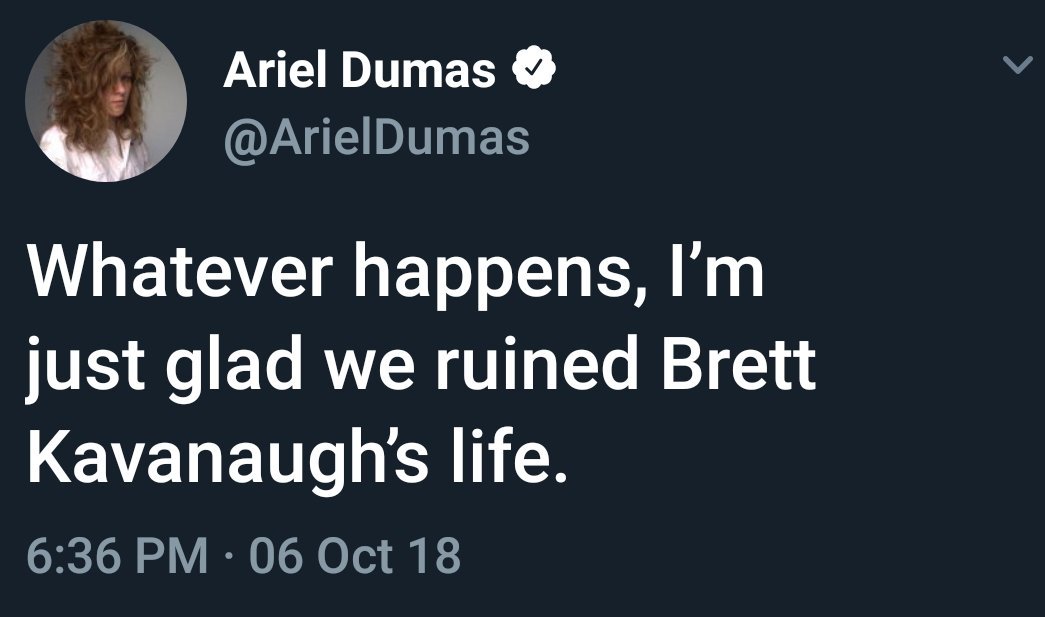
@JamesMartinSJ close association with “comedian” whose writer is “glad we ruined Brett Kavanaugh’s life”

Homosexualist activist and Jesuit Fr. James Martin, LGBTSJ, calls himself the “Show Chaplain” for the execrable and only occasionally amusing Stephen Colbert.  HERE and HERE

Here’s something for the “Show Chaplain” to Colbert Report, Colbert’s former show before taking over a new gig in the evenings.

I was alerted to a story at Fox and at Twitchy, which recounts how a writer for Colbert wrote a horrific tweet about now-Justice Kavanaugh.

Show writer Ariel Dumas (pronounced “dumass” perhaps?) posted:

Nice, huh?  Look at that again.

“Whatever happens, I’m just glad we ruined Brett Kavanaugh’s life.”

She’s glad that “we” ruined a man’s life.

Can we assume that “we” means people she associates with, perhaps on the staff of the show?

A few examples of how Colbert’s present show how (written by Arial Dumass) treated Kavanaugh.   HERE and HERE and HERE.

Yep… they tried to ruin a man’s life.

That’s hilarious, isn’t it.

She later deleted this tweet (someone captured it) and then locked her account.

This is a great example of how the Left thinks and works: personal destruction of anyone they find threatening.

This is the crowd that Martin, LGBTSJ, runs with. 

How will the “chaplain” of the Colbert Show handle this? 

He has taken a public position on and about that show.  In this news, you can see something of the culture behind the show.


Posted in SESSIUNCULA | Tagged , , ,
7 Comments

Card. Ouellet’s Letter to Archbp. Viganò about the #ViganoTestimony

The Prefect of the Congregation for Bishops wrote an Open Letter to Archbp. Viganò, once the Nuncio to these USA.  As you know, Archbp. Viganò released a “Testimony“.   Then he went into hiding, for good reason.

In the sequel to the Testimony, Archbp. Viganò addressed himself directly to Card. Ouellet.  Here is that excerpt:

I would like to make a special appeal to Cardinal Ouellet, because as nuncio I always worked in great harmony with him, and I have always had great esteem and affection towards him. He will remember when, at the end of my mission in Washington, he received me at his apartment in Rome in the evening for a long conversation. At the beginning of Pope Francis’ pontificate, he had maintained his dignity, as he had shown with courage when he was Archbishop of Québec. Later, however, when his work as prefect of the Congregation for Bishops was being undermined because recommendations for episcopal appointments were being passed directly to Pope Francis by two homosexual “friends” of his dicastery, bypassing the Cardinal, he gave up. His long article in L’Osservatore Romano, in which he came out in favor of the more controversial aspects of Amoris Laetitia, represents his surrender. Your Eminence, before I left for Washington, you were the one who told me of Pope Benedict’s sanctions on McCarrick. You have at your complete disposal key documents incriminating McCarrick and many in the curia for their cover-ups. Your Eminence, I urge you to bear witness to the truth.

Ouellet has now responded to Viganò

Here is Ed Pentin’s translation of Card. Ouellet’s Letter to Viganò.  My emphases.  Emphases in the original.  My comments[UPDATE: Pentin replaced his translation with an, as yet, unofficial Vatican translation – here they are side by side.


Pentin Translation (Vatican working translation)
Dear Brother Carlo Maria Viganò,

In your last message to the media, in which you denounce Pope Francis and the Roman Curia, you urge me to tell the truth about facts that you interpret as an endemic corruption that has invaded the hierarchy of the Church to its highest level. With due pontifical permission, I offer here my personal testimony, as prefect of the Congregation for Bishops, on the events concerning the Archbishop Emeritus of Washington Theodore McCarrick and his alleged links with Pope Francis, which are the object of your vehement public denunciation as well as of your demand that the Holy Father resign. I write this testimony of mine on the basis of my personal contacts and the documents in the archives of the above mentioned Congregation, which are currently the object of a study to shed light on this sad case.


Dear brother Carlo Maria Viganò,

In your last message to the press, in which you make accusations against Pope Francis and against the Roman Curia, you invite me to tell the truth about certain facts that you interpret as signs of an endemic corruption that has infiltrated the hierarchy of the Church up to its highest levels. With pontifical permission, and in my capacity as Prefect of the Congregation for Bishops, I offer my testimony about matters concerning the Archbishop emeritus of Washington, Theodore McCarrick, and his presumed links to Pope Francis, matters that are at the center of your public accusations and your demand that the Holy Father resign. I write my testimony based on my personal contacts and on documents in the archives of the Congregation, currently the object of study to clarify this sad case.


Allow me to tell you first of all, in all sincerity, by virtue of the good relationship of collaboration that existed between us when you were nuncio to Washington, that your current position seems to me incomprehensible and extremely reprehensible, not only because of the confusion that it sows among the people of God, but because your public accusations seriously damage the reputation of the Successors of the Apostles. I remember a time when I enjoyed your esteem and confidence, but I observe that I have lost in your eyes the dignity you placed in me, for the mere fact of having remained faithful to the directions of the Holy Father in the service that he entrusted to me in the Church. Is not communion with the Successor of Peter the expression of our obedience to Christ who chose him and supports him with His grace? My interpretation of Amoris Laetitia, which you complain about, is inscribed in this fidelity to the living tradition, of which Francis has given us an example with the recent modification of the Catechism of the Catholic Church on the question of the death penalty. Out of consideration for the good, collaborative relation we had when you were Apostolic Nuncio in Washington, allow me to say, in all honesty, that I find your current attitude incomprehensible and extremely troubling, not only because of the confusion it sows among the People of God, but because your public accusations gravely harm the reputation of the bishops, successors of the Apostles. I recall a time when I enjoyed your esteem and your trust, but now I see that I have been stripped in your eyes of the respect that was accorded to me, for the only reason I have remained faithful to the Holy Father’s guidance in exercising the service he has entrusted to me in the Church. Is not communion with the Successor of Peter an expression of our obedience to Christ who chose him and sustains him with his grace? My interpretation of Amoris Laetitia, which you criticize, is grounded in this fidelity to the living tradition, which Francis has given us another example of by recently modifying the Catechism of the Catholic Church on the question of the death penalty.
Let’s get to the facts. You say you informed Pope Francis on 23 June 2013 about the McCarrick case in the audience he granted to you, as well as to many other pontifical representatives he then met for the first time on that day. I imagine the enormous amount of verbal and written information he had to gather on that occasion about many people and situations. I strongly doubt that McCarrick interested him to the extent that you believe, since he was an archbishop emeritus of 82 years and seven years without a post. In addition, the written instructions prepared for you by the Congregation for Bishops at the beginning of your service in 2011 did not say anything about McCarrick, except what I told you about his situation as an emeritus bishop who had to obey certain conditions and restrictions because of rumors about his behavior in the past. Let us address the facts. You said that on June 23, 2013, you provided Pope Francis with information about McCarrick in an audience he granted to you, as he also did for many pontifical representatives with whom he met for the first time that day. I can only imagine the amount of verbal and written information that was provided to the Holy Father on that occasion about so many persons and situations. I strongly doubt that the Pope had such interest in McCarrick, as you would like us to believe, given the fact that by then he was an 82-year-old Archbishop emeritus who had been without a role for seven years. Moreover, the written instructions given to you by the Congregation for Bishops at the beginning of your mission in 2001 did not say anything about McCarrick, except for what I mentioned to you verbally about his situation as Bishop emeritus and certain conditions and restrictions that he had to follow on account of some rumors about his past conduct.
Since June 30, 2010, when I became prefect of this Congregation, I have never taken the McCarrick case to an audience with Pope Benedict XVI or Pope Francis, except in the last few days, after his fall from the College of Cardinals. The former cardinal, who retired in May 2006, was strongly urged not to travel, nor to appear in public, in order not to provoke further rumours about him. It is false to present the measures taken against him as “sanctions” decreed by Pope Benedict XVI and annulled by Pope Francis. After reviewing the archives, I note that there are no documents in this regard signed by either Pope, nor a note of an audience of my predecessor, Cardinal Giovanni-Battista Re, which would have given a mandate to the archbishop emeritus McCarrick to live a private life of silence, with the rigor of canonical penalties. The reason for this is that, unlike today, there was not enough evidence of his alleged guilt at the time. Hence the position of the Congregation inspired by prudence and the letters of my predecessor and mine reiterated, through the Apostolic Nuncio Pietro Sambi and then also through you, the exhortation to live a discreet life of prayer and penance for his own good and for that of the Church. His case would have been the subject of new disciplinary measures if the nunciature in Washington, or any other source, had provided us with recent and decisive information about his behavior. I hope, like so many others, that out of respect for the victims and the need for justice, the investigation under way in the United States and the Roman Curia will finally give us a critical, overall view of the procedures and circumstances of this painful case, so that such events do not recur in the future. From 30th June 2010, when I became Prefect of the Congregation for Bishops, I never presented in audience the McCarrick case to Pope Benedict XVI or to Pope Francis – not until recently, after his dismissal from the College of Cardinals. The former Cardinal, retired in May of 2006, had been requested not to travel or to make public appearances, in order to avoid new rumors about him. It is false, therefore, to present those measures as “sanctions” formally imposed by Pope Benedict XVI and then invalidated by Pope Francis. After a review of the archives, I find that there are no documents signed by either Pope in this regard, and there are no audience notes from my predecessor, Cardinal Giovanni-Battista Re, imposing on the retired Archbishop the obligation to lead a quiet and private life with the weight normally reserved to canonical penalties. The reason is that back then, unlike today, there was not sufficient proof of his alleged culpability. Thus, the Congregation’s decision was inspired by prudence, and the letters from my predecessor and my own letters urged him, first through the Apostolic Nuncio Pietro Sambi and then through you, to lead a life of prayer and penance, for his own good and for the good of the Church. His case would have deserved new disciplinary measures if the Nunciature in Washington, or any other source, had provided us recent and definitive information about his behavior. I am of the opinion that, out of respect for the victims and given the need for justice, the inquiry currently underway in the United States and in the Roman Curia should provide a comprehensive and critical study of the procedures and the circumstances of this painful case in order to prevent something like it from ever happening in the future.
How can it be that this man of the Church, whose inconsistency is known today, has been promoted on several occasions, to the point of holding the highest positions of Archbishop of Washington and Cardinal? I myself am very surprised by this and recognize the shortcomings in the selection process that has been carried out in his case. But without going into detail here, it must be understood that the decisions taken by the Supreme Pontiff are based on the information available at that precise moment and that they constitute the object of a prudential judgment that is not infallible. It seems unfair to me to conclude that the persons in charge of prior discernment are corrupt even though, in the concrete case, some clues provided by the testimonies should have been further examined. The prelate in question knew how to defend himself with great skill from the doubts raised in his regard. On the other hand, the fact that there may be people in the Vatican who practice and support behavior contrary to the values of the Gospel in matters of sexuality does not authorize us to generalize and to declare this or that, and even the Holy Father himself, unworthy and complicit. Should the ministers of truth not, first of all, guard themselves against slander and defamation? How is it possible that this man of the Church, whose incoherence has now been revealed, was promoted many times, and was nominated to such a high position as Archbishop of Washington and Cardinal? I am personally very surprised, and I recognize that there were failures in the selection procedures implemented in his case. However, and without entering here into details, it must be understood that the decisions taken by the Supreme Pontiff are based on the information available to him at the time and that they are the object of a prudential judgment which is not infallible. I think it is unjust to reach the conclusion that there is corruption on the part of the persons entrusted with this previous discernment process, even though in the particular case some of the concerns that were raised by testimonies should have been examined more closely. The Archbishop also knew how to cleverly defend himself from those concerns raised about him. Furthermore, the fact that there could be in the Vatican persons who practice or support sexual behavior that is contrary to the values of the Gospel, does not authorize us to make generalizations or to declare unworthy and complicit this or that individual, including the Holy Father himself. Should not ministers of the truth avoid above all calumny and defamation?
Dear pontifical representative emeritus, I tell you frankly that to accuse Pope Francis of having covered up with full knowledge of the facts this alleged sexual predator and therefore of being an accomplice of the corruption that is spreading in the Church, to the point of considering him unworthy of continuing his reform as the first pastor of the Church, is incredible and unlikely from all points of view. I can’t understand how you could let yourself be convinced this monstrous accusation could stand. Francis had nothing to do with McCarrick’s promotions in New York, Metuchen, Newark and Washington. He removed him from his dignity as a Cardinal when a credible accusation of child abuse became apparent. I have never heard Pope Francis allude to this self-styled great adviser of his pontificate in relation to [episcopal] nominations in America, even though he does not hide the trust he gives some prelates. I sense these are not your preferences, nor those of your friends who support your interpretation of the facts. However, I find it aberrant that you take advantage of the sensational scandal of sexual abuse in the United States to inflict on the moral authority of your Superior, the Supreme Pontiff, an unprecedented and undeserved blow. Dear pontifical representative emeritus, I tell you frankly that to accuse Pope Francis of having covered-up knowingly the case of an alleged sexual predator and, therefore, of being an accomplice to the corruption that afflicts the Church, to the point that he could no longer continue to carry out his reform as the first shepherd of the Church, appears to me from all viewpoints unbelievable and without any foundation. I cannot understand how could you have allowed yourself to be convinced of this monstrous and unsubstantiated accusation. Francis had nothing to do with McCarrick’s promotions to New York, Metuchen, Newark and Washington. He stripped him of his Cardinal’s dignity as soon as there was a credible accusation of abuse of a minor. For a Pope who does not hide the trust that he places in certain prelates, I never heard him refer to this so called great advisor for the pontificate for episcopal appointments in the United States. I can only surmise that some of those prelates are not of your preference or the preference of your friends who support your interpretation of matters. I think it is abhorrent, however, for you to use the clamorous sexual abuse scandal in the United States to inflict an unmerited and unheard of a blow to the moral authority of your superior, the Supreme Pontiff.
I have the privilege of meeting Pope Francis for a long time each week, to discuss the appointments of bishops and the problems that affect their government. I know very well how he treats people and problems: with much charity, mercy, attention and seriousness, as you yourself have experienced. Reading how you end your last, seemingly very spiritual message, making light of yourself and casting doubt on his faith, seemed to me really too sarcastic, even blasphemous! This cannot come from the Spirit of God. [Blasphemy?  I suggest that blasphemy is really about detraction against God, not against any human being, no matter what his role.] I have the privilege of having long meetings with Pope Francis every week to discuss the appointment of bishops and the problems that affect their governance. I know very well how he treats persons and problems: with great charity, mercy, attentiveness and seriousness, as you too have experienced. I think it is too sarcastic, even blasphemous, how you end your last message, purportedly appealing to spirituality while mocking the Holy Father and casting doubt about his faith. That cannot come from the Spirit of God.
Dear Brother, I would really like to help you rediscover communion with him who is the visible guarantor of the communion of the Catholic Church; [Is the Prefect of Bishops forecasting a future censure?] I understand how bitterness and disappointment have marked your path in service to the Holy See, but you cannot end your priestly life in this way, in an open and scandalous rebellion, which inflicts a very painful wound on the Bride of Christ, whom you claim to serve better, worsening division and bewilderment in the people of God! What can I answer your question if I don’t tell you: come out of your hiding place, repent of your revolt and return to better feelings towards the Holy Father, instead of exacerbating hostility against him. How can you celebrate the Holy Eucharist and pronounce his name in the canon of Mass? How can you pray the holy Rosary, Saint Michael the Archangel and the Mother of God, condemning the one she protects and accompanies every day in his weighty and courageous ministry?  [With due respect to the Cardinal, this is a little over the top, especially in a time when everyone is supposed to respect everyone else’s conscience.] Dear brother, how much I wish that I could help you return to communion with him who is the visible guarantor of communion in the Catholic Church. I understand that deceptions and sufferings have marked your path in the service to the Holy See, but you should not finish your priestly life involved in an open and scandalous rebellion that inflicts a very painful wound to the Bride of Christ, whom you pretend to serve better, while causing further division and confusion among the People of God. How could I answer your call except by saying: stop living clandestinely, repent of your rebelliousness, and come back to better feelings towards the Holy Father, instead of fostering hostility against him. How can you celebrate Mass and mention his name in the Eucharistic Prayer? How can you pray the Holy Rosary, or pray to Saint Michael the Archangel, or to the Mother of God, while condemning the one Our Lady protects and accompanies every day in his burdensome and courageous mission?
If the Pope were not a man of prayer, if he were attached to money, if he favored the rich to the detriment of the poor, if he did not show an untiring energy to welcome all the poor and give them the generous comfort of his word and his gestures, if he did not multiply all the possible means to proclaim and communicate the joy of the Gospel to everyone and to all in the Church and beyond her visible borders, if he did not reach out to families, to abandoned old people, to the sick in soul and body and especially to the young people in search of happiness, perhaps someone else could be preferred, according to you, with different diplomatic or political attitudes. But I, who have known him well, I cannot question his personal integrity, his consecration to the mission and especially the charism and peace that dwell in him by the grace of God and the power of the Risen One. If the Pope was not a man of prayer; if he was attached to money; if he favored riches to the detriment of the poor; if he did not demonstrate a tireless energy to welcome all miseries and to address them through the generous comfort of his words and actions; if he did not seek to implement all possible means to announce and to communicate the joy of the Gospel to all in the Church and beyond her visible horizons; if he did not lend a hand to the families, to the abandoned elderly, to the sick in body and soul and, above all, to the youth in their search for happiness; one could prefer someone else, according to you, with a different political or diplomatic approach. But I cannot call into question his personal integrity, his consecration to the mission and, above all, the charisma and peace he enjoys through the grace of God and the strength of the Risen One.
In response to your unjust and unjustified attack, dear Viganò, I conclude therefore that the accusation is a political set-up without a real foundation that can incriminate the Pope, and I reiterate that it deeply hurts the communion of the Church. May it please God that this injustice be quickly remedied and that Pope Francis continue to be recognized for what he is: an outstanding pastor, a compassionate and firm father, a prophetic charism for the Church and for the world. May he continue with joy and full confidence his missionary reform, comforted by the prayer of God’s people and by the renewed solidarity of the whole Church with Mary, Queen of the Holy Rosary. Dear Viganò, in response to your unjust and unjustified attack, I can only conclude that the accusation is a political plot that lacks any real basis that could incriminate the Pope and that profoundly harms the communion of the Church. May God allow a prompt reparation of this flagrant injustice so that Pope Francis can continue to be recognized for who he is: a true shepherd, a resolute and compassionate father, a prophetic grace for the Church and for the world. May the Holy Father carry on, full of confidence and joy, the missionary reform he has begun, comforted by the prayers of the people of God and the renewed solidarity of the whole Church, together with Mary, Queen of the Holy Rosary!
Marc Cardinal Ouellet, Prefect of the Congregation for Bishops,

Feast of Our Lady of the Holy Rosary, October 7, 2018.”


Marc Cardinal Ouellet

Prefect of the Congregation for Bishops,

Feast of Our Lady of the Holy Rosary, October 7th 2018.”


So, that’s a “no” vote from the Cardinal Prefect.

UPDATE:

Ed Pentin made an observation:

Posted in The Coming Storm, The Drill, The future and our choices | Tagged , ,
55 Comments

Your Sunday Sermon Notes

Was there a good point made in the sermon you heard during your Mass to fulfill your Sunday Obligation?

Let us know.

For my part, I spoke about our roles in the terrible war raging in the Church today.

Posted in Liturgy Science Theatre 3000, Our Solitary Boast |
6 Comments

ASK FATHER: Intentions of the Holy Father, indulgences and you

Today is the 1st Sunday of October and therefore we have the chance to gain the indulgence attached to the Supplication to Our Lady of Pompeii.  More on that HERE.

Several people have written to me recently to ask about one of the things we have to do to gain indulgences, namely, pray for the Holy Father’s intentions.    They are, how to say this… hesitant about this aspect of gaining indulgences.

Allow me to remind you of a few things.

First, to pray for the intentions of the Holy Father means to pray for the intentions that he designates.  In modern times, Popes have on a monthly basis designated some intentions for prayer.

That said, there are also traditional intentions designated as the intentions of the Holy Father.

Because we are unreconstructed ossified manualists, we turn an old manual for help.

A synopsis of the Pontiff’s intentions is found in Prümmer’s manual (vol. III, no. 556). Prümmer says that “Intentions of the Holy Father” for which we pray in the course of obtaining an indulgence, are a five-fold set which tradition (and the former Congregations) fixed as such, namely:

1. Exaltatio S. Matris Ecclesiæ (The triumph/growth of holy mother the Church),
2. Extirpatio hæresum (The rooting out of heresy),
3. Propagatio fidei (The propogation of the Faith)
4. Conversio peccatorum (The conversion of sinners),
5. Pax inter principes christianos (Peace among christian rulers).

A Catholic today can use this classic and traditional set of intentions for the purpose of gaining indulgences.

Posted in "How To..." - Practical Notes, ASK FATHER Question Box | Tagged , , ,
6 Comments

Fr. Z’s Kitchen: Roman Saturday Tripe! “No tripe for the dems!”

Romans have a tradition of making great food out of the quinto quarto, the fifth fourth, that is, the parts of the animals that weren’t sold for income or were very cheap.

There’s a tradition in Rome of eating tripe on Saturdays.  You can see from time to time in the City “SABATO TRIPPA”.  Hence, trippa alla romana.

Today I’m enjoying tripe because it’s Saturday, we’ve had a lot to stomach over the last few weeks and, for the libs, there’s an old proverb which basically means, “We’re ___ out of luck!”, that is, “Non c’è trippa per i gatti!… There’s no tripe for the cats!”   On that note, I’ll be watching the Senate confirmation vote.

So, cows have various stomachs by which they do their thing.  The type I found at the store was the reticolo, so named for its “net” pattern.  It’s nicknamed “beretta” like the thing priests wear on their heads and carry at their “4”.

The outside presages the inside.

This was uncooked.  In Rome you can buy it pre-cooked, which cuts down the prep time.

I simmered the beretta with onion, carrot, celery, garlic.

When the water got hot, the tripe contracted into something that you could repair tires with.

After several hours, it relaxed again.   Here’s the set up.  NB: Clement XIV mug, which can be YOURS!  CLICK!

Start with pancetta in the pan.   Add your chopped onion, celery and carrot.  I used some of the simmering water from time to time to start a bit of a sauce that the tripe could suck up.

Time to cut this up.

In they go, in all there reticulated goodness.

Add tomato.   I might add a little more later.  I plan on giving this a few more hours.

In Rome you can find a couple variants of “Roman style” tripe.  There’s the spiffier kind which uses a meat-tomato sauce to cook the tripe and the poorer kind which uses just tomato.  The later is sometimes called “trippa alla trasteverina”, the sort made “across the Tiber” from central Roma, once a poorer district and the area where I sort of “grew up” when I moved over there.  The streets of trastevere are where I founded my Italian.  Also, sometimes in the reports of journalists who cover the Vatican will, in Italian, refer to “oltretevere… beyond or across the Tiber” for the Roman Curia, etc.

That reminds me of the Ode by Horace, which I’ll now share with you.

In Ode 1.20 the poet talks about his countryside ville (his “Sabine Farm”… *sigh*), his wine and a great shout that echoed out over Rome for his patron Maecenas:

Vile potabis modicis Sabinum
cantharis, Graeca quod ego ipse testa
conditum levi, datus in theatro
cum tibi plausus,

care Maecenas eques, ut paterni
fluminis ripae simul et iocosa
redderet laudes tibi Vaticani
montis imago.

Caecubum et prelo domitam Caleno
tu bibes uvam; mea nec Falernae
temperant vites neque Formiani
pocula colles.

The parts below in parenthesis I added to make this clearer to those who don’t know much about Horace.

(When you visit me in the country at my farm)
You will quaff from simple drinking cups
the lowly Sabine which I laid down with the
Greek style seal, in the year when the applause
was given to you in the theater,

dear knight Maecenas, so loud that
the Vatican hill together with the banks of
the fatherly river Tiber sent the praises
back to you.

(At home) you will be drinking Caecuban and the grape
crushed in the Calenean press; my vines
and not Falernian or Formian vines will
blend in your cups
(when you visit my Sabine farm house in the country).

A long time ago, one of my Latin profs told me that as I got older I would appreciate Horace more and more.

Speaking of the echoing shout, during John Paul II’s funeral Mass Rome was still and silent.  There was virtually no traffic and, therefore, no “white noise” filling the air.  When, at the end, the pallbearers turned about with JPII’s coffin for the last time, a huge shout when up into the air.  Where I was sitting I could hear it echo out over the City.  It was probably the loudest single human sound ever made in the history of the city, given the number of people watching at that moment.

That’s where I am at right now with the tripe.  The place is filled with tripy fragrance.

I’ve selected an interesting Sangiovese with a little Cabernet Sauvignon in it, which should give it a bit more earthiness.

More later.

UPDATE:

UPDATE:

Tonight… brocoletti tossed in the pan with oil, garlic and hot pepper.  First given them a boiling bath for a few minutes.   Then, let them have it!

As I dressed it.

The only thing that made this better, is that I was able to made a little care package for my priest neighbor here at The Cupboard Under The Stair™.

Food like this needs sharing!

Anyway… so much can be done with so little, so long as you are patient and you have a little savvy.

Folks, make big meals now.  Invite friends and talk about what’s going on.  PRAY when you are together.

Enjoy your Catholic identity together!

Posted in Fr. Z's Kitchen | Tagged , ,
19 Comments

#Synod2018 – Wherein Fr. Z rants

“For God so loved the world that He did not send a committee.”

“If I ought to write the truth, I am of the mind that I ought to flee all meetings of bishops, because I have never seen any happy or satisfactory outcome to any council, nor one that has deterred evils more than it has occasioned their acceptance and growth.” – St. Gregory Nazianzus (ep. 131)

It seems to me that all this thrashing around with a Synod (“walking together”) is a waste of time… at least when it comes to the topic of “young people”.

First, there is almost no way that what happens there won’t come off as condescending.

Next, there is almost no way that what happens there will produce “solutions”.

How about this.

Let’s return to the liturgical worship of our forebears and give that a try, with the whole thing that even Vatican II commanded (Gregorian chant, Latin, no innovations, etc.).

Let’s return to clear preaching and explication of doctrine, succinctly and with conviction.  Getting rid of unneeded microphones could help (cf. McLuhan).

Let’s promote parish activities as of yore and opportunities for corporal and spiritual works of mercy.

But it all comes back to preaching (catechesis) and, above all, sacred liturgical worship.

My old pastor, Msgr. Schuler was wont to quip, “Nemo dat quod non got”, purposely macaronic, for “You can’t give what you aint’ got.”

We have to know clearly what we believe (fides quae creditur) and have a solid, holy relationship with the content of our Faith (fides quae creditur – a Person!) and we must be able to communicate it clearly and with charity (1 Peter 3:15).

If we don’t know who we are, then we can’t share who we are.  If we can’t share who we are, why should anyone bother to listen to us?

Why should young people listen to the previous generations if a) we don’t know the Faith and b) we don’t act like we believe it?

The strongest signals they receive are c) the Faith doesn’t mean enough to us that we want to hand it on and d) they don’t see us on our knees. 

They see us stick our hands out and they know that we never go to confession.  They’re not stupid.

And yet, inherent, I think, in young people, especially children, is a liturgical being struggling to be realized.  They want truth.  They have the right inclinations.  Hence, when they don’t get the good stuff that our forebears worked out really well, then they search for it elsewhere and through all they know: enthusiastic dashing about.

The starting point, therefore, is a renewal of our sacred liturgical worship of God.  That’s where we must start and that’s where we must wind up.

We cannot simply have a marketing approach evangelization.  Everything we do must flow from our Catholic identity and that must start and aim at worship, as individuals and as congregations.

We need liturgical worship for our identity, like our bodies need shelter, air and nourishment.

If we have become ineffective bring the Faith to the masses and the masses to the Faith, including young people, then we need to review how we are worshiping Almighty God.

We need a strong, hard identity liturgical life!  Prayer in the home with joy!   Works of mercy as a regular part of life!

Ask yourselves: Is what are you are getting at your parish or chapel providing what young people (and you) need?  Clear Catholic identity (which involves works of mercy as a sine quibus non)?

Fathers: Is that what you are providing for your flocks?

If not… for the love of all that’s holy WHY NOT?!?

This Synod stuff will wind up being smoke and mirrors, I’m afraid, unless simple points are addressed.

Posted in ¡Hagan lío!, "How To..." - Practical Notes, Hard-Identity Catholicism, Synod, The future and our choices, Turn Towards The Lord, Wherein Fr. Z Rants | Tagged ,
14 Comments
























