QUAERITUR: Confessions during Mass

I had a great conversation with a group of priests last night. The subject of confessions during Mass came up.  I promised to repost information I have previous shared.

The Sacrament of Penance needs to be revived.  Confessions before Masses is a great way to do this.  If there are enough priests available, confessions during Mass is another.

Here is the documentation translated from Latin found in Notitiae 37 (2001 – no. 419-420) pp. 259-260 with my emphases and comments:

Congregation for Divine Worship and the Discipline of the Sacraments (October 2001)

What are the dispositions governing the time for the celebration of the sacrament of Penance? For example, can the faithful have recourse to the sacrament of Penance during Mass?

The principal norms governing the time for the celebration of the sacrament of Penance are to be found in the Instruction Eucharisticum mysterium (25 May 1967), which states: The faithful are to be constantly encouraged to accustom themselves to going to confession outside [And this is very good. People should ideally be focused on the sacred action of Holy Mass when they are at Holy Mass. Also, special effort must be made to see to one’s own spiritual welfare. Moreover, depending on the way it is handled, hearing confessions during Mass might be distracting to some other people.] the celebration of Mass, and especially at the prescribed times. [This is close to one of my 20 Tips! #3] In this way, the sacrament of Penance will be administered calmly and with genuine profit, and will not interfere with active participation inthe Mass (no. 35). The same is reiterated in the Praenotanda of the Ordo Paenitentiae (no. 13), which states that: the reconciliation of penitents can be celebrated at any time and day. [Remember those people who claimed confessions couldn’t be heard during the Sacred Triduum?]

Nevertheless this ought to be understood as a counsel [Not an imperative, that is, that confessions should be heard at scheduled times rather than during Mass.] directed to the pastoral care of the faithful, who ought to be encouraged and helped to seek health of soul in the sacrament of Penance, and have recourse to it, as far as possible outside the place and time of the celebration of Mass. On the other hand, [Here we go…] this does not in any way prohibit priests, except the one who is celebrating Mass, from hearing confessions of the faithful who so desire, including during the celebration of Mass. [There it is, ladies and gentlemen.] Above all nowadays, when the ecclesial significance of sin and the sacrament of Penance is obscured in many people, and the desire to receive the sacrament of Penance has diminished markedly, pastors ought to do all in their power to foster frequent participation by the faithful in this sacrament. [In other words… this sacrament, and the awareness among the faithful of its importance, is really in danger.] Hence canon 986.1 of the Code of Canon law states: All to whom by virtue of office the care of souls is committed,are bound to provide for the hearing of the confessions of the faithful entrusted to them, who reasonably request confession, and they are to provide these faithful with an opportunity to make individual confession on days and at times arranged to suit them.

QUAERITUR: Confessions during MassThe celebration of the sacrament of Penance is indeed one of the ministries proper to priests. The Christian faithful, on the one hand, are not only obliged to confess their sins (cf. can. 989), but on the other hand are fully entitled to be assisted by their Pastors from the spiritual riches of the Church, especially by the word of God and the sacraments (can. 213).

Consequently, it is clearly lawful, even during the celebration of Mass, to hear confessions when one foresees that the faithful are going to ask for this ministry. In the case of concelebrations, it is earnestly to be desired that some priests would abstain from concelebrating [One a side note about concelebration, which ought to be safe, legal and rare… there are some priests who are obsessed with concelebration. They nearly impose it on other priests, in violation of their rights or judge priests badly if they choose (as is their right) not to concelebrate. This has happened to me, as a matter of fact, and in a surprising place. Still, I like this advice from the CDW: confession is very important – perhaps some men could hear confessions instead of concelebrating!] so as to be available to attend to the faithful who wish to receive the sacrament of Penance. It should be borne in mind, nevertheless, that it is not permitted to unite the sacrament of Penance with the Mass, making of them both a single liturgical celebration [This is done in the Novus Ordo sometimes with baptisms, for example, or even celebrations of liturgical hours such as vespers.].

Furthermore, in Redemptionis Sacramentum 76 we read:

Furthermore, according to a most ancient tradition of the Roman Church, it is not permissible to unite the Sacrament of Penance to the Mass in such a way that they become a single liturgical celebration. This does not exclude, however, that Priests other than those celebrating or concelebrating the Mass might hear the confessions of the faithful who so desire, even in the same place where Mass is being celebrated, in order to meet the needs of those faithful. This should nevertheless be done in an appropriate manner.

Cf. Pope John Paul II, Apostolic Letter (Motu Proprio), Misericordia Dei, 7 April 2002, n. 2: AAS 94 (2002) p. 455; Cf. Congregation for Divine Worship and the Discipline of the Sacraments, Response to Dubium: Notitiae 37 (2001) pp. 259-260.
Posted in "How To..." - Practical Notes, ASK FATHER Question Box, Linking Back, Mail from priests | Tagged , ,
23 Comments

News about the Instruction on Summorum Pontificum

The intrepid Andrea Tornielli has on his blog a note about the upcoming Instruction for Summorum Pontificum.

Here, in my fast translation, is the heart of the matter.

[…]

Above all, the instruction confirms that the Motu Proprio is universal law of the Church and that all are bound to apply it and guarantee that it be appled.  The Instruction affirms that the possibility of celebration in the old rite was assured where ever there are groups of the faithful who request it.  In the text it is not made more precise any minimum numer of the faithful who must constitute the group.

It is said on the other hand that it is good – in accord also with the Post-synodal exotation on the Eucharist – that seminarians study Latin and know celebration according to the old form.  [That exhoration doesn’t, I believe, mention that seminarians should know the old rite, but it does talk about Latin.  So does the 1983 Code of Canon Law… in no uncertain terms.] The “sacerdos idoneus”, for celebration with the pre-Conciliar missal, does not have to be an expert Latinist, but that he know and understand what he is reading and is called to pronounce during the rite.  [This may go a little beyond what a normal interpretation of law suggests.  I will stick with what Card. Egan said and what seems reasonable : since favoribilia ampliantur and odiosa restringenda, it seems that a priest needs to be able to pronounce the texts properly.  It is great if he can do more.]

The Pontifical Commission “Ecclesia ei”, which for two years has been part of the Congregation for the Doctrine of the Faith, will be established as an organism called to settle questions and controversies, making judgments in the name of the Pope.

Bishops must not and cannot promulgate norms that restrict the faculty conceeded by the Motu Proprio, nor can they change the conditions.  They are called, instead, to apply it.

The Triduum can also be celebrated in the pre-Conciliar rite where there is a stable group of the faithful bound to the older liturgy.  Members of religious orders can use the Missal in their respective preconciliar rites.

After this, Tornielli, in a paragraph of tortured Italian, describes what is going on with the Ambrosian Rite.  In a nutshell, the Ambrosian Rite is not mentioned.  The Pont. Comm. “Ecclesia Dei” does not have competence over the Ambrosian Rite, instead, the Congregation for Divine Worship does. It is like that the there will be a subsequent move to clarify the situation of the Ambrosian Rite, since it is the Pope’s obvious desire that the faithful have the older rites available if they want them.  In the past, when there have liturgical reforms, the Roman Rite received attention first, and the other rites followed.   That may be the situation here.

If this is the main thrust of the Instruction, we have to say that it is favorable to those who desire an even wider use of the older form of the Roman Rite.  I am sorry for those attached to the Ambrosian Rite, but I suspect something will be done about that too when the reorganization of the Congregation takes place.  Who knows.

Still, this is positive.

I draw your attention to the point about no minimum number of people being required, at least not specified, for there to be a “group”.  This is good.  The less said about numbers, the better.   Also, the matter about the Triduum is positive.  Let there also be the Triduum in the older rite for Catholics who desire to participate, if they can pull it off well.  Why should bishops be troubled with questions like that when they are burdened with far more pressing issues.

The point about priests and seminarians and Latin needs a comment.  When bishops ordain men to the diaconate and priesthood, someone stands up and attests that they are properly trained.  But the Code of Canon Law specifically says that seminarians must be very well-trained in Latin (c. 249).   So, if they aren’t, why are the formators telling bishops that they are well-trained?  These are seminarians and deacons and priests of the LATIN CHURCH and there is a specific canon that covers this point of training.  Furthermore, the Latin Rite has two forms.  Are seminarians well-trained and ready for service if they don’t know their Rite?  Moreover, Sacrosanctum Concilium states that pastors must make sure that their flocks can both sing and speak in both their mother tongue and Latin all the parts which pertain to them.  How does that happen if they themselves have no use fo the Latin language for the Rite which they are bound to celebrate for God’s people?

Okay… I’m finished.

Posted in SUMMORUM PONTIFICUM, The Drill, Wherein Fr. Z Rants | Tagged ,
38 Comments

Australia: Auxiliary bishop writes to Pope, considers resignation, Church too narrow

The Canberra Times has this

Australia: Auxiliary bishop writes to Pope, considers resignation, Church too narrowHard times: troubled bishop writes to Pope
BY GRAHAM DOWNIE, RELIGION REPORTER
08 Mar, 2011 08:12 AM

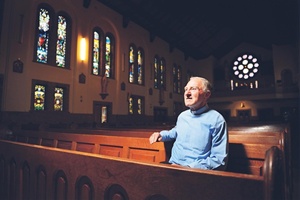
The parlous [“parlous”?  This is somewhat obsolete version of “perilous”.] state of the Catholic Church in Australia led Auxiliary [!] Bishop of Canberra Pat Power [the old gent in the powder-puff blue jumper, above] to write formally [Is there any other way?] to the Pope in November.

No reply has been received and Bishop Power is considering early retirement.

He said yesterday he was disappointed rather than disillusioned with the Church.

The second Vatican Council had given great hope and some wonderful things had happened, he said.

”But in other ways we have retreated into fairly narrow positions. [?] I just think it is a shame the potential we had to be a source of inspiration within the whole community has been diminished.” [Has there been nothing in Australia which contributed to that over the last few years?  Or is that Rome’s fault too?]

Bishop Power had been prompted to write to the Pope, particularly over the parlous [“parlous” again!  It wasn’t a mistake the first time!] state of the Diocese of Wilcannia-Forbes, which has remained without a bishop since the resignation of Bishop Chris Toohey almost two years ago. [And Rome didn’t appoint Bp. Power?]

The diocese, which covers more than half the area of NSW, has 20 parishes and only about 15 priests.

”I maintain that what is happening in Wilcannia-Forbes at the moment is going to progressively become the situation in other Australian dioceses,” Bishop Power said.  [If they can’t find a priest to promote to bishop in all this time…  Hmmm…]

The Archdiocese of Canberra and Goulburn had kept the ship afloat to some extent, with overseas priests. But Bishop Power said he was deeply concerned about the health and morale of its priests. ”I am not saying the morale in the diocese is not good, but it is tested when priests are doing a whole lot more than really they should be asked [So!  Retire early!] .. Part of my role is vicar for clergy. I am genuinely concerned for the health and well-being of our priests.”

Bishop Power will turn 70 next year. ”I am thinking seriously of retirement when I turn 70.” Bishops and priests normally retire at 75. [Wait a minute!  There is a priest shortage but he is thinking about retiring five years earlier than his priests?] On whether he had expected a reply from the Pope to his letter, Bishop Power chuckled and said, ”Normally, when you write a letter, you expect a reply.”

But he took no personal insult that he had not yet received a reply. [The Pope might be busy.  After all these are parlous times.]

The Canberra Times reported in December the archdiocese of Canberra and Goulburn was in difficult financial straits and parish priests were being asked how they intended to rectify the position.

Bishop Power attributes in part the crisis in Australia to undermining of the Church by conservative Catholics reporting to Rome on more liberal developments.

Given the lack of reply to his letter to the Pope, Bishop Power said, ”They are amazingly well connected.” Their views were reflective of the extreme religious right prominent in the US.

Don’t worry, Your Grace, I am sure your formal letter to the Holy Father was forwarded to the Congregation for Bishops.  Even now it rests on a desk in that Congregation’s office for auxiliaries located on sublevel 2 next to the steam pipe trunk distribution venue.

I want to give shout out to the Australian Confraternity of Catholic Clergy, an outstanding group.  These are the sort of priests who would willingly work long after 75 years of age and die, as priests, with their boots on.

I’ll leave the combox open here, though it be parlous to do so.

Don’t be nasty or I’ll suspend your posting ability.

Posted in Picture Me In My Grief | Tagged ,
73 Comments

Monday Supper … and poetry

I am posting a Monday instead of Sunday Supper offering.

We are having a meeting of our literary group, and I am cooking.

We are reading G. M. Hopkins, in a certain phase. We are having “spaghetti al seminario” and a wine tasting as well.

Posted in Fr. Z's Kitchen, What Fr. Z is up to |
16 Comments

Two “Brick by Brick” notes for your edification

First, may I ask the readership to take about 5, maybe 6, seconds to VOTE for this blog?  Click HERE.

I had great notes from readers.

First, …

St. Benedict’s Chapel in Chesapeake, VA … dedicated their new church this past Saturday (March 5). This is likely the first from-the-ground-up building constructed in the past 30 years specifically to say the TLM. I wrote about the new church with pictures here.

Also, …

In the Diocese of Kansas City-St. Joseph, MO, the Benedictines of Mary, Queen of Apostles have a new home.  They had an open house and photos are posted.

Posted in Brick by Brick |
19 Comments

QUAERITUR: Can I attend SSPX Triduum?

From a reader:

I attend the Extraordinary Form of Mass celebrated each Sunday by a priest of my diocese. This is great and I’m very grateful to be able to receive my liturgical heritage as a Catholic each Sunday. However, there will be no EF services for the Triduum; as far as I know, the bishop has never allowed for such provision for our EF community. My question is, given this situation, could I legitimately attend the SSPX chapel for Holy Thursday, Good Friday and the Easter Vigil?
Obviously I do not intend to rupture communion with my ordinary or with the Holy Father in so doing.

Since the SSPX is not in union with the Successor of Peter, I cannot say that people should attend chapels of the SSPX unless they would otherwise be denied, for one grave reason or another, the opportunity to participate at Holy Mass for a significant period of time.

Posted in "How To..." - Practical Notes, ASK FATHER Question Box | Tagged ,
Comments Off on QUAERITUR: Can I attend SSPX Triduum?

LENTCAzTs are coming

Beginning Tuesday I will post daily Lenten podcasts.

Posted in The Campus Telephone Pole |
Comments Off on LENTCAzTs are coming

The Cause of Bp. Baraga

I picked this up from my friend Fr. John Boyle’s blog Caritas in Veritate.  It concerns the cause for beatification of the first bishop of Marquette, MI, Frederic Baraga.  Baraga went to my native Minnesota as well.

March 12, 2011 is a very important day in the Cause for Beatification of our first Bishop, Frederic Baraga.  On that day the positio will be examined at  the Vatican by a group of theological consultors to the Congregation for Causes of Saints.  This positio is the documentation of the life, ministry and writings of the Servant of God Frederic Baraga.  It also includes a summary of his virtues.

The theological consultors, after discussing Bishop Baraga’s life and ministry, will make a formal recommendation to the Congregation for Causes of Saints concerning whether or not Bishop Baraga exhibited in his life what is referred to as “heroic virtue.”  If such a recommendation is made and accepted by the Congregation, then it goes to the Pope who would declare the heroic virtue and give Bishop Baraga the title of “Venerable.”

This is a critical step in the eventual beatification of Bishop Baraga, the other being the recognition of a miracle attributable to his intercession. We have been waiting for over twelve years for this step to be taken.

Bishop Alexander K. Sample is calling upon all the faithful of the Diocese of Marquette and beyond to observe Friday, March 11, 2011 as a day of prayer and penance for the success of this important step. Due to the six-hour time difference between here and Rome, it is important that we pray before the examination by the theologians on March 12.  The bishop especially recommends attendance at Mass, Eucharistic adoration and not eating between meals.  Since this is a Friday in Lent, he is also asking that our communal abstinence from meat on March 11 be offered for this special intention.

Posted in Saints: Stories & Symbols | Tagged , ,
6 Comments

Ireland: obsessing over the wrong problem

The Church in Ireland is in trouble!   Disaster looms!   The meteor is coming straight at them!

The NEW TRANSLATION of the Missal must be STOPPED!

Butch Cassidy and the Sundance Kid are at the top of the cliff.  Sundance is afraid to jump into the boulder filled rapids because he can’t swim.  Butch responds: “Are you crazy? The fall will probably kill you.”

This is a classic example of fixing your attention on the wrong problem.

I submit that the Church in Ireland has bigger problems than the translation to worry about.  In fact, the new translation might help.

But let’s set that optimistic possibility aside and wring our hands in solidarity with the Irish Association of Catholic Priests over the changes Rome made to the ICEL translation.

From the Irish Times with my emphases and comments:

Priests call for publication of new missal translation to be suspended

PATSY McGARRY, Religious Affairs Correspondent

IRELAND’S CATHOLIC bishops are to publish a statement “shortly” on the new translation of the Roman missal, they said yesterday.

The translation is to be used in Ireland from Advent next December.

At Maynooth this week members of the bishops’ Commission for Worship, Pastoral Renewal and Faith Development met the Association of Catholic Priests.

Forthright criticisms [Not just criticisms, but “forthright” criticisms.  Well… that convinces me!] of the new translation were expressed by priests. Their discussions coincided with the spring meeting of the Irish Episcopal Conference. [A sort of “robber council”!]

In attendance at the meeting with the association were five bishops, all members of the commission, including its chairman Bishop Seamus Freeman.

Killala priest Fr Brendan Hoban called for implementation of the translation to be suspended so priests and people could be properly consulted. [How is that supposed to happen, exactly?  Was that done when the Novus Ordo was implemented?] What was on offer was very deficient, [Not just deficient… very deficient!] especially in the use of exclusive language, and had been imposed from Rome, he said, according to minutes on the association website.  [Ah, Rome!  The great enemy.  Worse than the Sasanach.  I love this head fake.  The Irish Church has a few problems they have created all by themselves without any help from Rome at all.  But let’s fret over the thing being imposed by Rome.]

It was priests who would face the hostility of many Catholics, especially women, towards the new translation, he said. [But wait!  There’s more!] He said it would be unfair to use it in nursing homes where people were very familiar with the old translations.

Kilmore priest Fr Gerard Alwill criticised the secrecy surrounding the translation process.

He said there was major dissatisfaction [Not just dissatisfaction.. major dissatisfaction!] with the archaic terms, long, convoluted sentences and sexist language it used.

Kildare and Leighlin priest Fr PJ Madden spoke of a recent meeting in Carlow attended by 60 priests where many said the new texts were not wanted. [Let me get this straight… “many” out of … how many priests?  Many of 60? So… let’s say 20?] He felt that at the meeting there was no real effort to take on board the deeply felt concerns of the priests.

Fr Pádraig McCarthy of the Dublin archdiocese suggested the bishops suspend publication of the new translation immediately. [‘Cause they have nothing more important to worry about in Ireland.] A leaflet highlighting its pros and cons should be circulated, after which priests and parish liturgical groups should make their views known to the local bishop and the National Centre for Liturgy at Maynooth, he said. [Let me picture this for a moment: The local bishop is opening his mail.  He hefts the envelope from the Congregation for the Doctrine of the Faith about the little dust-up over Fr. Just-Call-Me-Seamus.  Then he spots the missive from the angry parish liturgical group at St. Brigit’s in Inisfree.  He drops the CDF’s latest and opts for St. Brigit’s because he is dying to read their insights into inclusive language.]

Dublin priest Fr Dermot Lane said the word “consubstantial”, for instance, as used in the new translation, was transliteration and not used in mainstream English. [And “one is being” is? That’s what they say in Ireland now, isn’t it?]

He suggested a process of consultation with the people should take place on the new translation such as that used to prepare the new National Directory for Catechesis . He noted that as early as 2003 the Catholic Biblical Association of America was critical of the new translation of the missal.

Columban priest Fr Seán McDonagh said the word “man”, as used in it, was no longer a common noun in contemporary English, and the excuse for using sexist language in the new translation smacked of Humpty Dumpty in Alice through the Looking Glass , where he said “when I use a word . . . it means just what I choose it to mean – neither more nor less.”

You can hear this on street corners all through Ireland.  “If it weren’t for the new translation I’d still be going to church on Sundays!”  In every pub you can hear them clucking, “I spent all those years saying ‘And also with you” and now Rome is imposing this!”  Moms at the grocers white-knuckle their shopping bags and say, “I am pulling my kids out of their school because Rome changed the ICEL translation!”  Advent will come and there will begin the great emptying of seminaries.  Priests in dark rectories everywhere will murmur, “This is the greatest crisis we have ever faced.”

They’ll need listening sessions to help them with the trauma.   The Pope may have to write a letter.  The Irish bishops should prostrate themselves in their cathedrals over the hurt this new translation will cause.

Posted in Picture Me In My Grief, Throwing a Nutty | Tagged , ,
76 Comments

Egypt: 4000 Muslims attack Coptic homes, burn church

St. Nunilo and Alodia, pray for us.

Assyrian International News Agency

(AINA) — A mob of nearly four thousand Muslims has attacked Coptic homes this evening in the village of Soul, Atfif in Helwan Governorate, 30 kilometers from Cairo, and torched the Church of St. Mina and St. George. There are conflicting reports about the whereabouts of the Church pastor Father Yosha and three deacons who were at church; some say they died in the fire and some say they are being held captive by the Muslims inside the church.

Witnesses report the mob prevented the fire brigade from entering the village. The army, which has been stationed for the last two days in the village of Bromil, 7 kilometers from Soul, initially refused to go into Soul, according to the officer in charge. When the army finally sent three tanks to the village, Muslim elders sent them away, saying that everything was “in order now.”

A curfew has been imposed on the 12,000 Christians in the village.

This incident was triggered by a relationship between 40-year-old Copt Ashraf Iskander and a Muslim woman. Yesterday a “reconciliation” meeting was arranged between the relevant Coptic and Muslim families and together with the Muslim elders it was decided that Ashraf Iskander would have to leave the village because Muslims torched his house.

The father of the Muslim woman was killed by his cousin because he did not kill his daughter to preserve the family’s honor, which led the woman’s brother to avenge the death of his father by killing the cousin. The village Muslims blamed the Christians.

The Muslim mob attacked the church, exploding 5-6 gas cylinders inside the church, pulled down the cross and the domes and burnt everything inside. Activist Ramy Kamel of Katibatibia Coptic advocacy called US-based Coptic Hope Sat TV and sent an SOS on behalf of the Copts in Soul village, as they are presently being attacked by the mob. He also said that no one is able to contact the priest and the deacons inside the burning church and there is no answer from their mobile phones.

Coptic activist Wagih Yacoub reported the mob has broken into Coptic homes and has called on Copts to leave the village. “Terrorized Copts have fled and some hid in homes of Muslim neighbors,” he added.

Witnesses said the mob chanted “Allahu Akbar” and vowed to conduct their morning prayers on the church plot after razing it.

By Mary Abdelmassih

Posted in Modern Martyrs, The future and our choices | Tagged , , , ,
34 Comments























